
International News
FED, Iran, and The Rupee- Three Forces Shaping Bullion’s Next Move AUGMONT BULLION REPORT
A Firmer Dollar and Rising Treasury Yields Are Increasing The Opportunity Cost Of Holding Gold.


The bullion market faces competing forces: US–Iran tensions at the Strait of Hormuz provide geopolitical support, while a stronger dollar, elevated Treasury yields, and prolonged Fed rate tightness suppress prices. Gold recovered modestly to $4,700 after diplomatic signals emerged. The Fed’s April 29 decision remains the critical macro trigger. India’s rupee weakened to Rs. 94/dollar amid rising crude costs. Central banks globally continue accumulating gold, though at a slower pace. Institutional ETF demand stays structurally strong.
The dominant market driver last week was the intensifying US–Iran conflict centred on the Strait of Hormuz. Iran restricted commercial shipping through the waterway and allegedly attacked foreign vessels. The US, in turn, blockaded Iranian ports — a move Iran labelled a ceasefire violation. President Trump publicly directed the Navy to engage vessels deploying mines in the strait. Separately, US forces intercepted an Iranian oil supertanker in the Indian Ocean, escalating maritime tensions further.
This reduces gold’s attractiveness relative to yield-bearing assets. Consequently, a stronger US dollar and persistent rate pressure continue to suppress gold prices despite the geopolitical backdrop.
While such geopolitical disruptions typically strengthen gold’s safe-haven appeal, the bullion market remained constrained. Central banks are maintaining tight monetary policy due to energy-driven inflation, keeping interest rates elevated.
By Friday, gold recovered modestly, trading above $4,700, reflecting cautious optimism following diplomatic signals — Iranian Foreign Minister Abbas Araghchi’s scheduled visit to Islamabad, with Pakistani officials suggesting a meaningful peace breakthrough was probable.
The US Federal Reserve is now projected to hold rates steady through 2026, abandoning earlier expectations of two rate cuts. A rate hike remains a live possibility as policymakers monitor the conflict’s inflationary spillovers. The Fed’s April 29 meeting is now the single most-watched macro event, likely to set gold’s near-term directional bias.
India’s rupee depreciated to approximately Rs. 94 per dollar, a three-week low, driven by rising crude oil import costs. The currency weakened nearly 1% week-on-week. The Reserve Bank of India intervened by selling dollars to stabilise the exchange rate, but persistent demand from oil importers offset these efforts, keeping the rupee under structural pressure.
Sovereign gold accumulation remained a sustained global trend. Central banks in China, India, Poland, and Turkey continued adding physical gold reserves. January 2026 purchases slowed to 5 tonnes against a 2025 monthly average of 27 tonnes, though demand broadened geographically, with Malaysia and South Korea re-entering the market. Uzbekistan led buying; Russia recorded the largest sales at 9 tonnes. China continued expanding its reserves.
Institutional demand remains structurally robust in 2026. A record $89 billion flowed into gold ETFs in 2025, and the SPDR Gold Trust now holds 1,073 metric tons, reflecting significant portfolio realignment toward precious metals. In February, gold ETFs attracted $5.3 billion in fresh inflows, led by North America and Asia, though European funds saw $1.8 billion in net outflows.
China’s silver imports totalled 206.76 tonnes in January–February 2026 — the highest in eight years — tightening global supply and lifting prices. In India, industrial buyers absorbed price dips, providing a floor during speculative sell-offs. Wedding season demand added further consumption-side support, with household jewellery purchases rising across major cities.
Overall sentiment toward bullion remains cautious. A firmer dollar and rising Treasury yields are increasing the opportunity cost of holding gold. The key upcoming catalysts are the Fed’s April 29 rate decision, US Q1 GDP data on April 30, and any definitive progress in US–Iran diplomacy. Each event carries the potential to sharply reverse current price trends.
Technically, gold faces resistance at $4,850 (~ Rs. 1,55,000). A confirmed break above this level could open a path toward $5,000 (~ Rs. 1,60,000). Immediate support is established at $4,650 (~ Rs. 1,51,000).
Silver prices are consolidating in the range of $73(~ Rs. 235,000) and $82(~ Rs. 2,58,000). Either a breakout or breakdown will give a further price move.


International News
Fluorescent Diamonds: GIA to Introduce Clearer Guidance
According to GIA, around 25% to 35% of all diamonds show some level of fluorescence. Greater transparency about this significant segment of the market could help improve confidence among both consumers and the jewellery trade.
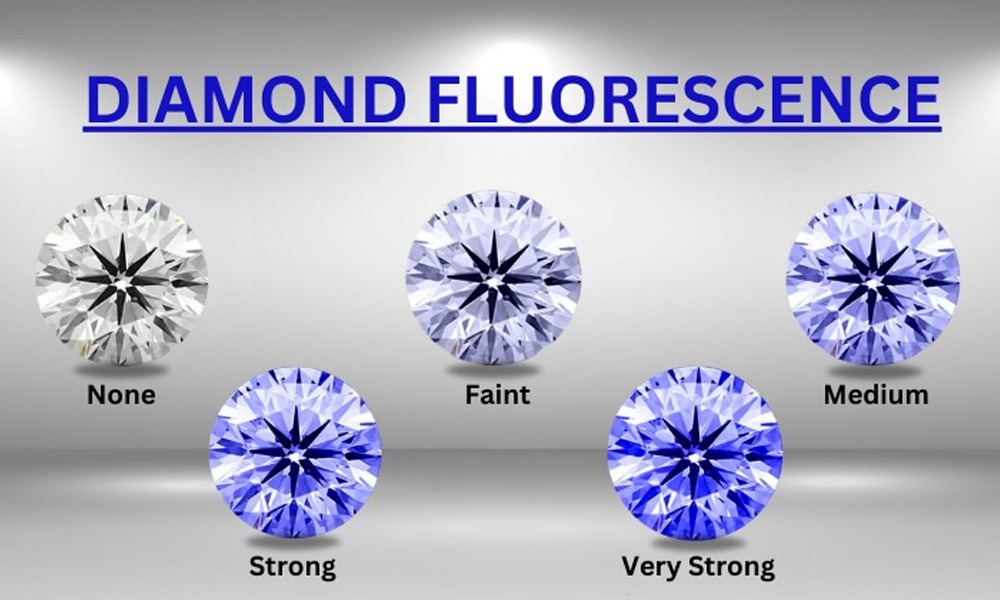
Later this year, the Gemological Institute of America (GIA) will introduce new wording in its diamond grading reports to reduce confusion about fluorescent diamonds. The update, expected in the fourth quarter, is one of the most important steps taken by a grading laboratory to explain this feature more clearly to both the jewellery trade and consumers.
Rapaport Intelligence Report explores what this change could mean for the diamond market. Fluorescence has had a long and complicated history. In the past, fluorescent diamonds often sold at premium prices. However, attitudes changed during the diamond boom of the 1970s and again after a grading controversy in South Korea in the early 1990s. Although later gemological research helped improve confidence in fluorescent diamonds, many buyers still view them negatively, and they often sell at discounted prices.
The report also looks at how these discounts have changed over the past six years through both strong and weak market conditions. In addition, the report explains two key questions: how fluorescence affects a diamond’s appearance and whether it influences its color grade. It also considers whether GIA’s new report comments could change how buyers view fluorescent diamonds.
The report revisits a long-debated issue—does fluorescence really affect a diamond’s beauty, or are today’s concerns mainly based on old perceptions that continue to influence buying decisions?
According to GIA, around 25% to 35% of all diamonds show some level of fluorescence. Greater transparency about this significant segment of the market could help improve confidence among both consumers and the jewellery trade.


-
 International News3 hours ago
Fluorescent Diamonds: GIA to Introduce Clearer Guidance
-

 GlamBuzz3 hours ago
Regal Jewellers appoints Vijay Sethupathi and Simran as brand ambassadors for Tamil Nadu
-

 National News4 hours ago
India’s Consul General to Dubai, Shri V V Reddy, Interacts with BDB Committee
-

 National News4 hours ago
Shankesh Jewellers Ltd. Unveils New Corporate Office at Kalbadevi Road, Mumbai
