

By Invitation
GSI teaches the art of selling jewellery, with training as unique as your brand
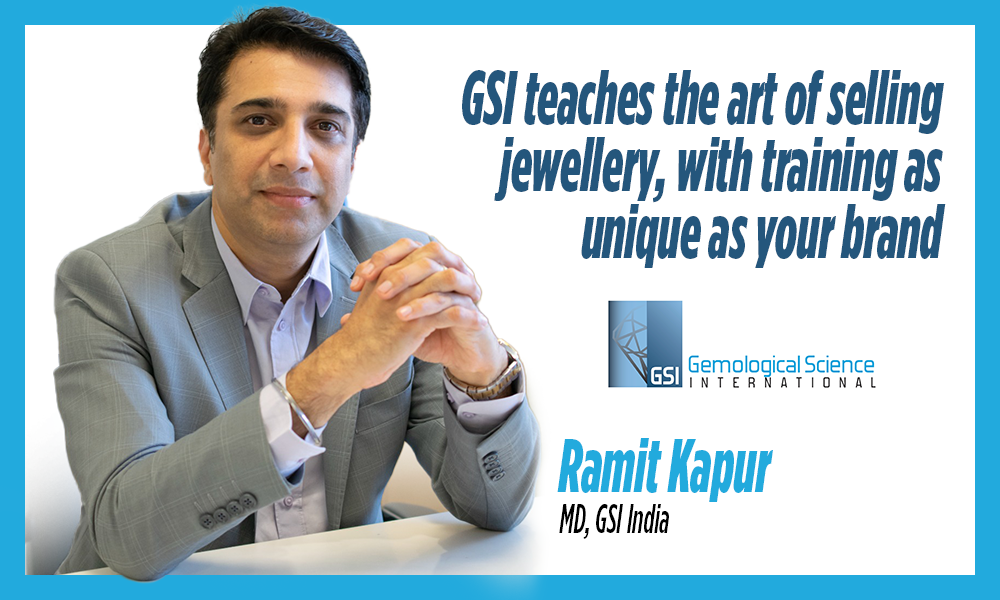
By Ramit Kapur, MD, GSI India

In jewelry retail, the real challenge isn’t having beautiful products, it’s getting customers to believe in them. Every day, sales teams face tough questions that reflect common consumer concerns: ‘How much of this piece is real gold, and how much is just Laakh behind the Polki?’ ‘Does a gemstone only hold value if it comes from a specific origin, like an emerald from Colombia versus one from Russia?’ ‘This diamond is SI clarity; why should I buy it when it’s not flawless?’ These are not small queries; they are make-or-break moments in the sales process.”
At GSI, we know that overcoming these objections requires more than product knowledge; it takes confidence, context, and the ability to tell the right story. That’s why our retail sales training programs such as the “Jewelry Excellence Program” are built not as cookie-cutter modules but as customized, brand-specific experiences designed to prepare teams for exactly these moments.
Customization is Key: Training Built Around What You Sell
The foundation of our approach lies in customization. Our training spans every aspect of the jewelry business; gemstones, diamonds, polki, metals, sales skills, jewelry care, and more. This journey begins by engaging with retailers to understand their unique goals and what they wish to achieve and communicate to their customers through their sales teams. Whether it’s improving customer engagement, boosting sales, or enhancing product knowledge, every program is tailored to align with those objectives.
We don’t walk in with a generic presentation. We start by studying the retailer’s various jewelry categories and their unique propositions in their collections. If your brand thrives on diamonds, we focus on teaching your team how to sell across different quality grades, highlighting factors beyond the 4Cs that influence value. If polki is central, we equip your staff to handle queries about its craftsmanship and value . If your store experiments with colored stones, we give your team the ability to sell a lesser-known garnet with the same conviction as a ruby.

This begins with a pre-program audit and mystery shopping : observing your store’s customer base, communication style, and brand personality. The result? A training program that is not only technically accurate but also culturally aligned with your business. No two retailers are the same, and no two GSI training programs are, either.
From Product to Pitches: Building Salespeople Who Sell Experiences
Knowledge alone doesn’t close sales. The ability to build rapport, handle hesitation, and guide customers to the “yes” does. GSI’s programs cover the full arc of retail selling, from product to pitches.
We use role-playing not as stale scripts but as live simulations of real scenarios your staff faces daily. Whether it’s explaining why a F-color diamond and a H-color diamond are both excellent buys, or learning how to turn a casual browser into a lifelong client, our methods prepare sales teams to create memorable experiences from the first hello to the final handshake and beyond.
Learning That Sticks: Continuous Assessment for Continuous Growth
Training is not a one-off exercise. At GSI, participants take an initial assessment, and then a follow-up assessment in the coming months. This ensures knowledge retention, highlights top performers, and shows management where to provide additional support. It also helps map future leaders, identifying which team members are ready for more responsibility.
The GSI Difference: Faculty, Data, and Industry Trust
Our edge comes from who we are. As a global gemological lab, we sit on real-time data, research, and trends that most firms simply don’t have access to. And our faculty isn’t made up of trainers-for-hire; they are seasoned experts who’ve graded and tested stones, advised brands, and shaped markets across continents. They bring that authority straight into the classroom.
This combination of scientific insight, retail acumen, and faculty expertise is why leading brands trust GSI to prepare their teams for the realities of modern jewelry retail.
Certification is the Last Point, Knowledge Comes First
Here’s a truth many overlook: certificates don’t sell jewelry, people do. A certificate may close the conversation, but it’s the sales team’s knowledge, confidence, and storytelling that open it. That’s why GSI puts human expertise ahead of paper credentials. We train teams to own the conversation, handle objections with authority, and make customers feel secure before the certificate even enters the discussion.
Because at the end of the day, selling jewelry is not just about the product in the box, it’s about the people behind the counter. And that’s where GSI makes the difference.


By Invitation
India’s Next Decade in Jewellery Exports: Scale, Discipline & Global Positioning
By Darshan Chauhan, Director –

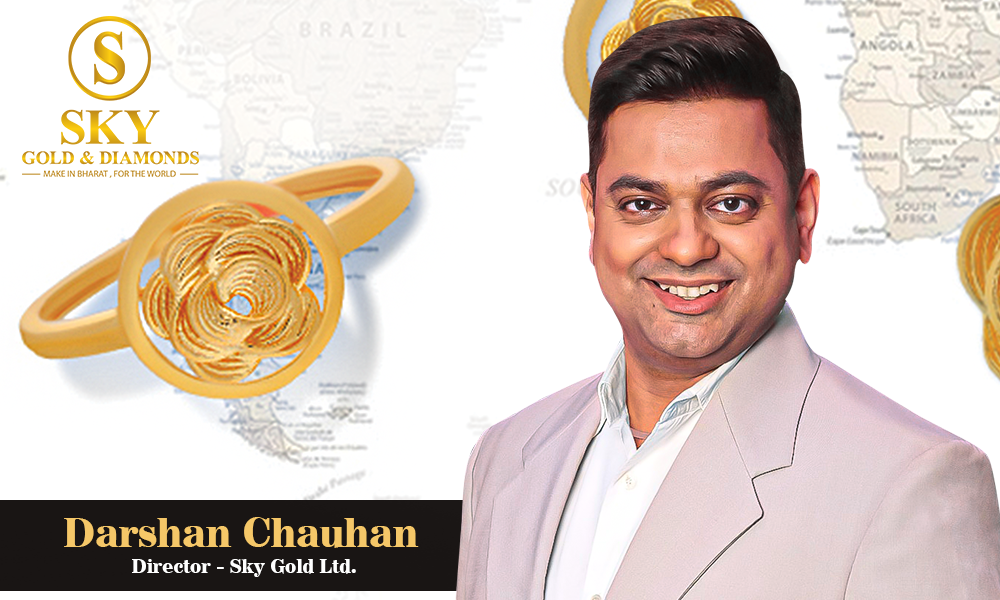
Sky Gold Ltd.
India’s jewellery export journey has been built on generations of craftsmanship, entrepreneurial resilience and an unmatched manufacturing ecosystem. From artisan-led workshops to technologically advanced facilities, the country has steadily earned global recognition as a reliable sourcing destination. Yet the coming decade represents a transition. The conversation is no longer only about producing more; it is about exporting smarter, operating with discipline and positioning India as a structured global partner rather than merely a manufacturing base.
The global jewellery trade itself is undergoing a quiet transformation. International buyers today evaluate suppliers through a wider lens. Design capability and competitive pricing remain important, but equal weight is now given to compliance, transparency, delivery consistency and financial stability. Export relationships are becoming long-term strategic partnerships rather than transactional buying arrangements.
For Indian exporters, this shift presents both an opportunity and a responsibility.
One of the most significant changes ahead will be market diversification. The United States has historically driven a substantial share of India’s jewellery exports, and it will continue to remain a vital market. However, concentration in a single geography exposes businesses to currency fluctuations, economic cycles and regulatory shifts. The Middle East has emerged as a strong growth corridor, supported by trade agreements, logistical advantages and evolving consumer demand. At the same time, regions such as Australia and parts of Europe are opening opportunities for exporters willing to meet higher compliance standards.
Diversification, therefore, is not about expanding aggressively into every market. It is about building balanced exposure that enhances stability while protecting margins.
Alongside geographic expansion, compliance is becoming a defining factor in global positioning. Responsible sourcing practices, traceability systems and governance standards are increasingly shaping procurement decisions. International brands are consolidating supplier networks and partnering with exporters who demonstrate reliability beyond production capability. In this environment, compliance should not be viewed as an external obligation. It strengthens credibility and enables access to premium markets where trust carries measurable value.
Equally important is capital discipline. Jewellery exports operate within a high-value commodity framework where gold price volatility directly impacts profitability. Elevated gold prices amplify the cost of inefficiencies, whether through excess inventory, unhedged exposure or extended payment cycles. Export growth in the coming decade will depend on closer alignment between procurement, treasury management and production planning. Structured hedging practices, bullion banking relationships and disciplined working capital management will increasingly separate stable exporters from vulnerable ones.
Manufacturing evolution will also play a central role. India already possesses scale; the next step is precision. Technology adoption, including CNC manufacturing, advanced prototyping and integrated digital production systems, enhances consistency while reducing wastage. Global buyers value predictability as much as creativity. When craftsmanship is supported by
process-driven manufacturing, India’s competitive advantage becomes far more compelling.
At the same time, India must gradually move beyond being perceived solely as a cost-competitive supplier. Countries that have successfully strengthened their global positioning have invested in design identity, innovation and long-term brand perception. Indian exporters have the opportunity to shift the narrative toward reliability, creativity and manufacturing excellence. Building deeper partnerships with international buyers, rather than focusing only on order volumes, will help achieve this transition.
Sustainability is emerging as another critical dimension of export strategy. Renewable energy adoption, responsible sourcing and environmental accountability are becoming key evaluation criteria in developed markets. These initiatives are not merely ethical considerations; they are risk-management tools that safeguard long-term market access. Exporters who align early with global sustainability expectations will find themselves better positioned as international standards continue to evolve.
Domestic retail trends are also influencing export direction more than before. The growing demand for lightweight, versatile jewellery in India mirrors changing consumer preferences globally. Faster design cycles and data-led product planning are reshaping manufacturing strategies. Exporters who remain closely connected to consumer behaviour both domestically and internationally gain stronger foresight into demand patterns.
The next decade of Indian jewellery exports will therefore be defined by alignment: scale supported by systems, creativity supported by discipline and growth supported by governance. India already has the foundation, skilled artisans, manufacturing depth and strong global relationships. The opportunity now lies in strengthening operational maturity.
If approached with clarity and intention, India can transition from being viewed primarily as the world’s jewellery workshop to being recognised as a trusted global partner in design, manufacturing and supply chain excellence. The future of exports will not depend solely on how much we produce, but on how confidently global markets rely on us.
In that shift lies the true potential of India’s next decade in jewellery exports.


-

 BrandBuzz1 hour ago
Vummidi Bangaru Jewellers Auspicious Akshaya Tritiya Campaign
-

 BrandBuzz7 minutes ago
Akoirah Unveils Diamond Draw Campaign Across Key Cities Ahead of Akshaya Tritiya
-
 National News16 hours ago
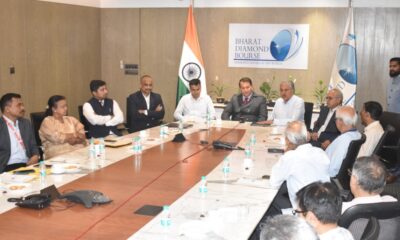
Bharat Diamond Bourse and Department Of Posts Sign MOU
-

 International News18 hours ago
WGC Gold Market Commentary: Anatomy Of A Fall
