JB Insights
Gold Prices May Touch ₹1 Lakh in H2 2025 Amid Strong Investment Demand: ICICI Report

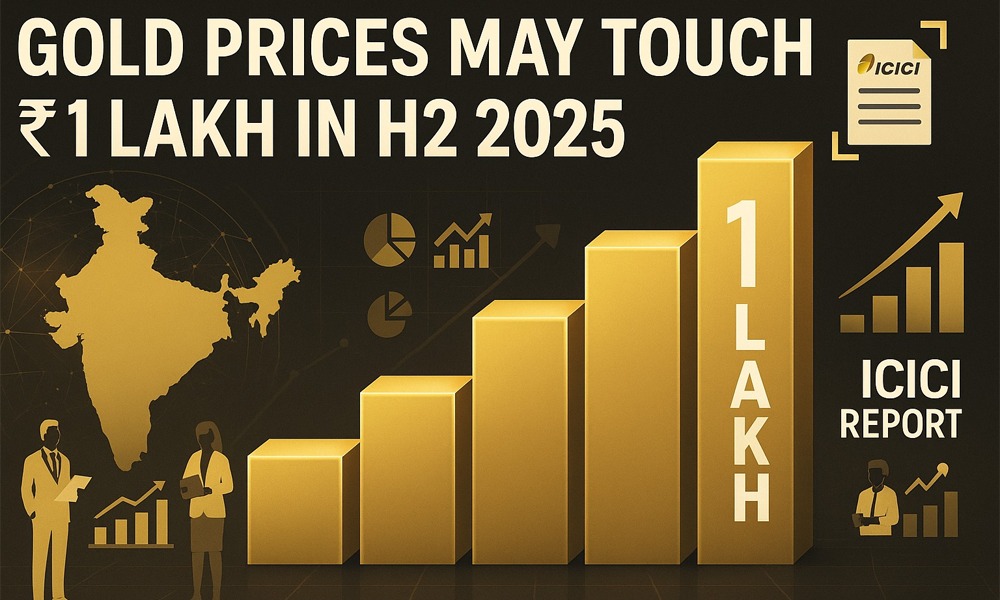
Gold prices in India are expected to trend higher in the second half of 2025, potentially reaching the ₹1,00,000 per 10 grams mark, according to a report by ICICI Bank Global Markets. Prices are currently trading in the range of ₹96,500 to ₹98,500 per 10 grams, but are forecasted to edge upward due to sustained investment demand and a mild depreciation in the Indian Rupee.
“Local gold prices are expected to continue trading with an upside bias, moving from a near-term range of ₹96,500–₹98,500 to the ₹98,500–₹100,000 range in H2 2025,” the report stated.
In June, domestic gold prices rose by 0.6% despite a global slowdown in momentum, supported by a 0.2% decline in the rupee. However, jewellery demand showed signs of weakening, with gold imports declining from USD 3.1 billion in April to USD 2.5 billion in May.
Investment demand, in contrast, remains strong. AMFI data showed net inflows of ₹2.92 billion into gold ETFs in May, following two months of outflows. Globally, SPDR Gold ETF holdings increased from 930 tonnes on June 1 to 948 tonnes by July 1, and speculative net long positions rose by 13,000 lots.
Despite gold’s YTD gains of 28%, prices have remained flat in recent weeks due to improving global risk sentiment. Key geopolitical developments, including a ceasefire between Israel and Iran and progress on U.S. trade agreements with the UK, Vietnam, Japan, India, and the EU, have eased safe-haven demand.
“The upshot is that easing geopolitical tensions and expectations that trade-war 2.0 could ease in magnitude have worked to limit further sharp upside emerging in gold prices,” the report noted.
While jewellery demand remains soft, strong investment-related buying continues to underpin the yellow metal’s upward momentum.







JB Insights
Silver Wholesale Goes Digital: How India’s 925 Silver Trade Is Changing The Way It Buys and Sells
The buyers on the wholesale side have changed too. Alongside the traditional jeweller, the trade now serves Instagram and WhatsApp sellers working from home, marketplace sellers, and first-time founders building their own jewellery brands online

By BanwariLal Bamalwa CEO | Director, GlamBug Mart Pvt Ltd

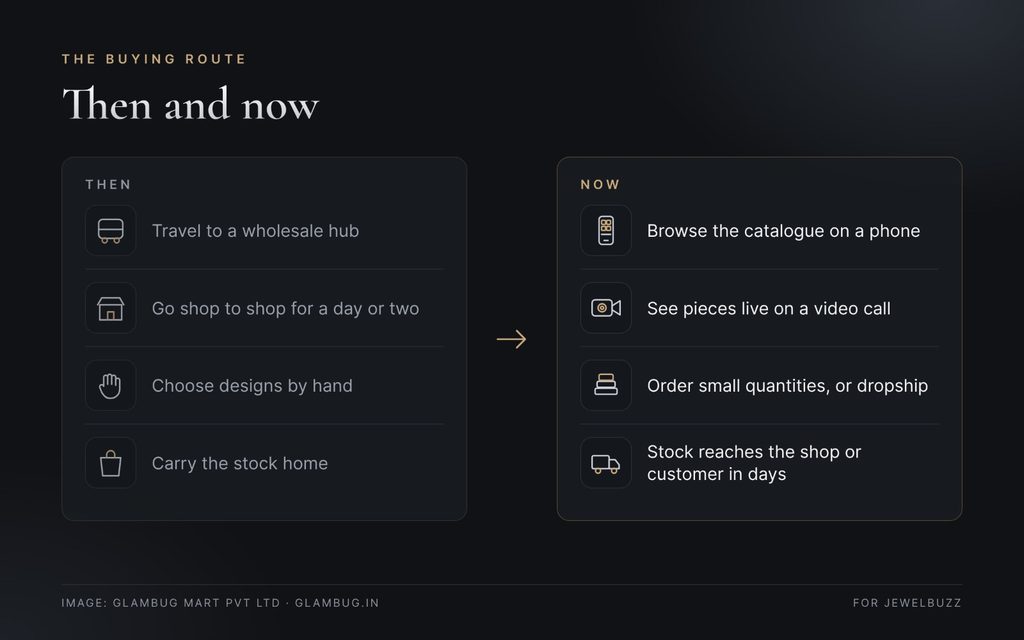
For decades, buying silver jewellery wholesale in India followed a familiar route. A retailer from a smaller town would travel to a wholesale hub, spend a day or two going from shop to shop, choose designs by hand, settle the price by weight, and carry the stock home. The model worked, but it favoured buyers with time, travel budgets and the capital to hold inventory.
That route is now changing quickly.
A New Kind Of Buyer
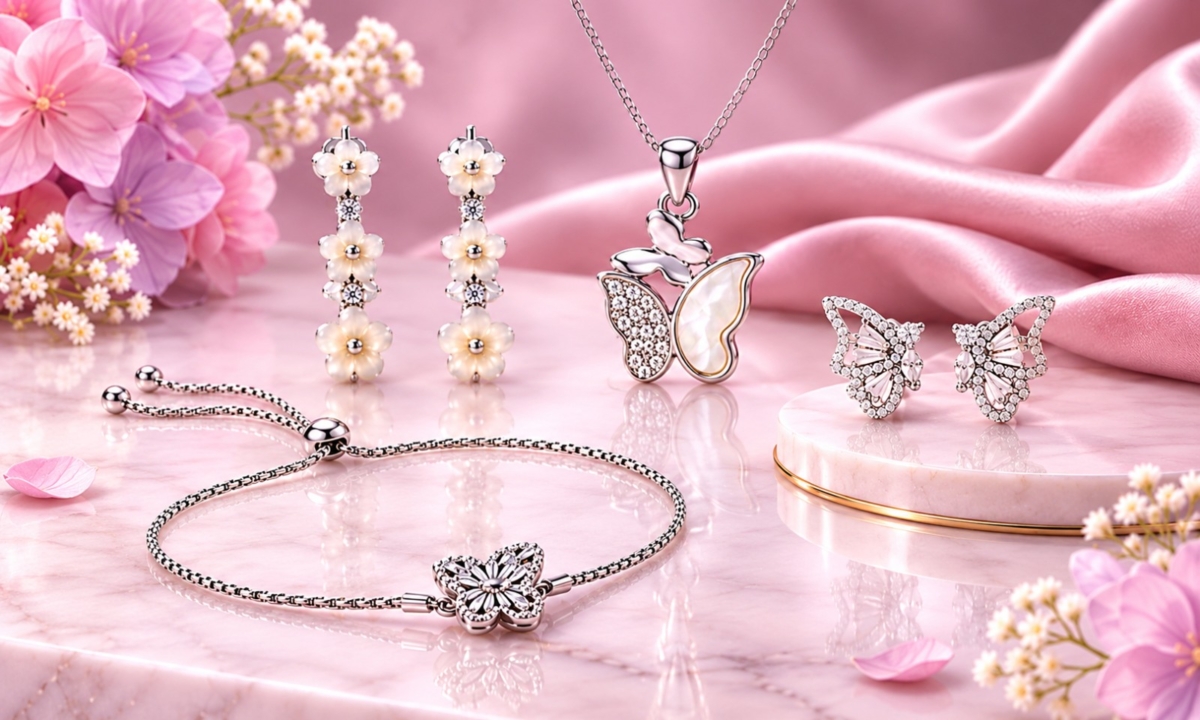
925 sterling silver has become one of the most active categories in Indian jewellery. As gold has grown more expensive, silver has found a wider audience in everyday fashion, gifting and festive wear, especially among younger customers.
The buyers on the wholesale side have changed too. Alongside the traditional jeweller, the trade now serves Instagram and WhatsApp sellers working from home, marketplace sellers, and first-time founders building their own jewellery brands online. Many of them have never visited a wholesale market. They want to see designs on a phone, order in small quantities, and have stock reach them, or their customer, within days.
Four Shifts In How The Trade Works
1. Catalogue apps are replacing market visits. Wholesalers are moving their catalogues into B2B apps where approved buyers can see designs, weights and per-gram rates, and send an enquiry for a quotation. Pricing by weight, once negotiated at the counter, is becoming visible and consistent.
2. Video calls are replacing the showroom. For buyers who still want to see a piece before ordering, live video selection lets them check finish, size, clasps and hallmarks on camera without travelling.
3. Dropshipping is lowering the cost of entry. A growing number of small sellers start with no inventory. They list designs online, and the wholesaler packs and ships each order directly to the end customer. For a home-based reseller, this removes the biggest barrier to starting: the cost of stock.
4. Integration is replacing manual updates. Online brands on platforms such as Shopify increasingly expect a supplier’s catalogue, stock levels and order flow to connect directly to their store, rather than copying product details and updating stock by hand.
Trust Becomes The Product
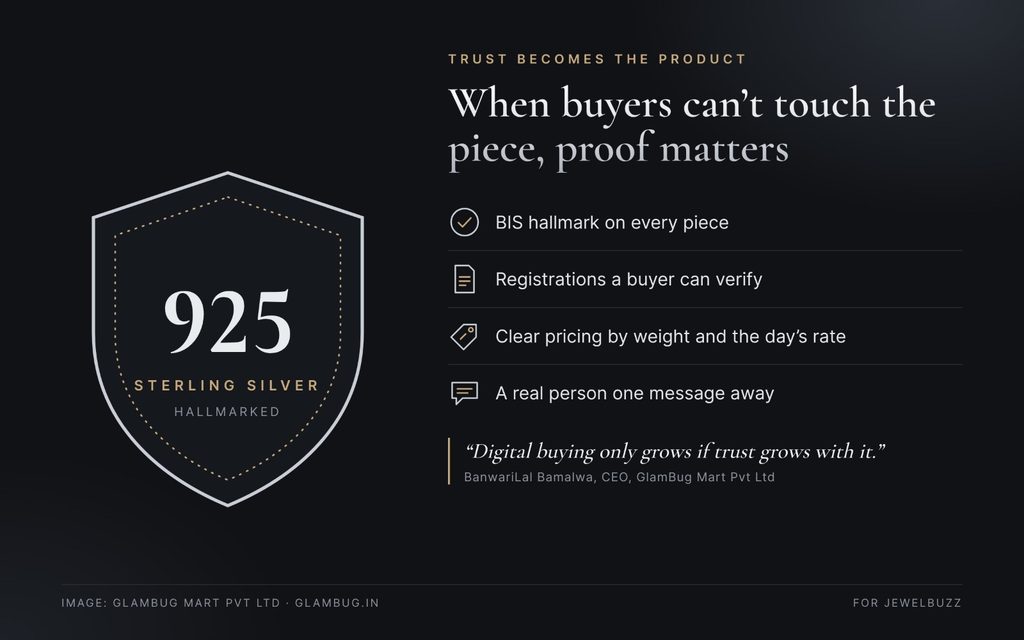
When buyers can no longer hold a piece before paying for it, trust becomes the deciding factor. Purity concerns are among the biggest worries for online jewellery shoppers and new resellers, and this is pushing hallmarking and verifiable registrations to the front of the buying decision.
Online, a buyer cannot touch the piece, so the first question is whether the silver is genuine. A supplier who openly shares their BIS registration and other credentials makes that question easy to answer. Digital buying only grows if trust grows with it.
GlamBug’s own path reflects the wider shift. The company, which imports from Italy, Turkey and Hong Kong and has held BIS hallmark registration since 2020, has over the past two years added a B2B catalogue app, video-call selection, dropshipping, a Shopify app and an API for partners, alongside its traditional wholesale business.
Our buyers changed before we did.A jeweller in a smaller town and a reseller working from home both want the same thing: to order quickly, with clear pricing and genuine silver. Technology is simply how we meet them where they already are.
The Challenges Ahead
The shift is not without friction. Silver prices can move sharply, which makes quotations harder to hold. Many traders now attach a validity window to each quote and price strictly by weight and the day’s rate. Small orders and direct shipping add packaging and logistics costs. And as more sellers enter the market, discounting can quickly erode thin margins.
Industry participants also point out that technology does not replace relationships. Many jewellers still value a call with a trusted supplier, and the most successful digital models keep a human contact a message away.
What It Means For The Trade
Digital wholesale is not replacing the traditional jeweller. It is widening the market. The same retailer who once bought only at the counter can now reorder from an app, and sellers who could never afford a showroom can build a business on hallmarked silver.
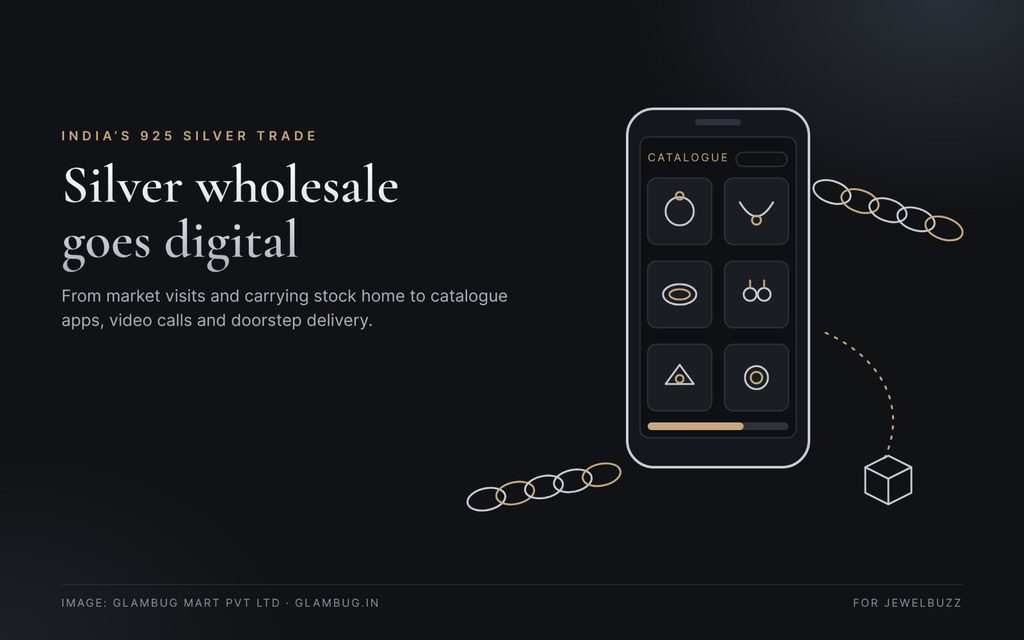
For wholesalers, the message is becoming clear: digitise the catalogue, make purity and registrations easy to verify, lower the barriers for small buyers, and connect to the platforms buyers already use. The buyers have already moved online. The trade is now catching up.


Farah Khan Fine Jewellery Launches Men’S Jewellery With The Miracle Man,Marking Azaan Ali’S Design Debut

Padmini Kolhapure Launches Fine Jewellery Wholesale and Manufacturing Brand

Palmonas Introduces ‘Tiny Treasures’, A 9KT Gold Jewellery Collection Designed For Little Ones

Bullion Prices Extend Losing Streak n AI Equity Selloff and Hawkish Fed Outlook

Paid B2B Jewellery Exhibitions Attract Entertainment Duty: Supreme Court

De Beers Group In Collaboration With Grandview Klein Diamond Unveils Namibia’S 176 Carat Owishi Natural Diamond In Washington, Dc
-
 International News3 days ago
Bullion Prices Extend Losing Streak n AI Equity Selloff and Hawkish Fed Outlook
-
 National News3 days ago
Paid B2B Jewellery Exhibitions Attract Entertainment Duty: Supreme Court
-
 DiamondBuzz4 days ago
De Beers Group In Collaboration With Grandview Klein Diamond Unveils Namibia’S 176 Carat Owishi Natural Diamond In Washington, Dc
-

 National News3 days ago
ANTISTATUS Jewellery Debuts Rider Collection At India Bike Week 2026