JB Insights
Silver Wholesale Goes Digital: How India’s 925 Silver Trade Is Changing The Way It Buys and Sells
The buyers on the wholesale side have changed too. Alongside the traditional jeweller, the trade now serves Instagram and WhatsApp sellers working from home, marketplace sellers, and first-time founders building their own jewellery brands online

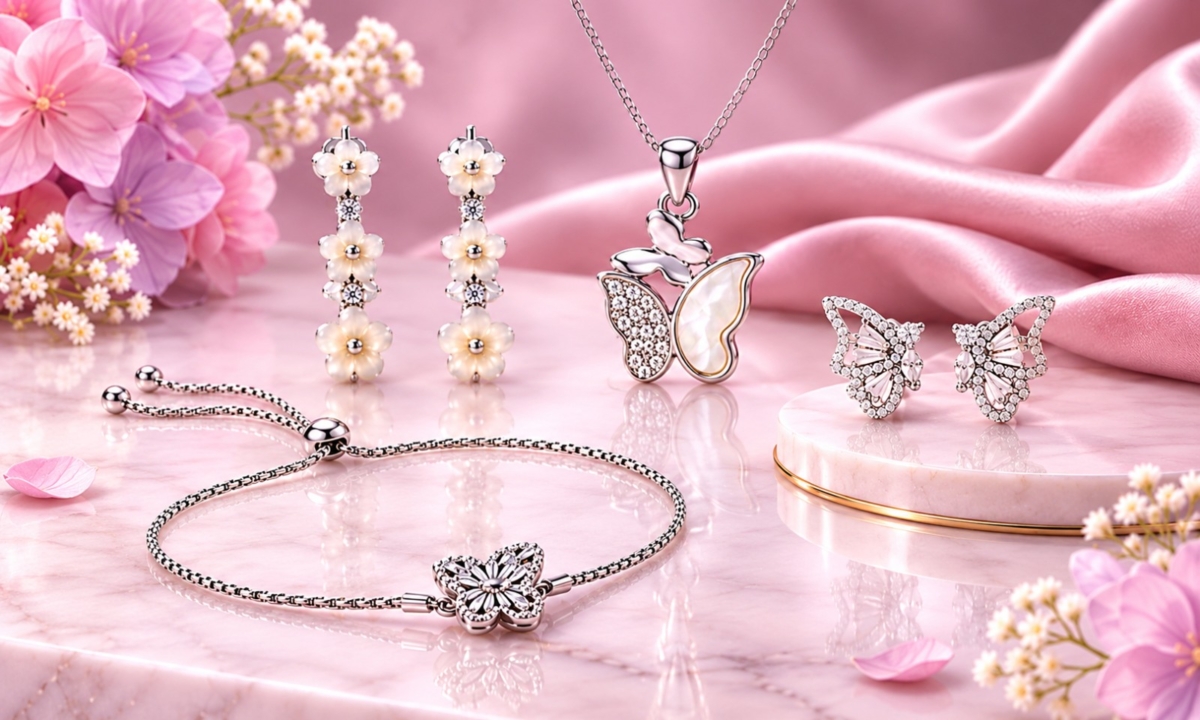
By BanwariLal Bamalwa CEO | Director, GlamBug Mart Pvt Ltd
For decades, buying silver jewellery wholesale in India followed a familiar route. A retailer from a smaller town would travel to a wholesale hub, spend a day or two going from shop to shop, choose designs by hand, settle the price by weight, and carry the stock home. The model worked, but it favoured buyers with time, travel budgets and the capital to hold inventory.
That route is now changing quickly.
A New Kind Of Buyer
925 sterling silver has become one of the most active categories in Indian jewellery. As gold has grown more expensive, silver has found a wider audience in everyday fashion, gifting and festive wear, especially among younger customers.
The buyers on the wholesale side have changed too. Alongside the traditional jeweller, the trade now serves Instagram and WhatsApp sellers working from home, marketplace sellers, and first-time founders building their own jewellery brands online. Many of them have never visited a wholesale market. They want to see designs on a phone, order in small quantities, and have stock reach them, or their customer, within days.
Four Shifts In How The Trade Works
1. Catalogue apps are replacing market visits. Wholesalers are moving their catalogues into B2B apps where approved buyers can see designs, weights and per-gram rates, and send an enquiry for a quotation. Pricing by weight, once negotiated at the counter, is becoming visible and consistent.
2. Video calls are replacing the showroom. For buyers who still want to see a piece before ordering, live video selection lets them check finish, size, clasps and hallmarks on camera without travelling.
3. Dropshipping is lowering the cost of entry. A growing number of small sellers start with no inventory. They list designs online, and the wholesaler packs and ships each order directly to the end customer. For a home-based reseller, this removes the biggest barrier to starting: the cost of stock.
4. Integration is replacing manual updates. Online brands on platforms such as Shopify increasingly expect a supplier’s catalogue, stock levels and order flow to connect directly to their store, rather than copying product details and updating stock by hand.
Trust Becomes The Product
When buyers can no longer hold a piece before paying for it, trust becomes the deciding factor. Purity concerns are among the biggest worries for online jewellery shoppers and new resellers, and this is pushing hallmarking and verifiable registrations to the front of the buying decision.
Online, a buyer cannot touch the piece, so the first question is whether the silver is genuine. A supplier who openly shares their BIS registration and other credentials makes that question easy to answer. Digital buying only grows if trust grows with it.
GlamBug’s own path reflects the wider shift. The company, which imports from Italy, Turkey and Hong Kong and has held BIS hallmark registration since 2020, has over the past two years added a B2B catalogue app, video-call selection, dropshipping, a Shopify app and an API for partners, alongside its traditional wholesale business.
Our buyers changed before we did.A jeweller in a smaller town and a reseller working from home both want the same thing: to order quickly, with clear pricing and genuine silver. Technology is simply how we meet them where they already are.
The Challenges Ahead
The shift is not without friction. Silver prices can move sharply, which makes quotations harder to hold. Many traders now attach a validity window to each quote and price strictly by weight and the day’s rate. Small orders and direct shipping add packaging and logistics costs. And as more sellers enter the market, discounting can quickly erode thin margins.
Industry participants also point out that technology does not replace relationships. Many jewellers still value a call with a trusted supplier, and the most successful digital models keep a human contact a message away.
What It Means For The Trade
Digital wholesale is not replacing the traditional jeweller. It is widening the market. The same retailer who once bought only at the counter can now reorder from an app, and sellers who could never afford a showroom can build a business on hallmarked silver.
For wholesalers, the message is becoming clear: digitise the catalogue, make purity and registrations easy to verify, lower the barriers for small buyers, and connect to the platforms buyers already use. The buyers have already moved online. The trade is now catching up.


JB Insights
Jewellery retailers’ Backward Integration Into Jewellery Manufacturing Strategy To Secure Design, Quality, Cost and Delivery Control.
By Steve Fernandes
Indian jewellery retailers are moving into manufacturing to secure design, quality, cost and delivery control. PNG Jewellers’ proposed diamond-and-gold manufacturing subsidiary is the latest example.
1. Why Retailers Integrate Backward
Backward integration means a retailer builds or acquires capability earlier in its value chain, here jewellery manufacturing, rather than relying solely on third-party suppliers. The commercial logic rests on margin capture, differentiation and supply-chain resilience.
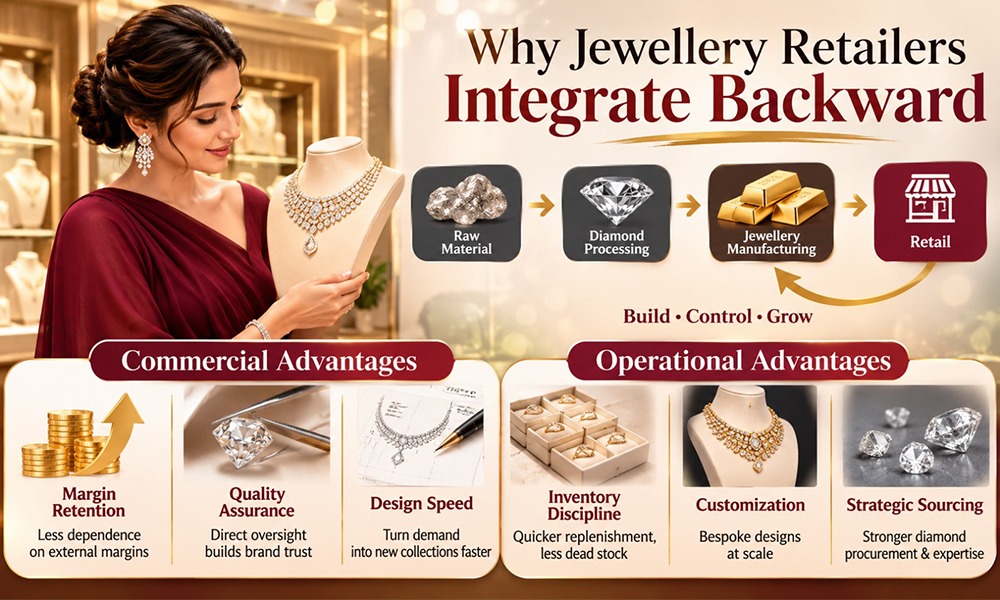
1.1 Commercial Advantages
- Margin retention: Less dependence on external conversion margins; better control of product cost.
- Quality assurance: Direct oversight of diamond setting, gold purity, finishing and hallmarking protects brand trust.
- Design speed: Store-level demand signals convert into new collections faster than vendor production calendars allow.
1.2 Operational Advantages
- Inventory discipline: Quicker replenishment of fast sellers; less dead stock in slow-moving SKUs.
- Customization: A captive base supports bespoke, bridal, regional and occasion-led jewellery at scale.
- Strategic sourcing: Stronger diamond procurement, grading and polishing expertise, covering both natural and lab-grown stones.
2. PNG Jewellers: The Move
2.1 Deal Structure
- Structure: Proposed 76%-owned subsidiary for diamond and gold jewellery manufacturing; initial investment of up to Rs 10 crore.
- Partners: Operational partners bring 27 years of technical experience, including cutting and polishing.
- Control with incentive: PNG keeps majority ownership and strategic direction, while the minority stake aligns partners with quality and execution.
2.2 Strategic Fit
- Not a standing start: PNG already has retail reach, a design portfolio and diamond-procurement capability.
- Northern push: Studded jewellery holds a higher market share in several northern states, so assured design range supports expansion there.
- Phased rollout: Validates asset acquisition, production quality, design acceptance and working capital before scaling.
3. How the Majors Compare
PNG’s announcement fits a broader pattern: vertically integrated players combine retail distribution with manufacturing, design and sourcing to create a more controllable value chain.
3.1 Integration Models at a Glance
| Retailer | Model | Highlights |
| Titan / Tanishq | Mature, integrated | Factories at Hosur and Pantnagar; stone-sourcing in Surat and Jaipur; product-development centre in Mumbai; mix of in-house plants, karigar centres and vendors. |
| Malabar Gold & Diamonds | Fully vertical | 15 manufacturing units across five countries and 14 wholesale units in eight. Hyderabad facility integrates design, refining, manufacturing, QA, hallmarking and warehousing; capacity above 4.7 tonnes of gold jewellery and 1.8 lakh carats of diamond jewellery. |
| Kalyan Jewellers | Hybrid | Consolidated manufacturing plus long-term contract manufacturers, supporting a franchise-led retail network. |
| Senco Gold | Regional | Senco Gold Artisanship Pvt. Ltd. preserves Eastern India design identity and supply reliability. |
| PNG Jewellers | Capital-light entry | Majority control with experienced partners; sits between Titan’s integration and Kalyan’s hybrid approach. |
3.2 Key Lesson
Integration need not mean owning everything. Retailers can balance control and flexibility:
- Captive capacity for high-value, design-sensitive, fast-turning products.
- Third-party vendors for overflow, seasonality and lower-complexity lines.
4. Success Factors for PNG
4.1 Execution Priorities
- Start with studded jewellery, where design and quality control matter most.
- Use capacity selectively, retaining external vendors for overflow and regional specialities.
- Build strong governance around diamond procurement, transfer pricing, capacity allocation and quality standards.
4.2 Scaling Discipline
- Prove unit economics before scaling: yield, rejection rates, labour productivity, inventory turns, delivery reliability.
- Link production to retail data, so store-level and regional demand drives designs, not factory capacity.
5. Bottom Line
KEY TAKEAWAY Controlling more of the value chain improves responsiveness and margin capture, but only when manufacturing is tightly tied to merchandising, quality systems and working-capital discipline.


Silver Wholesale Goes Digital: How India’s 925 Silver Trade Is Changing The Way It Buys and Sells

Malabar Gold & Diamonds Strengthens Its Presence in Lucknow With New Showrooms In Mahanagar and Patrakarpuram

World Gold Council – India Gold Market Update

From White Gold to Sterling Silver: Gargi by PNGS Opens Its 51st Store in Akola
Malabar Gold & Diamonds Strengthens Its Presence in Lucknow With New Showrooms In Mahanagar and Patrakarpuram
Silver Wholesale Goes Digital: How India’s 925 Silver Trade Is Changing The Way It Buys and Sells
-
 New Premises23 hours ago
From White Gold to Sterling Silver: Gargi by PNGS Opens Its 51st Store in Akola
-
 New Premises23 minutes ago
Malabar Gold & Diamonds Strengthens Its Presence in Lucknow With New Showrooms In Mahanagar and Patrakarpuram
-
 National News5 hours ago
World Gold Council – India Gold Market Update
-
 National News5 hours ago
GJ Exports Through SEZs Registered An Impressive 31.07% Year-On-Year Growth