
DiamondBuzz
GIA stops using 4Cs to grade LGDs


In a landmark decision that will reverberate through the global diamond industry, the Gemological Institute of America (GIA)—the world’s foremost authority in gemology—has announced it will no longer use its internationally recognized 4Cs grading system for laboratory-grown diamonds. Instead, beginning later this year, lab-grown diamonds submitted to GIA will receive simplified descriptors—categorized broadly as either “premium” or “standard”—or no grade at all if the quality is subpar.
While GIA’s move to redefine lab grown diamond grading might sound like a simple nomenclature change, it’s much more than that. This move marks a definitive moment in the ongoing separation of natural diamonds from lab-grown diamonds. It confirms what many in the industry have long known: lab-grown diamonds are not the same as natural diamonds and should not be treated as such.
GIA created the 4Cs—cut, color, clarity, and carat weight—as a rigorous system to help consumers understand the unique and complex qualities of natural diamonds. No two natural diamonds are exactly alike. They are rare geological miracles forged deep within the Earth over billions of years, each carrying a singular fingerprint from Mother Nature. A grading report for a natural diamond is essential because these stones exist along an immense spectrum of characteristics.








DiamondBuzz
Richemont and Signet Jewelers Could Join Global Diamond Consortium In Bid For De Beers
Richemont, Signet Would Connect The Consortium To Key Global Growth Vectors Spanning Luxury High Jewelry and Mass-Market Retail.


The Global Diamond Consortium (GDC)
Richemont and Signet Jewelers are reported to be in talks about joining the Global Diamond Consortium (GDC), the preferred bidder for De Beers according to a Bloomberg News report.
GDC was selected in July 2026 as one of Anglo American’s preferred bidders for De Beers as part of Anglo American’s ongoing corporate restructuring.
The potential inclusion of Richemont—owner of luxury Maisons including Cartier and Van Cleef & Arpels—and Signet Jewelers—the world’s largest retailer of diamond jewelry, operating brands such as Kay Jewelers, Zales, and Jared—would connect the consortium to key global growth vectors spanning luxury high jewelry and mass-market retail.
Strengthening the Natural Diamond Ecosystem: Participation by major luxury brands and global retail leaders reinforces commitment across the entire value chain—from responsible mining and manufacturing to consumer engagement.
Balanced Governance Structure: Discussions center on potential minority equity positions that would support long-term category growth while maintaining appropriate separation between ownership and commercial strategy.
Broad Stakeholder Participation: The consortium continues to advance talks with host governments, including discussions with the Government of Botswana regarding a potential increase in its equity share in De Beers from 15% to approximately 25%, alongside participation from private investors and southern African host nations.
Discussions between GDC, Richemont, Signet, and participating government stakeholders remain ongoing. Terms of any potential participation, including the size of equity interests, have not been finalized and remain subject to regulatory approvals and definitive documentation.



Belgian Consul General H. E. Mr. Pierre Stverlynck Graces BDB Annual Day

Limelight Lab Grown Diamonds Crosses 100 Stores Milestone This Dussehra: Targets 200 In 2027

Joyalukkas Opens Its 2nd Bengaluru Showroom in Jayanagar

US Holiday Shopping Expected To Top $1 Trillion For The First Time: NRF
Belgian Consul General H. E. Mr. Pierre Stverlynck Graces BDB Annual Day
Limelight Lab Grown Diamonds Crosses 100 Stores Milestone This Dussehra: Targets 200 In 2027
-
 International News20 hours ago
US Holiday Shopping Expected To Top $1 Trillion For The First Time: NRF
-
 National News14 hours ago
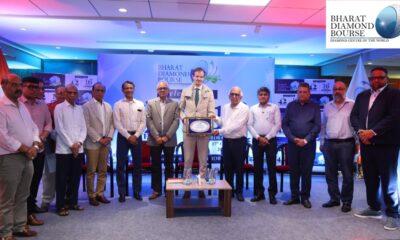
Belgian Consul General H. E. Mr. Pierre Stverlynck Graces BDB Annual Day
-
 National News15 hours ago
Limelight Lab Grown Diamonds Crosses 100 Stores Milestone This Dussehra: Targets 200 In 2027
-
 New Premises15 hours ago
Joyalukkas Opens Its 2nd Bengaluru Showroom in Jayanagar
