
DiamondBuzz
GIA Celebrates World Diamond Day Highlighting Iconic Gems
Institute Spotlights Historic Diamonds Like the Hope, Dresden Green, Winston Red, Taylor Burton, Motswedi

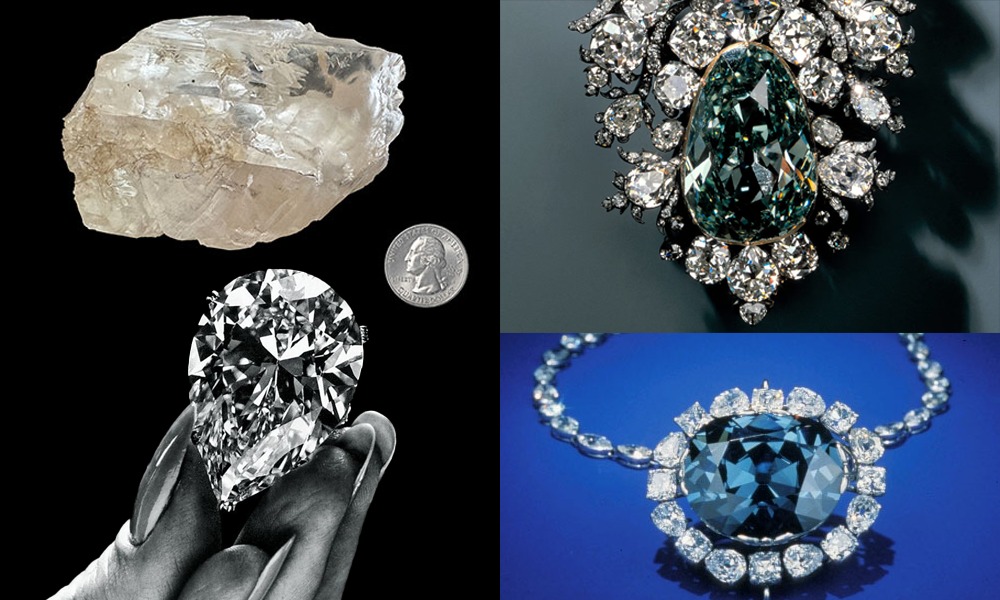
The Gemological Institute of America (GIA) marked World Diamond Day on 8th April by highlighting a selection of historically significant precious stones it has examined, underscoring their rarity, scientific importance and cultural legacy.
Below is a concise analytical breakdown of the stones and their significance from a trade, scientific, and storytelling angle:
Key diamonds highlighted
- Hope Diamond (45.52 ct, Fancy Deep greyish blue)
Traced to Golconda‑type deposits in India, this stone passed through French royalty before entering private and then museum collections, and today sits at the Smithsonian. Its combination of intense blue colour, provenance, and storied “curse” lore has made it one of the most‑recognised diamonds in the world, frequently used as a reference point in colour‑diamond marketing and exhibitions. - Dresden Green (~41 ct natural green)
The largest known natural green diamond, with an even green hue produced by natural ionising radiation in the crust. Its high purity and Saxon–European royal‑court history make it a benchmark for both rarity and the link between gemstones and political‑dynastic symbolism. - Winston Red (2.33 ct Fancy red)
A rare old‑mine‑cut Fancy red stone, of which only about 0.04% of fancy colour diamonds attain such a grade. As the only Fancy red diamond on public display, it is a key reference for dealers and collectors benchmarking the value of red‑dominant fancy colours. - Taylor‑Burton Diamond
A 68‑carat pear‑shaped D‑colour stone cut from a 240‑carat rough from South Africa’s Premier‑type deposit, later made famous by Richard Burton and Elizabeth Taylor. Its celebrity‑driven glamour elevated high‑colour‑clarity white diamonds into pop‑culture icons, reinforcing the “diamond as romance” narrative that still dominates bridal jewellery advertising. - Motswedi Diamond (2,488.32 ct rough)
Recovered in Botswana in 2024, this is the second‑largest gem‑quality diamond ever discovered and a high‑purity Type IIa crystal. Its size and purity allow scientists to study how carbon crystallises under extreme pressures deep in the Earth, making it a research‑grade specimen as well as a commercial headline‑maker. - Several stones—Hope, Dresden Green, Taylor Burton, and Winston Red—carry strong narratives of royalty, curses, Hollywood romance, and extreme rarity.
- GIA’s highlighting of these gems on World Diamond Day is a strategic blend of education and soft branding:
- It positions diamonds as objects of history and art, not just commodities.
- It reminds buyers, retailers, and media that GIA sits at the centre of authenticating and contextualising these legendary stones.gia+1
Beyond these diamonds, GIA has documented historic and royal artefacts such as the Marie Thérèse Pink diamond and the Mughal era “Mughal Spectacles,” helping to codify their gemmological and provenance data. This work reinforces its positioning as both a research institute and a preserver of the cultural heritage layer of gemmology, bridging ancient craftsmanship with modern scientific verification.


DiamondBuzz
Botswana Looks Beyond Rough Diamond Sales, Eyes U.S. Jewelry Market
The Duty Exemption By US Presents An Opportunity For Domestic Jewelry Manufacturers In Gaborone To Bypass Traditional Middle-Market Hubs and Establish A Direct Pipeline To American Consumers

Grappling with a painful downturn in global rough-diamond demand, Botswana is pivoting its economic strategy: expanding up the supply chain directly into American retail shelves while leveraging its resource wealth to fund conservation and diversification.
Speaking on the sidelines of New York Climate Week, Bogolo Joy Kenewendo, Botswana’s Minister of Minerals and Energy, highlighted the southern African nation’s plan to capitalize on a 0% import-tariff rate to the U.S. market. The duty exemption presents an opportunity for domestic jewelry manufacturers in Gaborone to bypass traditional middle-market hubs and establish a direct pipeline to American consumers.
shift The push into value-added manufacturing comes as the world’s top diamond producer by value navigates a broader structural Diamond revenues have long formed the bedrock of Botswana’s post-independence balance sheet, underwriting universal secondary education and tuition-free university funding. However, recent market volatility has underscored the vulnerabilities of a mono-sectoral economy.
Under the Botswana Economic Transformation Programme (BETP)—an initiative spearheaded directly by President Duma Boko and his vice president—the government is directing resources toward manufacturing, agriculture, and broader mining sectors to reduce its heavy reliance on rough diamond sales.
To support its luxury exports, Botswana is recalibrating its brand narrative around origin, environmental stewardship, and social impact. The country recently announced a five-year extension of the “Okavango Eternal” partnership alongside De Beers Group and the National Geographic Society. The initiative aims to protect the ecological integrity of the Okavango River Basin while tying diamond purchases to conservation efforts.
With De Beers currently facing an impending ownership change, officials remain optimistic that any capital restructuring could bring additional funds into Botswana to accelerate its domestic economic transition.



Sky Gold & Diamonds To Acquire Purvi Gems In Strategic Move To Drive Growth, Achieve Scale and Product Diversification

ZOYA Rewrites The Language Of High Jewellery, Inspired By India’s Spices As Keepers Of Memory, With Anoushka Shankar As Its Muse

Diamond Price Gains In Sept Led By Small, High-Quality Stones

Pandora Unveils $150 Million Mega-Factory In Vietnam

GIVA Celebrates The Many Expressions Of Navratri With Its New Campaign, ‘Tyohar Anek, Feeling Ek’
Sky Gold & Diamonds To Acquire Purvi Gems In Strategic Move To Drive Growth, Achieve Scale and Product Diversification
-
 International News9 hours ago
Pandora Unveils $150 Million Mega-Factory In Vietnam
-
 BrandBuzz8 hours ago
GIVA Celebrates The Many Expressions Of Navratri With Its New Campaign, ‘Tyohar Anek, Feeling Ek’
-
 National News5 hours ago
Sky Gold & Diamonds To Acquire Purvi Gems In Strategic Move To Drive Growth, Achieve Scale and Product Diversification
-

 National News10 hours ago
Precious Metal Futures Show Renewed Momentum
