DiamondBuzz
Alrosa Plans To Expand Diamond Production Through Severalmaz
Outlines An Expansionary Roadmap and Diversification Strategy Amid Market Volatility


Alrosa has confirmed a strategic pivot toward aggressive capacity expansion via its wholly-owned subsidiary, Severalmaz. Currently contributing approximately 10% to the Group’s aggregate output, Severalmaz is slated to become a primary engine for long-term value creation.
Despite prevailing macroeconomic headwinds and a softening in global demand for natural stones, Alrosa reported that the Lomonosov deposit maintained a stable production baseline, yielding an annualized run-rate of approximately 3.5 million carats through FY24 and FY25.
Key Strategic Pillars:
- Operational Resilience: CEO Pavel Marinychev emphasized that Severalmaz serves as a systemically important entity within the Arkhangelsk regional economy, providing a “solid foundation” for the Group’s multi-decade development cycle.
- CAPEX & Exploration: The firm is committed to significant capital expenditure directed toward greenfield exploration and the modernization of existing mining infrastructure to drive operational alpha and safety.
- Portfolio Diversification: To hedge against cyclical diamond market downturns, Alrosa is actively de-risking its balance sheet by diversifying into gold mining and offloading approximately 30% of its inventory to Gokhran to ensure consistent liquidity flows.
- R&D Synergies: The roadmap includes deep integration with regional scientific-industrial hubs to optimize extraction efficiencies and future-proof the production pipeline.


DiamondBuzz
Richemont and Signet Jewelers Could Join Global Diamond Consortium In Bid For De Beers
Richemont, Signet Would Connect The Consortium To Key Global Growth Vectors Spanning Luxury High Jewelry and Mass-Market Retail.

The Global Diamond Consortium (GDC)
Richemont and Signet Jewelers are reported to be in talks about joining the Global Diamond Consortium (GDC), the preferred bidder for De Beers according to a Bloomberg News report.
GDC was selected in July 2026 as one of Anglo American’s preferred bidders for De Beers as part of Anglo American’s ongoing corporate restructuring.
The potential inclusion of Richemont—owner of luxury Maisons including Cartier and Van Cleef & Arpels—and Signet Jewelers—the world’s largest retailer of diamond jewelry, operating brands such as Kay Jewelers, Zales, and Jared—would connect the consortium to key global growth vectors spanning luxury high jewelry and mass-market retail.
Strengthening the Natural Diamond Ecosystem: Participation by major luxury brands and global retail leaders reinforces commitment across the entire value chain—from responsible mining and manufacturing to consumer engagement.
Balanced Governance Structure: Discussions center on potential minority equity positions that would support long-term category growth while maintaining appropriate separation between ownership and commercial strategy.
Broad Stakeholder Participation: The consortium continues to advance talks with host governments, including discussions with the Government of Botswana regarding a potential increase in its equity share in De Beers from 15% to approximately 25%, alongside participation from private investors and southern African host nations.
Discussions between GDC, Richemont, Signet, and participating government stakeholders remain ongoing. Terms of any potential participation, including the size of equity interests, have not been finalized and remain subject to regulatory approvals and definitive documentation.


-
 TechBuzz16 hours ago
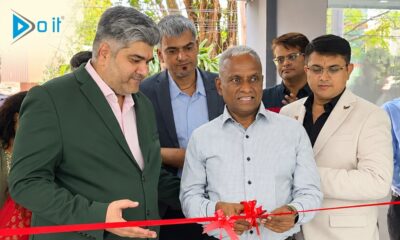
K. Srinivasan Unveils Doit Coimbatore Experience Centre
-

 GlamBuzz17 hours ago
Kalyan Jewellers’ Navratri Celebrations Bring Stars From All Industries To Thrissur
-

 National News16 hours ago
IFSCA Notifies India Good Delivery Gold Framework
-

 National News17 hours ago
World Gold Council Unveils Immersive Gold Experience At Phoenix Palladium, Lower Parel, Mumbai