
JB Insights
Fabrication Demand Drivers for Silver in the Industrial, Jewellery and Silverware Sectors through 2033
Jewellery, silverware demand is projected to rise 34, 30 percent


Industrial, Jewellery and Silver expected to see robust future. Silver industrial demand is forecast to increase 46 percent through 2033,while jewellery and silverware demand is projected to rise 34 and 30 percent respectively, with all three sectors already accounting for nearly three-quarters of the world’s demand for silver in 2022.
The investment sector comes in with a healthy 27 percent of overall silver demand last year, according to a report from Oxford Economics, a London-based economic advisory and consultancy firm. Fabrication Demand Drivers for Silver in the Industrial, Jewellery and Silverware Sectors Through 2033, was commissioned by the Silver Institute to forecast the growth rates of key sectors of global silver manufacturing demand, and to gain insight into how demand will change over the next decade.
As for specific countries, Oxford noted that India will lead the world in jewellery demand over the next ten years but that it may lose some of its silver jewellery dominance to China. India will continue to lead silverware demand but perhaps with a lower market share than it recorded in 2022. “We expect demand from India will contribute 43% of the growth in the demand for silver to be turned into silverware. This is less than their existing share of consumption at 73%,”the report noted.
Just over half of the growth in the global output of the other manufacturing sector between 2023 and 2033 is forecast to occur in China. The United States is forecast to have an 8% share of the additional other manufacturing output. Three countries including India are expected to generate 2% of the additional output.
The report concluded that long-term forecasting for the silver production industry, “should help them decide how best to target growing industries and where to locate their logistics, marketing, and sales efforts. There may however be unforeseen challenges to these forecasts,” the report warned. “This may occur if the different fabricator industries undergo structural change (such as thrifting) or there are unforeseen economic shocks.”







JB Insights
The New Jewellery Shopper: Why Trust Is Becoming The New Retail Currency
As Shoppers Arrive More Informed and Digitally Connected, Jewellery Retailers Are Shifting From Product-Led Selling To Trust-Led Experiences, Where Transparency, Personalisation and Confident Decision-Making Shape The Path To Purchase.

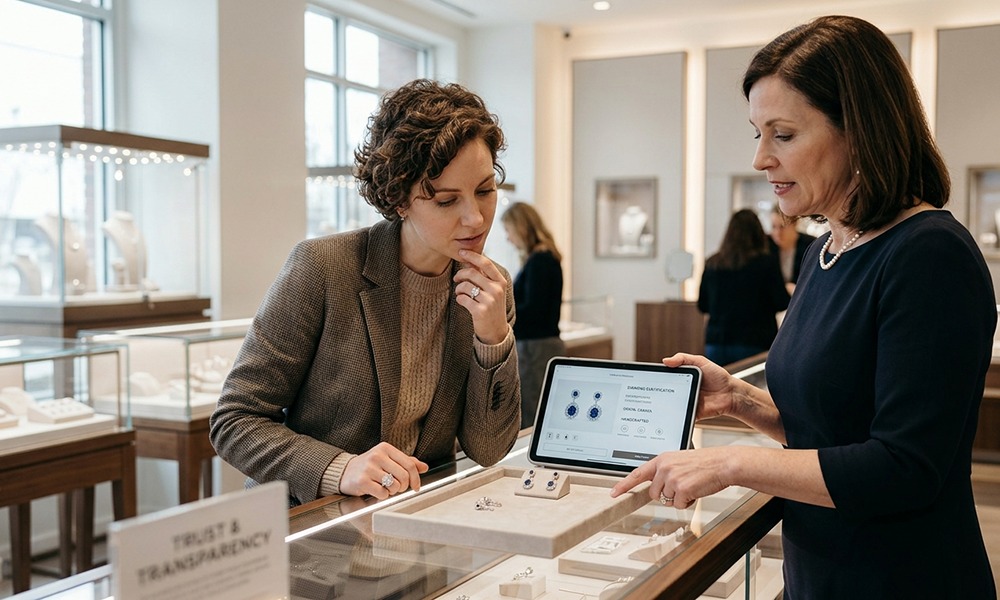
As jewellery consumers become more informed and value-conscious, retailers are discovering that the path from interest to purchase is increasingly shaped by trust, transparency and the quality of the buying experience.
There was a time when a customer walked into a jewellery showroom with a fairly simple expectation: find something beautiful, understand the price and make a purchase.
That equation is changing
The modern jewellery shopper may enter the store only after days or even weeks of digital research. Designs have already been compared, prices explored, brands evaluated and customer reviews considered. By the time the customer meets a salesperson, much of the discovery process may already have taken place online.
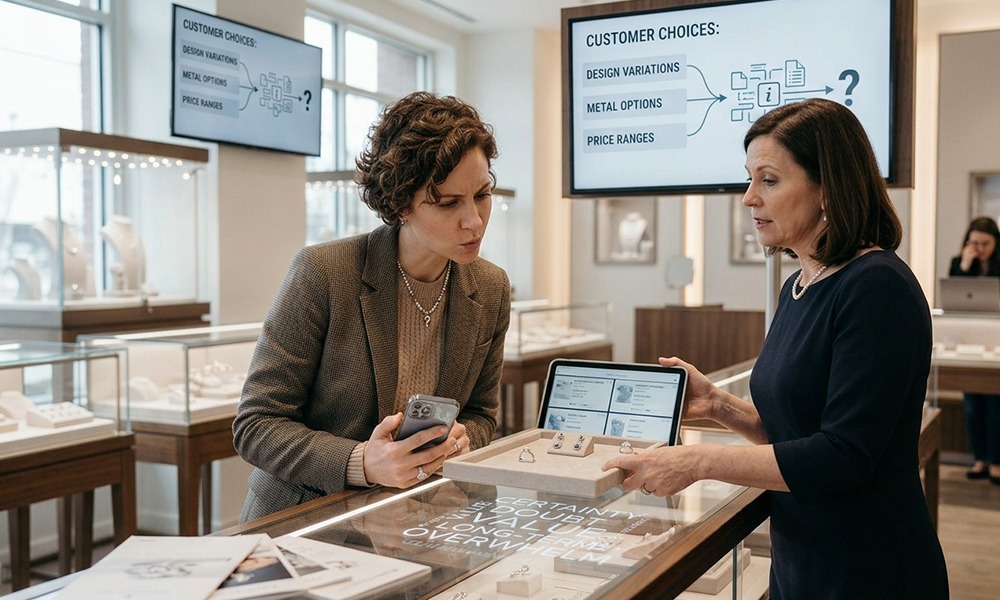
What remains is the more difficult part — making the customer feel certain.
This shift is quietly changing the dynamics of jewellery retail. The competitive advantage is no longer determined only by inventory, location or design assortment. Increasingly, it lies in how effectively a retailer can remove doubt and create confidence during the buying journey.
A Customer Who Arrives Informed
The jewellery customer of today is far more exposed to information than previous generations. Social media, brand websites, digital catalogues and online communities have made it easier to compare designs, materials, prices and brands before making a showroom visit.
But information does not always create certainty.
In fact, having too many choices and too much information can sometimes make the final decision more difficult. A customer may know exactly what they like but still hesitate over whether it represents the right value, the right style or the right long-term choice.
That gap between information and confidence is where the modern jewellery retailer increasingly has to operate.
The Retail Conversation Is Changing
The traditional sales conversation often begins with the product: its weight, design, stones, craftsmanship and price.
The emerging approach begins with the customer.
Why is the jewellery being purchased? Where will it be worn? What style does the customer normally choose? Is versatility important? What level of investment feels comfortable?
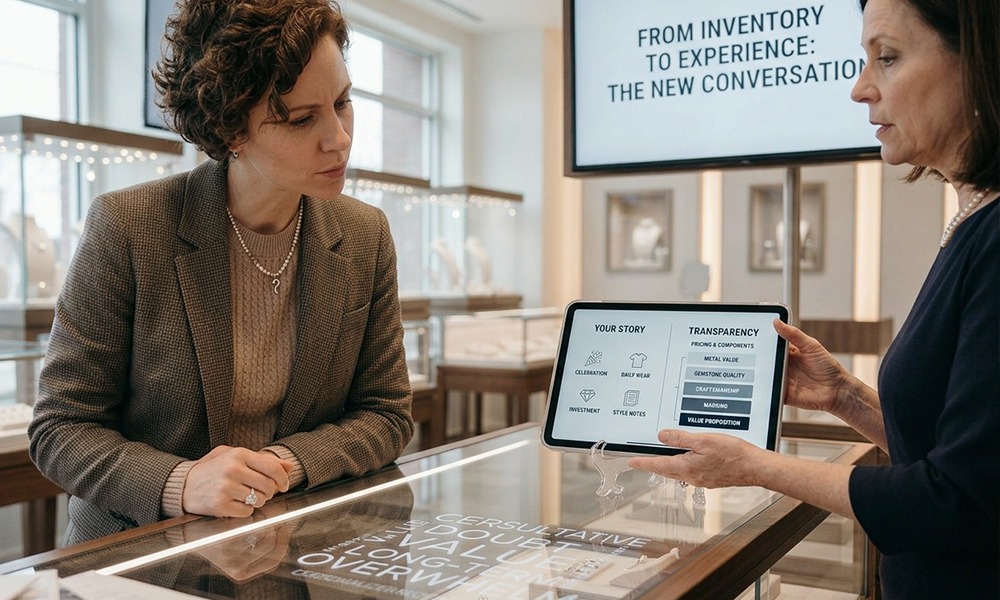
These questions can transform the interaction from a product presentation into a consultative buying experience.
For retailers, this requires sales teams to do more than know their inventory. They need to understand how to listen, curate and recommend.
Trust Has Become Part of the Product
A beautifully designed piece can attract attention, but uncertainty can stop the transaction.
Questions around making charges, gemstone valuation, diamond quality, exchange policies and long-term usability can influence the final decision.
This is why transparency is increasingly becoming a retail differentiator.
When the customer understands the components behind the price and the value attached to the product, the conversation becomes less about defending the price and more about explaining the value proposition.
The Digital Storefront Comes First
For many consumers, the first interaction with a jewellery brand does not happen inside a showroom.
It happens on a smartphone.
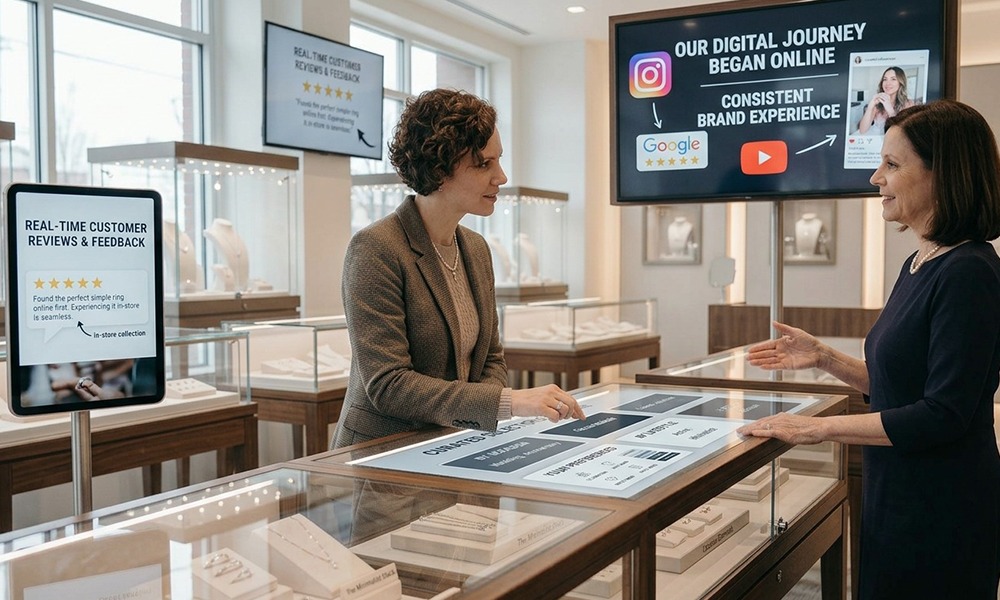
Instagram posts, websites, search results, influencer content, reviews and digital campaigns collectively create the first impression. By the time the customer walks into a store, the brand may already have been evaluated against several competitors.
This makes the digital presence an extension of the physical retail experience.
A retailer that promises premium craftsmanship offline but communicates inconsistently online creates a gap in customer confidence.
More Choice Does Not Always Mean More Conversion
Jewellery retailers have traditionally used extensive collections as a way of demonstrating scale and choice.
Yet an overwhelming assortment can create another problem: decision fatigue.
Curated selections based on occasions, lifestyles, price ranges and design preferences can help customers navigate the assortment more comfortably.
The role of the retailer is therefore gradually shifting from showing everything to showing what matters.
The Conversation Continues After the Customer Leaves
One of the most significant opportunities in jewellery retail may begin after the showroom visit.
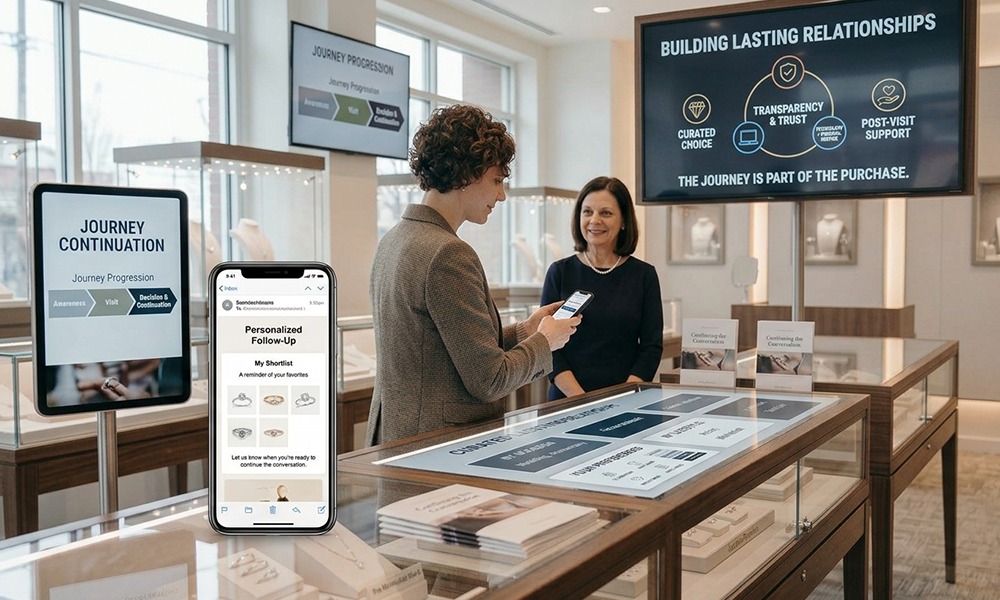
A customer who leaves without purchasing is not necessarily a lost customer. They may still be comparing options, discussing the purchase with family or simply taking time to decide.
A personalised follow-up featuring shortlisted designs, availability information, new arrivals or relevant styling suggestions can keep the conversation alive without turning it into aggressive selling.
The objective is simple: remain relevant while the customer is still making the decision.
Retail’s Next Competitive Advantage
The jewellery industry is entering an environment where customers can access more information than ever before. This makes the role of the retailer more important — not less.
The winning retail experience will increasingly depend on the ability to combine product expertise with transparency, technology with human interaction, and choice with curation.
Jewellery will always be emotional. But the journey towards owning it is becoming increasingly rational. In that journey, trust may become one of the most valuable assets a jewellery retailer can build.



-

 JB Insights18 hours ago
The New Jewellery Shopper: Why Trust Is Becoming The New Retail Currency
-

 DiamondBuzz16 hours ago
Botswana Says Stable Relationship With De Beers Vital to Diamond Recovery
-

 National News17 hours ago
GJEPC Hosts UK Trade Interaction In Kolkata To Boost Exports
-

 International News17 hours ago
JA Lobbies For Exemptions As US Threatens 100% Tariffs
