By Invitation
Artificial Intelligence and Design Thinking
The Future of Innovation

How is AI & Design Thinking related?
The concept of design thinking has been floating around for some time, but recent advances in artificial intelligence (AI) have made it possible to apply this concept in the design process.
Designers are using AI for many different purposes, which include generating design ideas, creating prototypes, and testing them before they are manufactured. Designers are also using AI for various purposes of conceptualisation.
Moreover, designers can use AI as an additional tool for making decisions about what should be created and how it should be created. Designers can use AI to test different design concepts or simulate them with virtual reality technology before they are built. This is why combining AI and design thinking is trending right now.
Is AI a foolproof tool for design?
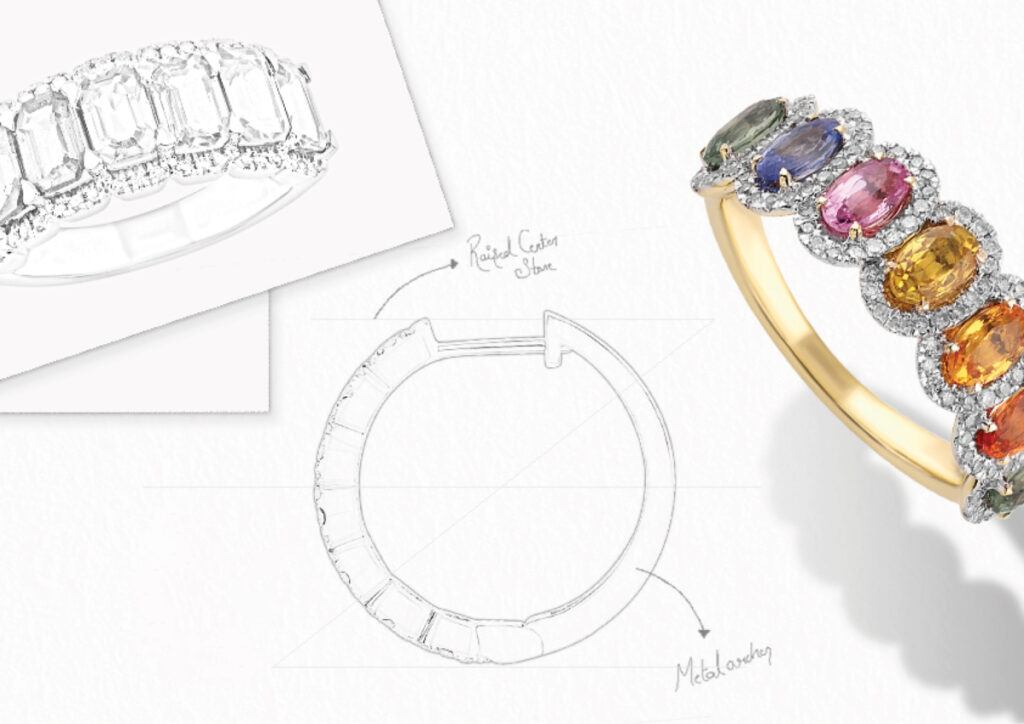
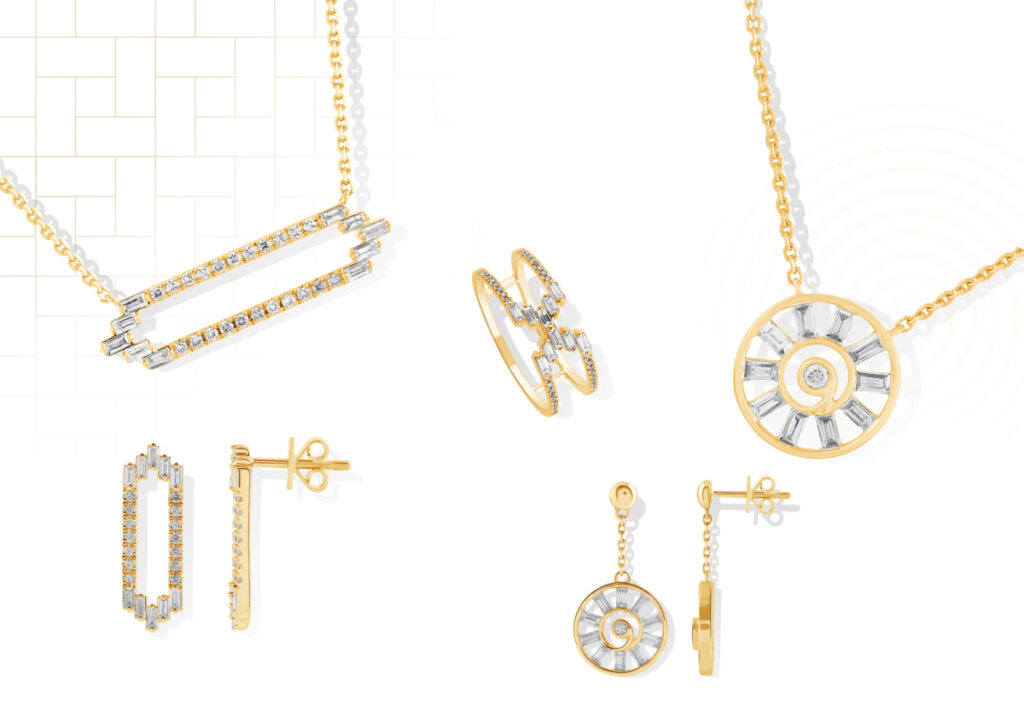
AI though is still at the exploration phase when it comes to our industry as compared to other industries but eventually, I see that it is there to stay, lets designers create designs faster and more cheaply due to the increased speed and efficiency it provides, but still it’s not a quick fix solution to design, but just another tool for better conceptualisation. Thepower of AI will be at the rate with which it can analyse massive amounts of data and recommend design changes. Based on that data, a designer can then cherry-pick and approve changes.
As mentioned above, design thinking is about providing a good experience for consumers. And the ones in the best positions to keep humans in mind are the human designers, after all.
Does AI help co-create better?
AI certainly helps co-create better, if it provides realistic visuals for better visualisation. Asian Star is on a journey to be known for design. It’s a combination of talent, hard work, proactiveness and networking. We are putting continuous effort with a commitment to this vision. With many exciting Projects in pipeline, staying updated with industry trends, software tools, and design techniques. We are constantly putting efforts and thinking outside the box, coming up with innovative ideas. Looking at many co-creation possibilities to find unique solutions to design challenges, and AI certainly is of a great help.
The design world has been significantly influenced by technological advancements. AI and machine learning are increasingly integrated into design processes. More AI-driven tools are being used for tasks like generating design variations, automating repetitive tasks, and even predicting design trends.
Generative design software is gaining popularity, enabling designers to input design parameters and have algorithms generate numerous design options based on those parameters. This is particularly useful in field of design.
Given the rapid pace of technological innovation, it’s crucial for designers to stay up to date with the latest advancements, tools, and trends in technology. Embracing these changes can enhance the efficiency and creativity of design processes and lead to more innovative and user-centric design solutions.
How to you encourage and cultivate a culture of innovation?
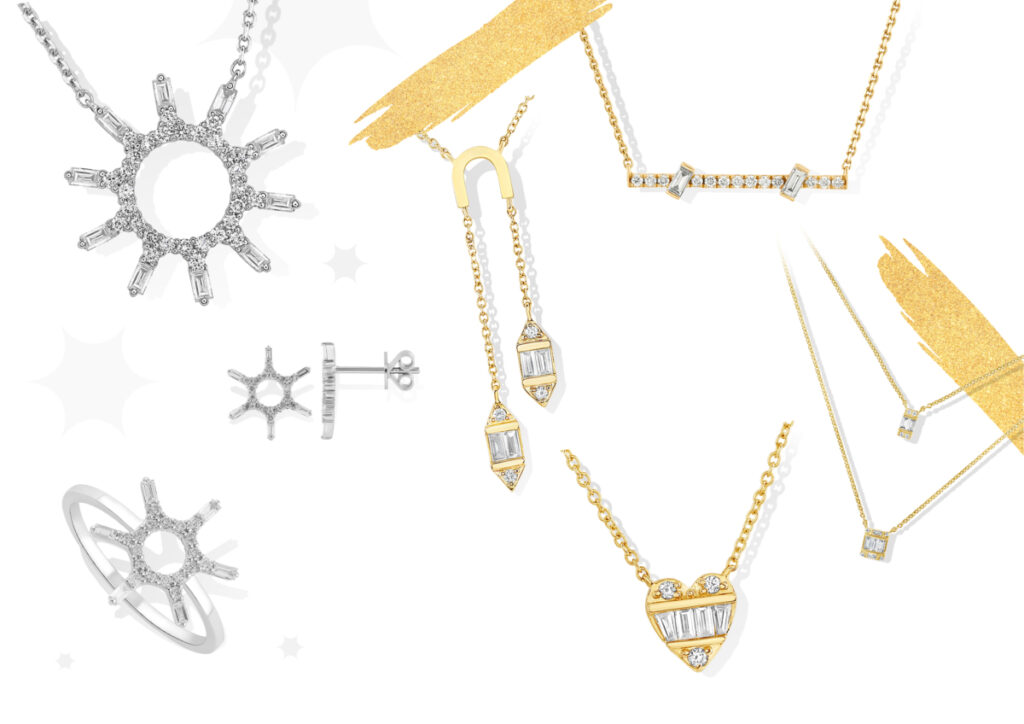
We make sure that our design and technical teams collaborate to foster a culture of innovation. We need to recognize and reward those who offer innovative and creative ideas for more successful growth of your business. While AI is an excellent tool for creating customer-centric designs, it can never replace the ongoing design development work that humans do. If we are truly prioritizing a human approach to design, it makes far more sense to have real humans working on design projects. AI, after all, is an added support tool for design innovation and creation.






By Invitation
From Prompt To Pendant: How AI Is Turning Jewellery Buyers Into Designers
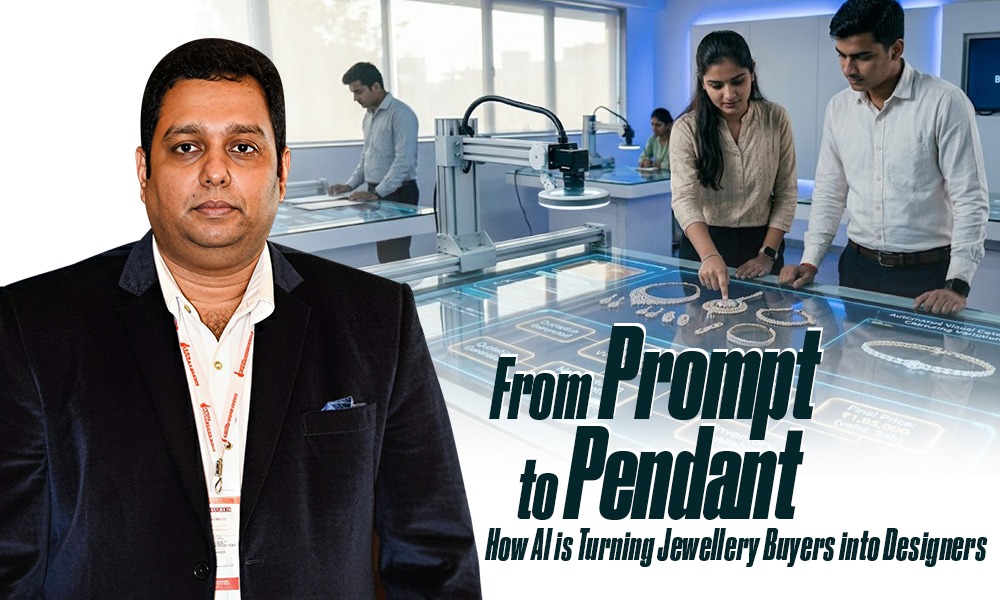
By Dr Sandip P. Dhurat

Not long ago, jewellery design was largely a one-way conversation. Consumers browsed catalogues, visited stores, or selected pieces from showcases. If they wanted something custom-made, they relied on the jeweller’s sketches, imagination, and expertise.
Today, a new collaborator has entered the room: Artificial Intelligence.
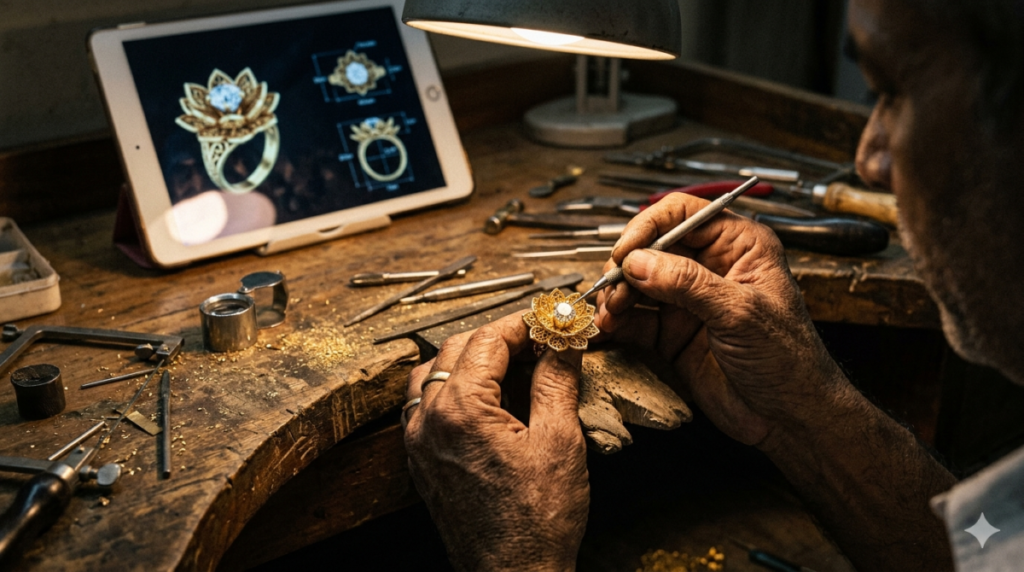
Across age groups, consumers are experimenting with AI-powered image generators and design applications to create jewellery concepts that reflect their personal tastes. A few words typed into a prompt—”an emerald engagement ring inspired by lotus petals” or “a contemporary mangalsutra with geometric motifs”—can generate multiple design possibilities within seconds.
What happens next is perhaps the most interesting part of the story.Instead of ordering these pieces online, many consumers are taking their AI-generated designs to the one person they trust most: their family jeweller.
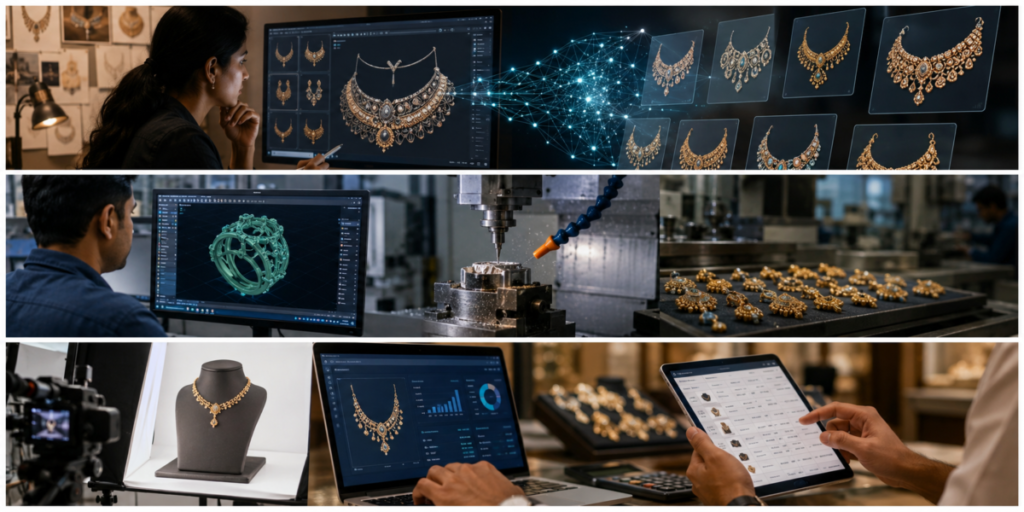
The new wave of customisation
For decades, customization in jewellery was often limited to engraving names, changing gemstones, or making minor design alterations. AI is expanding that possibility dramatically.
Consumers are no longer arriving at jewellery stores with vague ideas. They are walking in with detailed visual references generated on their smartphones. Some have experimented with dozens of versions before settling on a favourite. Others blend elements from different designs to create something entirely unique.
In a sense, AI is democratizing the design process. It allows consumers to participate creatively, even if they have no formal design background.
For younger buyers especially, this level of involvement is appealing. They want jewellery that feels personal, expressive, and different from what everyone else is wearing. AI gives them a playground where they can explore possibilities before making a purchase.
Role of traditional family jeweller
If AI can generate designs so easily, does that diminish the role of the jeweller?Quite the opposite.
While AI can create attractive images, it cannot determine whether a design is structurally sound, comfortable to wear, practical to manufacture, or durable enough for daily use. A ring that looks spectacular on a screen may be impossible to cast. A delicate bracelet generated by AI may not withstand regular wear.
This is where the expertise of the jeweller becomes invaluable.
Family jewellers are increasingly acting as interpreters between digital imagination and physical reality. They assess AI-generated concepts, refine proportions, suggest technical modifications, and ensure that the final piece balances aesthetics with craftsmanship.
Many jewellers describe the process as similar to working with a client-provided sketch—except the sketch is now more sophisticated and visually detailed.
The trust factor remains unchanged. Consumers may discover designs through AI, but they still want someone they know to guide the process and stand behind the finished product.
New collaboration trend
The relationship between customer and jeweller is evolving from buyer-and-seller to co-creators.
Consider a young couple designing an engagement ring. Instead of selecting from existing collections, they use AI to explore various combinations of settings, gemstones, and motifs. They then sit down with their jeweller to discuss feasibility, budget, stone availability, and craftsmanship.
The final piece is neither entirely AI-designed nor solely jeweller-designed. It is the outcome of a collaborative journey.
This shift creates opportunities for jewellers to engage customers more deeply. Conversations become richer because customers arrive with visual ideas rather than abstract descriptions.
In many cases, the design process becomes part of the emotional value of the jewellery itself.
The opportunity
The trend presents several advantages for jewellers willing to embrace it.
First, AI-generated concepts can serve as conversation starters. Instead of spending significant time understanding a customer’s vision from scratch, jewellers can begin with a visual reference and refine it together.
Second, it can increase demand for bespoke jewellery. Consumers who might never have considered custom design are discovering how accessible it has become.
Third, it opens the door to a new generation of buyers who value individuality over mass-produced designs.
Rather than competing with AI, jewellers can position themselves as the experts who transform digital concepts into heirloom-worthy creations.
Despite all the excitement around AI, jewellery remains an intensely human product.
A necklace gifted on a wedding day, a ring marking an engagement, or a bracelet passed down through generations carries emotions that no algorithm can replicate. AI may help generate ideas, but it cannot understand family traditions, cultural significance, sentimental stories, or the subtle nuances of personal taste.
Consumers are discovering designs through technology, but they are still seeking reassurance, expertise, and craftsmanship from people they trust.
Perhaps that is the real story behind this trend.
AI is not replacing the jeweller. It is empowering consumers to participate in the creative process while making the jeweller’s role even more valuable. The screen may provide the inspiration, but it is the skilled hand of the jeweller that transforms a digital concept into a treasured piece of jewellery.
In the years ahead, the most successful jewellers may not be those who resist AI, but those who embrace it as another tool in the ongoing art of personalization—where technology sparks the idea, and craftsmanship gives it life.

-

 International News1 hour ago
De Beers Assumes 100% Control Of Gahcho Kué Diamond Mine
-

 National News50 minutes ago
Keemti Jewels Unveils Second Lagship Store In Mumbai At Borivali-West
-

 New Premises4 hours ago
Malabar Gold & Diamonds Opens Its Second-Biggest Showroom In Goa
-
 National News1 hour ago
Tanvi Exports Files DRHP For Proposed IPO