
DiamondBuzz
De Beers Unveils A Diamond Is Forever: The Making of a Cultural Icon 1926–2026
How Four Words Changed the World of Luxury Advertising

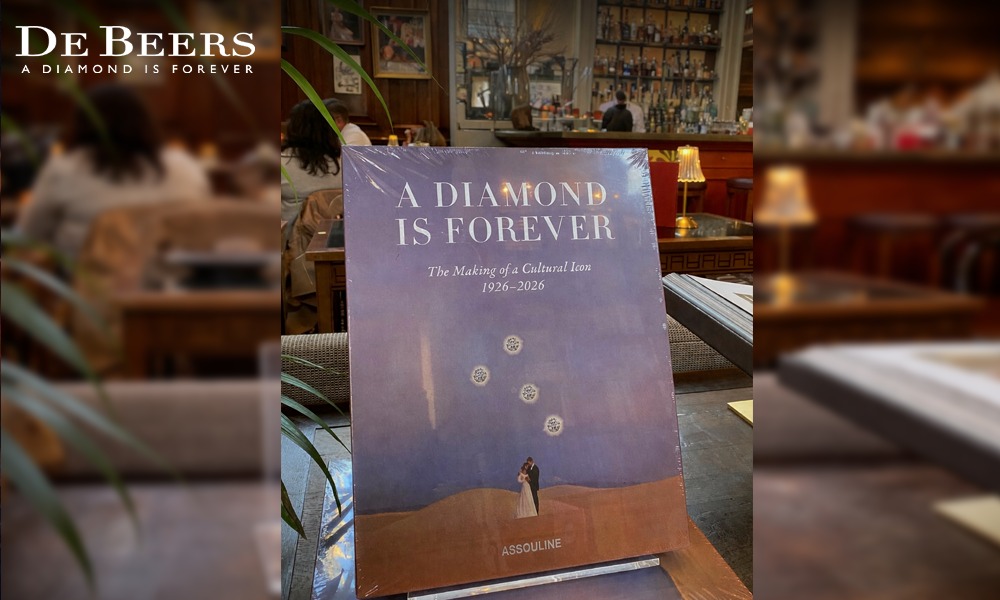
De Beers Group, a global leader in the natural diamond industry with a legacy spanning over a century, is launching A Diamond Is Forever: The Making of a Cultural Icon 1926–2026, a visual retrospective celebrating its pioneering role in shaping the world of natural diamonds. The book traces how, beginning in the 1930s, the brand reimagined natural diamonds from discreet treasures of the elite into aspirational symbols of love, commitment, and personal achievement, cementing their place as enduring masterpieces of nature and craftsmanship.
Drawing on rare archival material, the book explores how De Beers revealed the wonder of diamonds to a wider audience, shaping modern luxury marketing from the Great Depression to today’s era of conscious luxury. At the heart of the book is one of advertising’s most celebrated moments. In 1947, copywriter Frances Gerety of N. W. Ayer captured the gemstone’s essence with four words that would forever reshape the industry: “A Diamond Is Forever.” The declaration enshrined the diamond as a promise of love and endurance, an emotional sentiment resonating far beyond the notion of a simple gift. In 1999, it was named the greatest advertising slogan of the twentieth century by Advertising Age.
Beyond aesthetics, A Diamond Is Forever explores how these campaigns shaped social rituals and behaviour over time. The rise of engagement rings in the late 1930s and strategies like the “Two Months’ Salary” guideline highlight how marketing can redefine tradition. Campaigns such as the “Right Hand Ring” also reflected evolving ideas of female independence. In India, the influence of such campaigns and marketing narratives has been equally significant, shaping consumer perceptions and aspirations around diamonds. By positioning natural diamonds as powerful symbols of love, success and personal milestones, these strategies resonated strongly with Indian audiences, encouraging a shift from traditional gold-centric purchases to viewing diamonds as meaningful, emotionally driven choices for their loved ones.
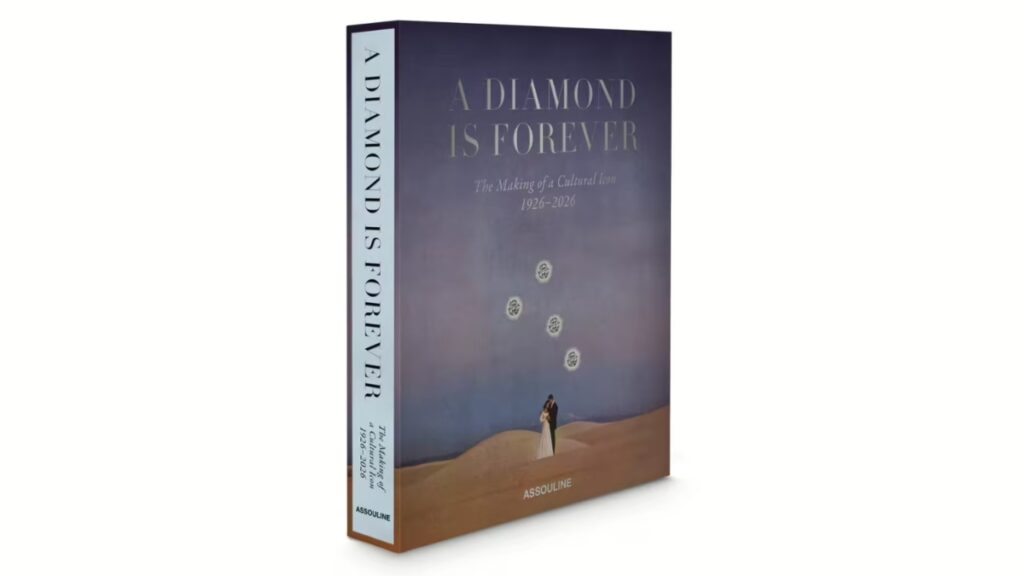
The book also highlights how De Beers fused the billion-year rarity of natural diamonds with fine art and pop culture. Works by Pablo Picasso, Salvador Dalí, and Raoul Dufy enhanced their allure, while icons like Marilyn Monroe and Elizabeth Taylor defined their glamour. Later, the 1990s “Shadows” campaign, set to Karl Jenkins’ Palladio, reinforced the diamond as timeless and unique.
In recent years, the conversation around diamonds has evolved to include provenance, sustainability and ethical stewardship, reinforcing the natural diamond’s position not only as a symbol of enduring love but also of responsibility and conscience. Much like a gallery tracing the evolution of artistic expression, A Diamond Is Forever offers rare insight into one of the most influential brand stories in history, revealing how diamonds have come to reflect the shifting ideals and aspirations of society.


DiamondBuzz
Divine Solitaires Named ‘Best Diamond Jewellery Brand’ At JewelZ South India 2026
The Recognition Acknowledges The Brand’s Approach To Quality Assurance, Standardised Pricing and Transparency In The Natural Diamond Solitaire Category.
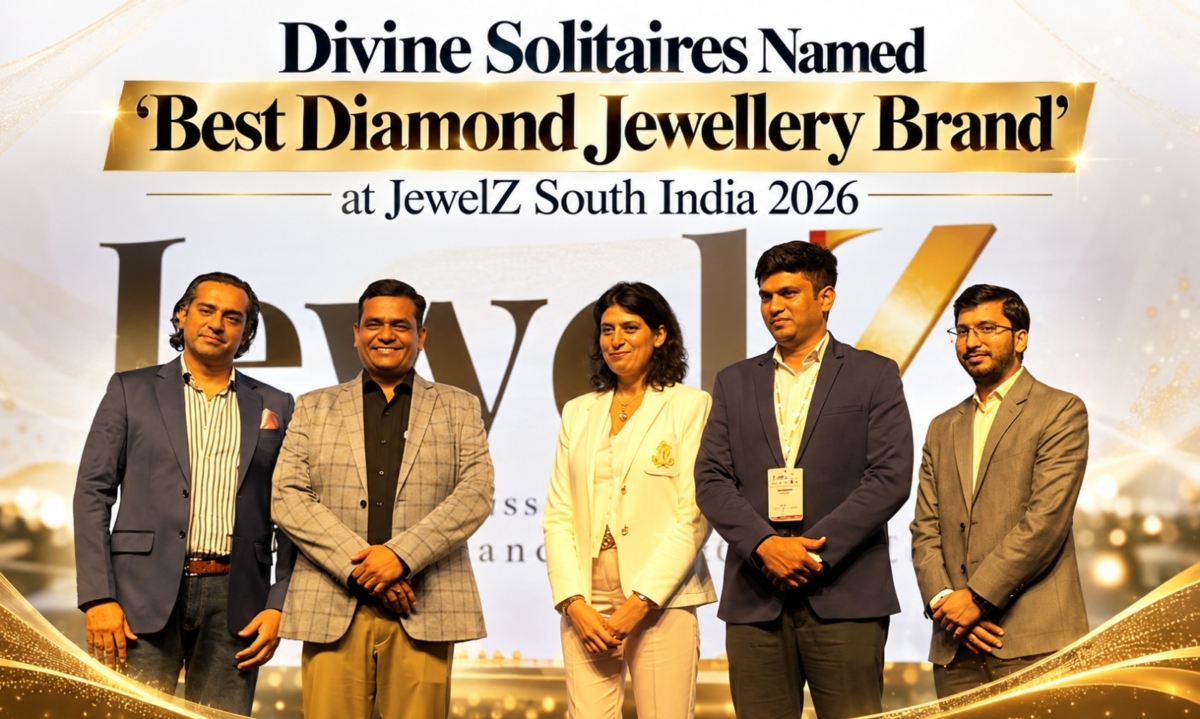
Hyderabad, 25 September 2026: Divine Solitaires, India’s natural diamond solitaire brand, has been honoured with the ‘Best Diamond Jewellery Brand’ award at JewelZ South India 2026, recognising its efforts to bring greater consistency, transparency and quality assurance to the natural diamond solitaire buying experience. The award was presented on 22 September at Novotel, HICC, Hyderabad.
The recognition comes as the natural diamond solitaire category evolves, with consumers increasingly seeking greater clarity around certification, quality and pricing when making high-value jewellery purchases. Divine Solitaires has built its proposition around addressing these expectations through its 123-parameter Quality Guarantee and Nationwide Standard & Transparent Pricing, which are applied uniformly across its retail network.
With a presence through 200+ partner jewellers across 100+ cities in India, the brand offers a portfolio of 3,000+ designs, alongside consumer-focused initiatives and long-term value programmes, including buyback and upgrade options.
Commenting on the recognition, Jignesh Mehta, Founder and Managing Director, Divine Solitaires, said:

“The way consumers buy diamonds is evolving. A solitaire is a significant purchase, and today’s buyer wants greater clarity on what they are buying, how quality is evaluated and how the price is determined. At Divine Solitaires, our endeavour has been to bring greater structure and consistency to this journey through clearly defined quality parameters and transparent pricing. This recognition at JewelZ South India is encouraging because it reflects the industry’s growing focus on building trust through greater accountability and standardisation.”
Adding to the brand’s presence at the event, Jignesh Mehta participated in the panel discussion “How the Jewellery Moguls are Crafting the New Jewellery Era”, moderated by Ritu Marya, Editor-in-Chief, Retailer Media. The session brought together senior industry leaders to discuss evolving consumer expectations, trust-building and changing retail models.
Mehta’s participation focused on the evolving natural diamond solitaire category, particularly the importance of consistent quality assurance, transparency and standardisation in building consumer confidence around high-value jewellery purchases.
The recognition reinforces Divine Solitaires’ focus on creating a more structured and transparent solitaire-buying ecosystem, as the category continues to evolve alongside changing consumer expectations.


-
 ShowBuzz20 minutes ago
SSI 2026 SETS A BIGGER STAGE FOR SILVER
-

 ShowBuzz5 hours ago
Silver Show Of India- Delhi 3rd Edition Unveiled At Yashobhoomi, Delhi
-

 ShowBuzz4 hours ago
Silver Trends To Watch At SSI Delhi 2026
-

 ShowBuzz8 hours ago
GJIIF 2026 Sets New Benchmarks As India’s Biggest-Ever Jewellery Trade Show Opens In Chennai
