International News
China’s Diamond Market Undergoes Dramatic Recalibration


Once a powerhouse of global luxury demand, China’s diamond market is experiencing a profound transformation, reflecting both changing consumer values and evolving economic realities. Liang Weizhang, CEO of HubWis Jewellery Strategic Creations (Guangzhou) Co., Ltd., provides an in-depth analysis of the latest trends, underlying drivers, and strategic imperatives for the industry.
According to the Gems & Jewelry Trade Association of China, the diamond market shrank from RMB 100 billion in 2021 to RMB 43 billion in 2024-a 57% drop-while diamonds’ share of the overall jewelry market fell from 14% to 6%. This contraction stands in stark contrast to the sector’s previous rapid expansion, but signals not just a downturn, but a realignment of consumer priorities and market structures.
While diamond demand has cooled, gold jewelry has surged, increasing its market share from 58% to 73% between 2021 and 2024. Other segments, such as jade and pearls, have seen volatility. Despite these shifts, the total Chinese jewelry market remains resilient, growing from RMB 720.5 billion in 2021 to RMB 820 billion in 2023, before a modest dip to RMB 778.8 billion in 2024. This underscores a rebalancing across categories rather than a wholesale decline in jewelry demand.
Customs data reveal a 73% drop in the volume of gem-quality diamond imports between 2021 and 2024, with import values plummeting 83%. Even as the volume of imports fell only 4% year-on-year in 2024, the value declined 40%, indicating significant downward pressure on prices and a shift toward more affordable, differentiated products.

Millennials and Gen Z are redefining luxury, prioritizing individuality, ethical sourcing, and value. For many, diamonds are now one of many ways to express personal identity rather than the ultimate status symbol. The rapid rise of laboratory-grown diamonds-offering sustainability and affordability-has further diversified the market, challenging the dominance of natural stones.
China’s moderated GDP growth and declining marriage rates have dampened demand for traditional diamond jewelry, particularly engagement rings. Consumers are increasingly drawn to gold, which offers both adornment and investment value, while diamond brands must work harder to connect emotionally and symbolically with buyers.
Industry leaders caution against viewing the contraction as permanent. Instead, they advocate for differentiated offerings, stronger storytelling, and digital engagement. Regional diversity within China presents growth opportunities, especially in emerging cities with distinct consumer profiles. Early signs of stabilization-such as increased activity at the Hong Kong Jewellery Show-offer cautious optimism for a gradual recovery.







International News
US Holiday Shopping Expected To Top $1 Trillion For The First Time: NRF
While Overall Buying Power Remains High, Ongoing Inflation and Rising Household Costs Mean Some Families Will Have To Watch Their Spending More Carefully Than Others

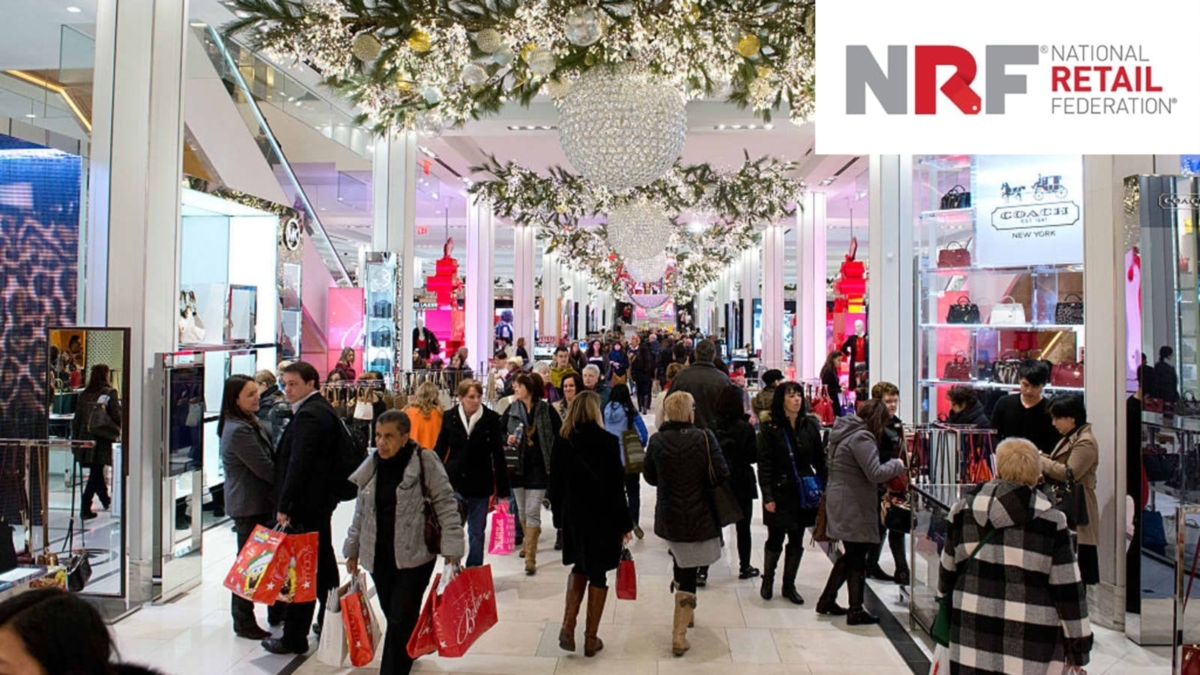
The National Retail Federation (NRF) predicts Americans will spend $1.01 trillion on holiday shopping in November and December. That is a 4.2% jump from $972 billion last year.
NRF said its forecast was based on economic modeling that incorporates consumer spending, employment, wages and historical retail sales data. It excludes automobile, gasoline and restaurant sales
Extra Hiring: To handle the surge in shoppers, stores plan to hire 325,000 to 375,000 temporary holiday workers.
Mixed Budget Impact: Higher gas prices and inflation could still strain some family budgets, affecting low- and high-income shoppers differently.
Retailers expect a strong shopping season because people continue to make holiday spending a priority.
Store owners are ready to attract shoppers by offering competitive prices, deals, and choices for every budget.
While overall buying power remains high, ongoing inflation and rising household costs mean some families will have to watch their spending more carefully than others.


Belgian Consul General H. E. Mr. Pierre Stverlynck Graces BDB Annual Day

Limelight Lab Grown Diamonds Crosses 100 Stores Milestone This Dussehra: Targets 200 In 2027

Joyalukkas Opens Its 2nd Bengaluru Showroom in Jayanagar

US Holiday Shopping Expected To Top $1 Trillion For The First Time: NRF
Belgian Consul General H. E. Mr. Pierre Stverlynck Graces BDB Annual Day
Limelight Lab Grown Diamonds Crosses 100 Stores Milestone This Dussehra: Targets 200 In 2027
-
 International News2 days ago
US Holiday Shopping Expected To Top $1 Trillion For The First Time: NRF
-
 National News2 days ago
Belgian Consul General H. E. Mr. Pierre Stverlynck Graces BDB Annual Day
-
 National News2 days ago
Limelight Lab Grown Diamonds Crosses 100 Stores Milestone This Dussehra: Targets 200 In 2027
-
 New Premises2 days ago
Joyalukkas Opens Its 2nd Bengaluru Showroom in Jayanagar