
International News
India tries to halt Sotheby’s auction of Piprahwa gems found with Buddha’s remains

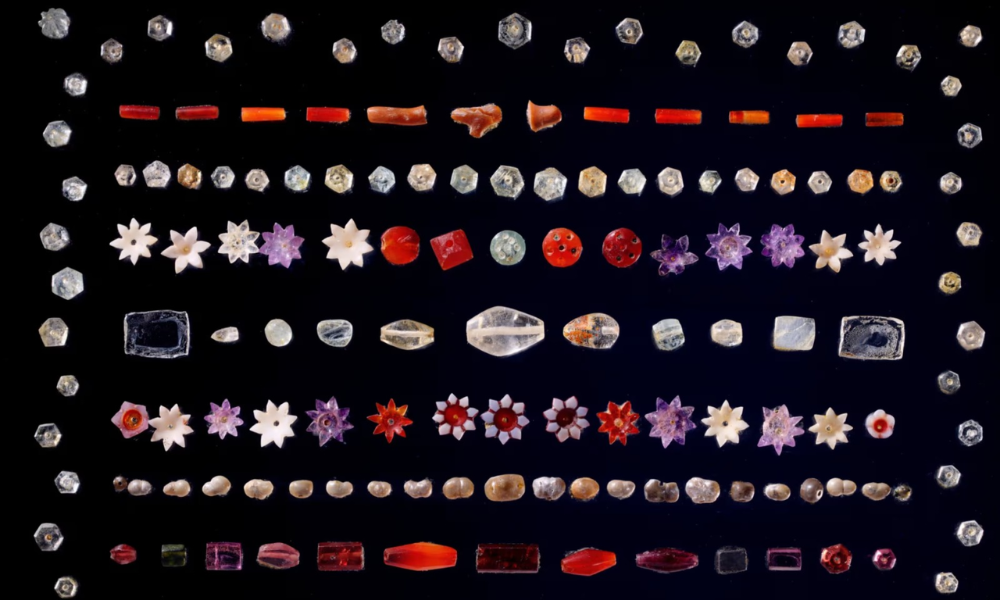
The Indian government has issued a legal notice to halt the “unethical” auction by Sothebys of ancient gem relics, which it said should be treated as the sacred body of the Buddha.The auction, which has prompted an outcry from scholars and monastic leaders, is scheduled for 7 May, and the gems are expected to sell for about HK$100m (£9.7m).
Its ministry of culture said the auction of the Piprahwa gems in Hong Kong this week “violates Indian and international laws, as well as United Nations conventions”, and demanded their repatriation to India “for preservation and religious veneration”.
The legal notice has been served on Sotheby’s Hong Kong and Chris Peppé, one of three heirs of William Claxton Peppé, a British colonial landowner who in 1898 excavated the gems on his estate in northern India, who are selling the relics.
Unearthed in 1898 by British estate manager and engineer William Claxton Peppé, the relics were discovered inside a sandstone coffer within the Piprahwa stupa, widely believed to be the ancient city of Kapilavastu, the Buddha’s childhood home. Among the contents were five reliquaries, including one of rock crystal with a fish-form handle, containing nearly 1,800 gemstones, precious metal sheets, bone, and ash.
An inscription in late Mauryan Brahmi script—deciphered by scholars Vincent Smith and later Harry Falk—affirmed the relics belonged to the Shakya clan and held the corporeal remains of the Historical Buddha. This epigraphic evidence, combined with early Pali texts like the Mahāparinibbāna-sutta, makes Piprahwa the only authenticated site of Buddha’s relics confirmed through inscription.
Following the discovery, a portion of the relics was presented to King Rama V of Siam (Thailand), and enshrined at Wat Saket in Bangkok, Shwedagon Pagoda in Yangon, and in Sri Lanka. The Indian Museum in Kolkata holds the majority of the gemstones, but the Peppé family retained a portion—approximately one-fifth—which is now coming to market.







International News
US Holiday Shopping Expected To Top $1 Trillion For The First Time: NRF
While Overall Buying Power Remains High, Ongoing Inflation and Rising Household Costs Mean Some Families Will Have To Watch Their Spending More Carefully Than Others

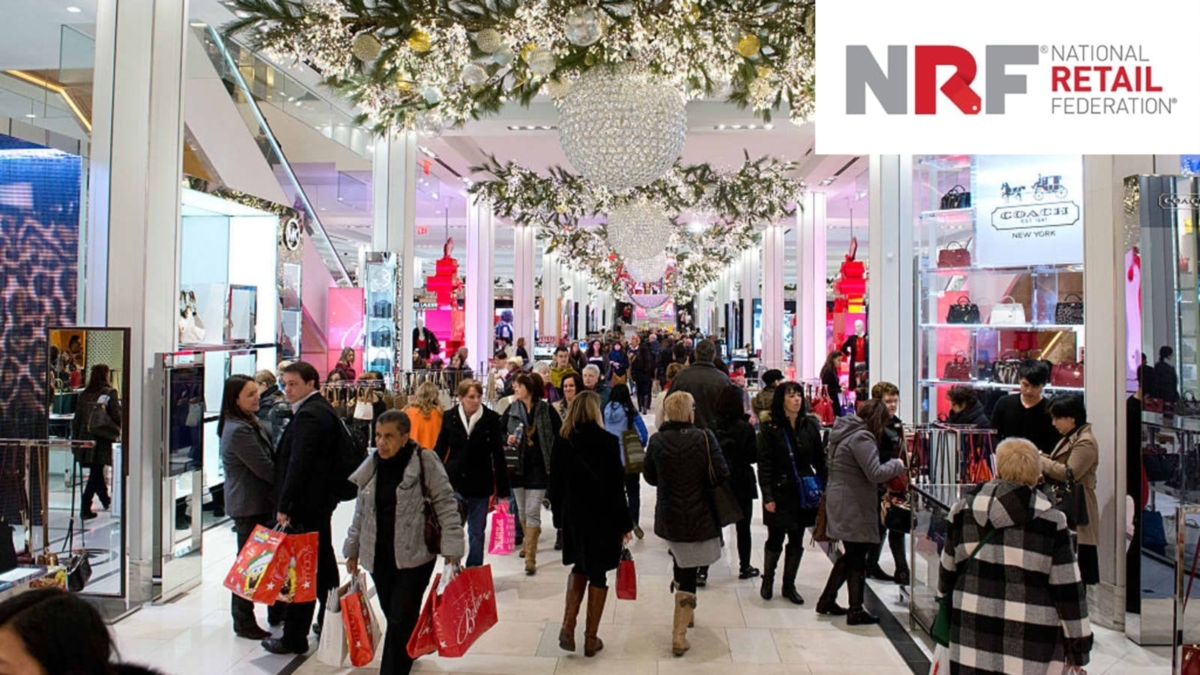
The National Retail Federation (NRF) predicts Americans will spend $1.01 trillion on holiday shopping in November and December. That is a 4.2% jump from $972 billion last year.
NRF said its forecast was based on economic modeling that incorporates consumer spending, employment, wages and historical retail sales data. It excludes automobile, gasoline and restaurant sales
Extra Hiring: To handle the surge in shoppers, stores plan to hire 325,000 to 375,000 temporary holiday workers.
Mixed Budget Impact: Higher gas prices and inflation could still strain some family budgets, affecting low- and high-income shoppers differently.
Retailers expect a strong shopping season because people continue to make holiday spending a priority.
Store owners are ready to attract shoppers by offering competitive prices, deals, and choices for every budget.
While overall buying power remains high, ongoing inflation and rising household costs mean some families will have to watch their spending more carefully than others.



Belgian Consul General H. E. Mr. Pierre Stverlynck Graces BDB Annual Day

Limelight Lab Grown Diamonds Crosses 100 Stores Milestone This Dussehra: Targets 200 In 2027

Joyalukkas Opens Its 2nd Bengaluru Showroom in Jayanagar

US Holiday Shopping Expected To Top $1 Trillion For The First Time: NRF
Belgian Consul General H. E. Mr. Pierre Stverlynck Graces BDB Annual Day
Limelight Lab Grown Diamonds Crosses 100 Stores Milestone This Dussehra: Targets 200 In 2027
-
 International News2 days ago
US Holiday Shopping Expected To Top $1 Trillion For The First Time: NRF
-
 National News2 days ago
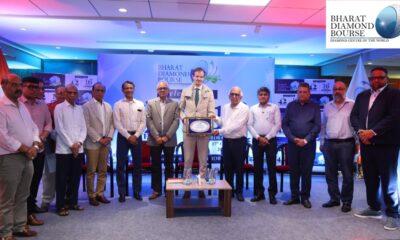
Belgian Consul General H. E. Mr. Pierre Stverlynck Graces BDB Annual Day
-
 National News2 days ago
Limelight Lab Grown Diamonds Crosses 100 Stores Milestone This Dussehra: Targets 200 In 2027
-
 New Premises2 days ago
Joyalukkas Opens Its 2nd Bengaluru Showroom in Jayanagar
