
DiamondBuzz
Building The Next Era Of Trust In Natural Diamonds
By Kirti Bhansali
Chairman, GJEPC

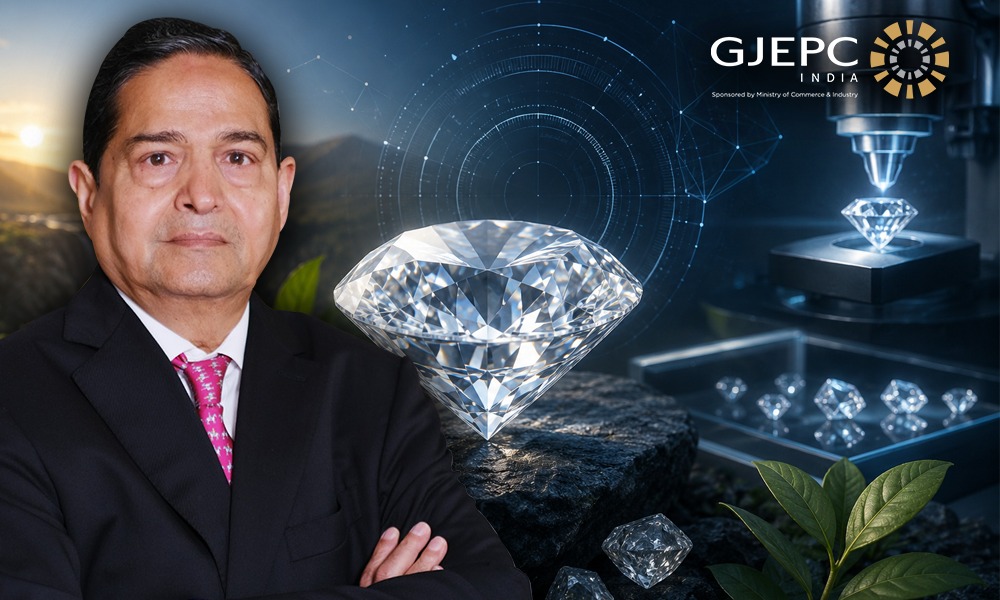
The global diamond industry is entering a phase where credibility will matter as much as competence.
For decades, the industry’s strength rested on rarity, emotion and aspiration. Today, it must also stand firmly on transparency, compliance and trust. Consumers are asking more questions about provenance, ethical sourcing and accountability than ever before. Governments are strengthening oversight. Markets are becoming more interconnected and more demanding simultaneously.
In such an environment, the Kimberley Process remains one of the most important pillars supporting confidence in natural diamonds.
The KP was created at a time when the industry faced serious reputational challenges linked to conflict diamonds. Through cooperation between governments, industry and civil society, it established a global certification framework that helped prevent the flow of conflict diamonds into legitimate trade channels. More importantly, it restored confidence in the integrity of the diamond pipeline at a critical moment for the industry.
India has always held a unique position within that framework.
As the world’s largest cutting and polishing centre, India processes more than 90% of the world’s natural diamonds. Millions of livelihoods across manufacturing, trading, jewellery production and exports are connected directly or indirectly to this industry. India is therefore not merely a participant in the global diamond pipeline; it is central to its continuity and stability.
India’s role within the Kimberley Process has also evolved over time. From participating actively in early discussions to chairing the KP in 2008 and 2019, India has consistently advocated for balanced, practical and inclusive solutions that protect both the integrity of the system and the interests of producing and manufacturing nations alike.
As the apex body representing India’s gem and jewellery industry, the Gem & Jewellery Export Promotion Council (GJEPC) has played an active role in supporting India’s engagement with the Kimberley Process through policy coordination, industry representation and sustained dialogue with global stakeholders.
As India hosts the 2026 Kimberley Process Intersessional Meeting in Mumbai, the discussions are naturally expanding beyond the original concerns that shaped the KP’s formation.
The industry must now respond to broader expectations around responsible sourcing frameworks and consumer assurance. At the same time, the industry must ensure that compliance systems remain practical and globally inclusive. The strength of the Kimberley Process lies in the fact that it brings together countries and stakeholders with vastly different economic realities and operational structures. Any future evolution of the system must preserve that balance.
India’s perspective on this issue is shaped by experience.
Our industry has built its leadership not merely through scale, but through resilience, adaptability and entrepreneurship. Indian manufacturers transformed categories of diamonds once considered commercially unviable into a globally competitive industry. Over the decades, India also invested heavily in technology, skill development and infrastructure, enabling the country to remain globally relevant even as market conditions evolved.
Today, that same spirit of adaptation is required again.
The natural diamond industry must continue reinforcing its value proposition in a world where consumer choices are expanding rapidly. Confidence in natural diamonds cannot depend solely on legacy or sentiment. It must be strengthened through transparency, responsible business practices and credible compliance mechanisms.
This is why the theme of Confidence, Compliance and Credibility is particularly relevant for the KP in 2026.
Confidence sustains consumer demand. Compliance protects the integrity of the trade. Credibility ensures long-term trust in the system itself.
These three elements are interconnected and mutually reinforcing.
India also recognises that the future of the diamond industry will depend increasingly on collaboration across the entire pipeline. Producing countries, manufacturers, traders, retailers and industry bodies must work together to strengthen systems that reassure consumers while also supporting economic opportunity and sustainable livelihoods.
The diamond industry has always demonstrated an extraordinary ability to adapt to change. From shifts in mining supply and manufacturing technologies to evolving retail formats and consumer expectations, it has repeatedly reinvented itself while preserving the emotional and cultural significance of natural diamonds.
The Kimberley Process represents one of the industry’s most important collective achievements. Its continued relevance will depend not only on regulation, but also on the willingness of all stakeholders to evolve responsibly together.
India remains committed to contributing constructively to that process and to helping shape a future where trust in natural diamonds remains strong, enduring and globally respected.


DiamondBuzz
Botswana Looks Beyond Rough Diamond Sales, Eyes U.S. Jewelry Market
The Duty Exemption By US Presents An Opportunity For Domestic Jewelry Manufacturers In Gaborone To Bypass Traditional Middle-Market Hubs and Establish A Direct Pipeline To American Consumers

Grappling with a painful downturn in global rough-diamond demand, Botswana is pivoting its economic strategy: expanding up the supply chain directly into American retail shelves while leveraging its resource wealth to fund conservation and diversification.
Speaking on the sidelines of New York Climate Week, Bogolo Joy Kenewendo, Botswana’s Minister of Minerals and Energy, highlighted the southern African nation’s plan to capitalize on a 0% import-tariff rate to the U.S. market. The duty exemption presents an opportunity for domestic jewelry manufacturers in Gaborone to bypass traditional middle-market hubs and establish a direct pipeline to American consumers.
shift The push into value-added manufacturing comes as the world’s top diamond producer by value navigates a broader structural Diamond revenues have long formed the bedrock of Botswana’s post-independence balance sheet, underwriting universal secondary education and tuition-free university funding. However, recent market volatility has underscored the vulnerabilities of a mono-sectoral economy.
Under the Botswana Economic Transformation Programme (BETP)—an initiative spearheaded directly by President Duma Boko and his vice president—the government is directing resources toward manufacturing, agriculture, and broader mining sectors to reduce its heavy reliance on rough diamond sales.
To support its luxury exports, Botswana is recalibrating its brand narrative around origin, environmental stewardship, and social impact. The country recently announced a five-year extension of the “Okavango Eternal” partnership alongside De Beers Group and the National Geographic Society. The initiative aims to protect the ecological integrity of the Okavango River Basin while tying diamond purchases to conservation efforts.
With De Beers currently facing an impending ownership change, officials remain optimistic that any capital restructuring could bring additional funds into Botswana to accelerate its domestic economic transition.



GJS 2026 Diwali Edition Concludes On A High Note With Record Sales

GJEPC Launches UNNATI: Powering Women In GJ Sector To Drive Industry Growth Towards Viksit Bharat

Divine Solitaires and SGL Launch The Know Your Diamond Zone At GJS Diwali Edition 2026
GJEPC Launches UNNATI: Powering Women In GJ Sector To Drive Industry Growth Towards Viksit Bharat

KEYA By Adbhut Brings Wearable Art and Indian Craftsmanship To Delhi Art Weekend 2026
Divine Solitaires and SGL Launch The Know Your Diamond Zone At GJS Diwali Edition 2026
-
 National News13 hours ago
GJEPC Launches UNNATI: Powering Women In GJ Sector To Drive Industry Growth Towards Viksit Bharat
-
 National News15 hours ago
KEYA By Adbhut Brings Wearable Art and Indian Craftsmanship To Delhi Art Weekend 2026
-
 National News14 hours ago
Divine Solitaires and SGL Launch The Know Your Diamond Zone At GJS Diwali Edition 2026
-
 National News17 hours ago
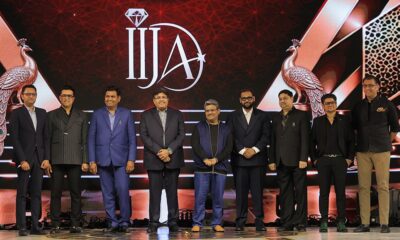
Titan, Kalyan, Malabar, Senco and Indriya Lead 54 Champions Crowned At The First India International Jewellery Awards
