
International News
Precious Metals Mixed As US Halts Iran Strike
Bullion Markets Found A Fragile Floor After U.S. President Donald Trump Announced He Would Defer Planned Military Action Against Iran

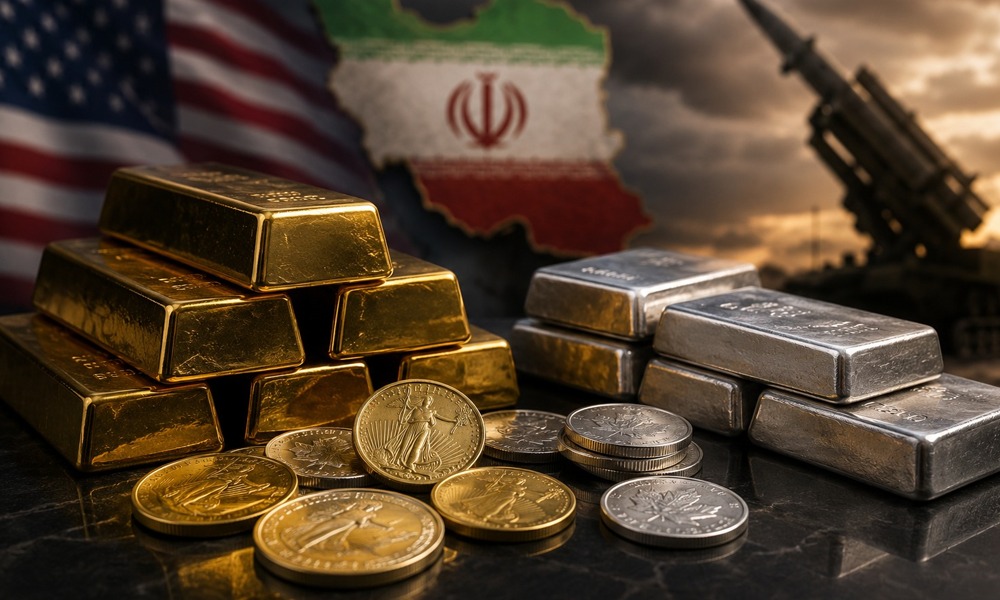
Precious metals delivered a mixed performance in Tuesday trading as geopolitical brinkmanship eased slightly in the Middle East and New Delhi moved to curb physical inflows, disrupting traditional demand channels for gold and silver.
In early trading, spot gold was virtually unchanged at $4,565.40 an ounce, hovering near lows not seen since late March. On India’s Multi Commodity Exchange (MCX), gold futures for June delivery ticked up by Rs. 500 to Rs. 159,899 per 10 grams, capitalizing on a softer U.S. dollar. Conversely, silver contracts for July delivery tumbled 1%, shedding Rs. 1,151 to trade at Rs. 275,500 per kilogram, weighed down by New Delhi’s fresh restrictions on silver imports.
The primary catalyst for the morning’s stabilization was a sudden de-escalation of geopolitical tensions. Bullion markets found a fragile floor after U.S. President Donald Trump announced he would defer planned military action against Iran, bowing to diplomatic pressure from Middle Eastern leaders.
The pause on military intervention sent Brent crude slipping back below the $110-per-barrel threshold, offering a reprieve to global equity and bond markets. Because surging energy costs typically drive the inflation that makes gold attractive, the drop in oil prices paradoxically dampened some of bullion’s immediate appeal as a hedge, while concurrently easing worries that central banks would need to keep interest rates higher for longer.
In India, the world’s second-largest consumer of precious metals, regulatory headwinds took center stage. The Ministry of Finance implemented stringent new curbs on silver imports to rein in the country’s current account deficit, sending shockwaves through domestic silver futures.
Simultaneously, the finance ministry moved quickly to quell growing market panic regarding domestic reserves. In an official statement on Tuesday, government officials flatly rejected rumors that New Delhi was planning a mandatory gold monetization program targeting the vast wealth held by India’s wealthy temple trusts. The ministry further dismissed reports that the gold cladding temple towers and doors would be reclassified under India’s “Strategic Gold Reserves,” calling the speculation “completely untrue and without factual foundation.”
While the near-term outlook remains clouded by a dense slate of upcoming macroeconomic data—including U.S. housing statistics, global PMI readings, and the minutes from the latest Federal Reserve FOMC meeting—institutional analysts argue that the long-term bull case for gold isn’t dead yet.
Some Wall Street heavyweights have begun trimming their expectations. JPMorgan recently revised its average 2026 gold forecast downward to $5,243 per ounce, from a previous estimate of $5,708, citing a cooling of retail investor demand.
However, market technicians view the recent slide as a healthy retracement rather than the beginning of a cyclical downturn.


International News
GJEPC India Pavilion at WJSME 2026 showcases India’s jewellery mfg.and design capabilities
For Indian exhibitors, the Sharjah show provides an opportunity to engage buyers from the UAE and wider Middle East.

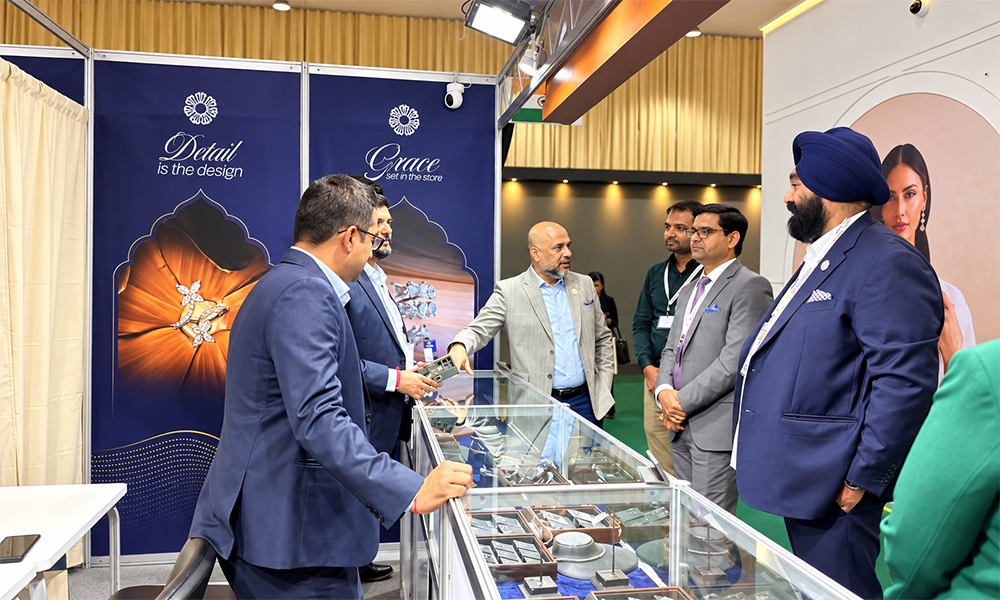
The India Pavilion organised by GJEPC made a strong opening at the 58th Watch & Jewellery Show Middle East 2026, being held at Expo Centre Sharjah from 30 September to 4 October.
Dr. Emmadi Vishnu Vardhan Reddy, Consul General of India, Dubai, visited the GJEPC-curated India Pavilion on the opening day. He was received by Antarpal Singh Sawhney, Regional Chairman – North, GJEPC, and Ashish Sakhardande, Head – India Jewellery Exposition Centre (IJEX), Dubai.
During his visit, Dr. Reddy interacted with participating exporters and viewed the jewellery and products on display. He appreciated the craftsmanship and design innovation represented at the Pavilion and highlighted the importance of exploring emerging markets and strengthening India’s global footprint in the gems and jewellery sector.
Bringing together 11 Indian exhibitors, the India Pavilion presents a cross-section of India’s jewellery manufacturing and design capabilities, with products spanning diamond jewellery, fine gold jewellery, silver jewellery, coloured gemstones, pearls, watches, and display and packaging solutions.
The participating exhibitors are Omega Jewellery, Core Jewellery Pvt. Ltd., Peacemoon Traders, Exclusive Diamond Jewellery Pvt. Ltd., Teyana Jewels LLP, Sejal Exports (India), Veekay Diamants, Harshwardhan Gems Pvt. Ltd., Sherly Jewels Pvt. Ltd., Rajesh Gems and Arina Jewellery LLP.
The Watch & Jewellery Show Middle East 2026 is expected to attract more than 66,000 visitors, including over 1,000 trade visitors from 52 countries. International participation includes Bahrain, China, Egypt, France, Japan, Kuwait, Lebanon, Pakistan, Poland, Qatar, Russia, Saudi Arabia, Sri Lanka, Türkiye, the UAE, the UK, the US and Yemen.
For Indian exhibitors, the Sharjah show provides an opportunity to engage buyers from the UAE and wider Middle East, while connecting with international visitors and trade representatives attending the event.


-

 National News2 days ago
Palmonas Unveils The Palmonas X Tanya Ghavri Collection
-

 BrandBuzz2 days ago
De Beers India Introduces ‘Love, From Hubby’, A New Ritual For A Second Season Of Love
-

 National News2 days ago
Precious Metals Prices Remain Broadly Steady
-

 National News3 days ago
Maharashtra Industries Minister unveils GJC Diwali Edition 2026 at JWCC, Mumbai
