
DiamondBuzz
Botswana’s VP expresses confidence in ongoing efforts to secure a buyer for De Beers


Botswana’s Vice President Ndaba Gaolathe has expressed strong confidence in the ongoing efforts to secure a buyer for De Beers, as Anglo American prepares to divest from its diamond operations. His remarks, delivered during an interview in Washington, suggest that the process is progressing well and that there is broad international interest in acquiring Anglo’s 85 per cent stake in the iconic diamond company.
The sale comes amid Anglo American’s strategic pivot away from diamonds and other assets to concentrate on copper, a sector currently yielding higher returns. De Beers has seen its valuation decline sharply in recent years, with Anglo having written down its value twice in the past 13 months. Once a cornerstone of the group’s portfolio, De Beers is now valued at $4.1 billion, significantly lower than when Anglo assumed full control in 2012.
Crucially, Gaolathe indicated that Botswana — already holding a 15 per cent stake in De Beers — is considering a substantial increase in its ownership, potentially up to 50 per cent. Such a move would mark a major shift in the company’s ownership structure and could redefine the power dynamics within the global diamond industry. Botswana, as one of the world’s largest diamond producers, has long been a key partner in De Beers’ supply chain, and this increased stake would reinforce its strategic influence over the sector.
The government’s willingness to expand its stake also reflects a broader effort by resource-rich nations to assert greater control over their mineral wealth and to ensure that profits from extraction are more equitably shared. If realized, Botswana’s expanded role in De Beers could serve as a model for other producing countries seeking to balance economic development with stronger national participation in global value chains.
With a sale or IPO expected by the end of 2025, the coming months will be critical in shaping the future of one of the diamond industry’s most storied names. Will Botswana emerge as a dominant shareholder, or will another global player step in? Either way, the outcome is likely to reshape the contours of the international diamond trade.







DiamondBuzz
De Beers Cuts Diamond Production But Sees Sales Rise
The Main Reasons For The Drop Were Planned Repair Work In Botswana and Slower Operations At Its Venetia Mine In South Africa. Demand For Diamonds Grew In The US and India.

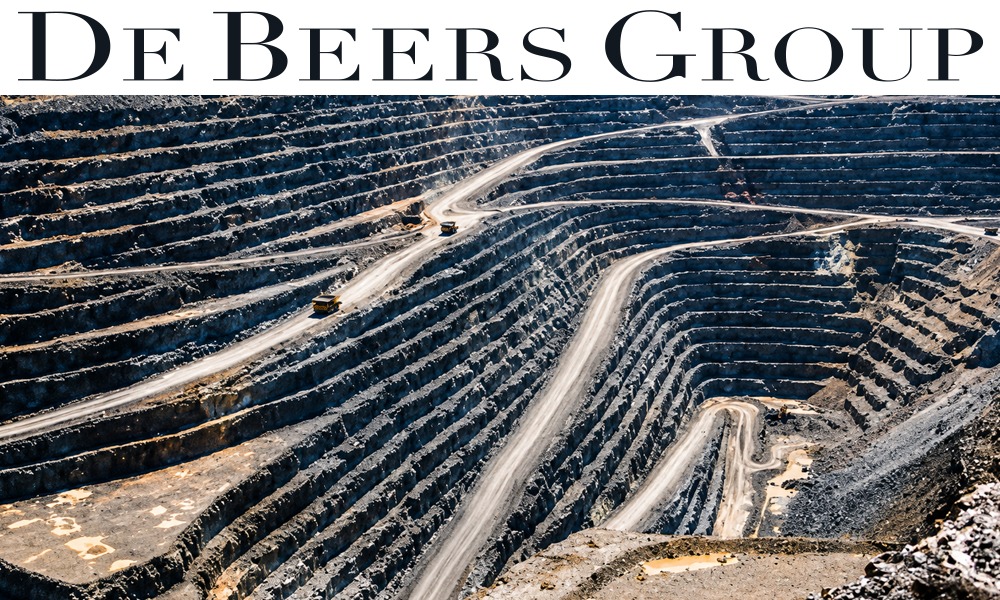
De Beers produced 11% fewer diamonds in the third quarter of 2026 compared to last year, bringing total production down to 6.8 million carats. The main reasons for the drop were planned repair work in Botswana and slower operations at its Venetia mine in South Africa before it temporarily pauses production for two years.
Despite lower production, overall diamond trading improved. Demand for diamonds grew in the US and India, and the market became better balanced. However, lab-made diamonds continued to hurt sales of cheaper natural diamonds.
Production Highlights by Country
Botswana: Down 20% to 4.8 million carats due to maintenance at the Orapa mine.
South Africa: Down 37% to 418,000 carats as the Venetia mine slowed down.
Namibia: Up 8% to 495,000 carats.
Canada: More than doubled to 1.06 million carats because the Gahcho Kué mine processed higher-quality ore.
On October 16, De Beers took full ownership of Canada’s Gahcho Kué mine after taking over its partner Mountain Province’s 49% share. Starting in the fourth quarter, De Beers will report all production from this mine on its own books. This will raise De Beers’ official production numbers, but it will not change the overall amount of diamonds in the world market.
Sales Revenue: Reached $731 million for the quarter, up 4% from $700 million last year.
Sales Volume: Nearly doubled to 8.7 million carats, up from 4.6 million carats a year ago.
Even though sales volume went up, the average price De Beers received per carat so far this year fell 37% to $97. This was caused by an 18% drop in overall rough diamond prices and the fact that De Beers sold a higher proportion of cheaper diamonds this year.
Because De Beers now owns 100% of the Gahcho Kué mine, it raised its full-year 2026 production target to 25–28 million carats (up from 21–26 million). It also lowered its expected production cost from $80 to about $70 per carat. The company said it will keep watching market demand and adjust its production as needed.



Dhanteras Shopping Guide 2026:Gold, Silver, Diamonds & Festive Jewellery Trends To Watch

Indriya, Aditya Birla Jewellery Unveiled India’s Largest Sustainable Jewellery Rangavalli

From Diya Puja To Diwali Soirées: Jewellery Designed To Go Beyond The Festive Season
Dhanteras Shopping Guide 2026:Gold, Silver, Diamonds & Festive Jewellery Trends To Watch
Indriya, Aditya Birla Jewellery Unveiled India’s Largest Sustainable Jewellery Rangavalli
From Diya Puja To Diwali Soirées: Jewellery Designed To Go Beyond The Festive Season
-
 JB Insights21 minutes ago
Dhanteras Shopping Guide 2026:Gold, Silver, Diamonds & Festive Jewellery Trends To Watch
-
 National News50 minutes ago
Indriya, Aditya Birla Jewellery Unveiled India’s Largest Sustainable Jewellery Rangavalli
-
 BrandBuzz2 hours ago
From Diya Puja To Diwali Soirées: Jewellery Designed To Go Beyond The Festive Season
-

 BrandBuzz2 hours ago
The Solenne Collection: A Celebration Of Diwali By Bharti Bangur Fine Jewels
