JB Insights
Be a cut above with Lab-Grown Diamonds
By Nikita Prasad; Head of Design & Co-Founder – GIVA


Diamonds have always symbolised elegance and luxury. Haven’t they captivated us all with their brilliance and the shine in all those love stories? We usually see the heroine blushing over that classic round brilliant cut in the cinescreen. But that’s an old story!
We’re now seeing the revival of vintage and rare cuts in diamonds. Celebrities are opting for lesser-known yet stunning cuts. And in a world where trends change quickly, rare diamond cuts are much sought after. There is so much to choose too these days – from vintage-inspired to avant-garde styles, you can find the diamond cut that best suits your persona.
As Marilyn Monroe famously said, “Diamonds are a girl’s best friend,” and now, more than ever, these best friends come in all shapes and styles, ready to tell their own unique stories. Here we have listed out our rare cuts in diamonds that you need to know. Let’s dive in.
Big Rocks and the Big Stars
What’s driving celebrities to embrace these rare diamond cuts? It’s the allure of individuality and craftsmanship. Their bold choices redefine diamond trends, proving that brilliance comes in many forms. From exquisite solitaires to striking emerald and cushion cuts, these unique designs are setting a new standard for modern engagement rings. One notable mention would be Anushka Sharma’s elegant solitaire diamond ring, reported to be worth a crore, caught the attention of jewellery enthusiasts worldwide; setting trends in modern engagement ring choices. Each cut tells a story; one of elegance, opulence and deep appreciation of exceptional designs.
The Emerald cut – For the Royal in You
It is the ideal choice for those who desire a piece of jewellery that is both classic and contemporary, understated yet undeniably captivating. Characterised by its rectangular shape with bevelled corners, this cut is a masterpiece of subtlety, designed to improve the diamond’s clarity rather than relying on excessive brilliance. Unlike more traditional cuts that emphasise sparkle, the Emerald cut showcases the diamond’s intrinsic beauty, allowing its inner character to shine through.
The allure of the Emerald cut lies in its step facets—wide, flat planes that cascade down the stone like a staircase. This unique structure allows light to enter the diamond in a more subdued, refined manner, producing a gentle, consistent glow rather than an explosive sparkle. Often associated with the glamour of the Art Deco era, the Emerald cut embodies the pinnacle of sophistication, drawing inspiration from architectural design and symmetry. It exudes a sense of timelessness and refinement, making it an enduring choice for those with a discerning eye for fine jewellery.
The Pear Shape – For the Discerning Few
Many celebrities have been spotted flaunting the pear cut diamond ring. This beautiful cut perfectly reflects her unique style, adding a touch of grace and timeless beauty to her engagement. The pear shape continues to be one of the most beloved and striking diamond cuts in the world of fine jewellery.
The Pear shape diamond, also called the teardrop shape, is an elegant cut that combines the brilliance of a round diamond with the elongated form of a marquise. It has a rounded end that tapers into a point, creating a graceful design that exudes sophistication and femininity.
And it’s the pear cut’s curves that makes the diamond’s sparkle even brighter. Its unique tapered design allows light to reflect beautifully, creating a stunning display of fire and brilliance. The elongated shape also gives the illusion of a larger stone, making it perfect for those who want a bigger diamond at a lesser price tag. One major benefit of the pear shape is its versatility. It looks great in many settings, from solitaires to toi et moi, making it a timeless choice. Its elongated form is flattering on many hand shapes. The asymmetry of the pear shape adds a modern touch, making it a refreshing alternative to traditional cuts.
Diamonds have always been symbolic, a metaphor even for being your best, just like how a stone is polished and cut to become a brilliant diamond. It has also become a canvas for self-expression too. And these rare diamond cuts allow the wearer to showcase their unique persona in the most understated way possible. So go ahead, your perfect and rare diamond cut is out there – waiting to tell your sparkling story.







JB Insights
From Customer Intelligence To Autonomous Growth Intelligence: Deepansh Bhargava Senior Vice President & Head Marketing at VBJ
From Customer Intelligence To AI-powered Growth Decisions, The Next-Gen CDP Is Built To Create Measurable Incremental Value.

For the last 6 years, Customer Data Platforms have transformed how brands understand their customers. They have brought fragmented data together, created unified customer profiles, enabled segmentation and made personalisation more intelligent. But the next evolution of CDPs will not be defined by how much customer data they can organise. It will be defined by how intelligently AI can convert that data into consumer value and incremental business outcomes.
The shift is from Customer Intelligence to Growth Intelligence.
Businesses today know more about their existing customers than ever before their purchase history, frequency, preferences, lifetime value and likelihood of buying again. Yet the larger opportunity lies in moving beyond what customers did to understanding what they need next, where their behaviour is changing and where the next phase of growth will come from. This also requires a sharper focus on incrementality.
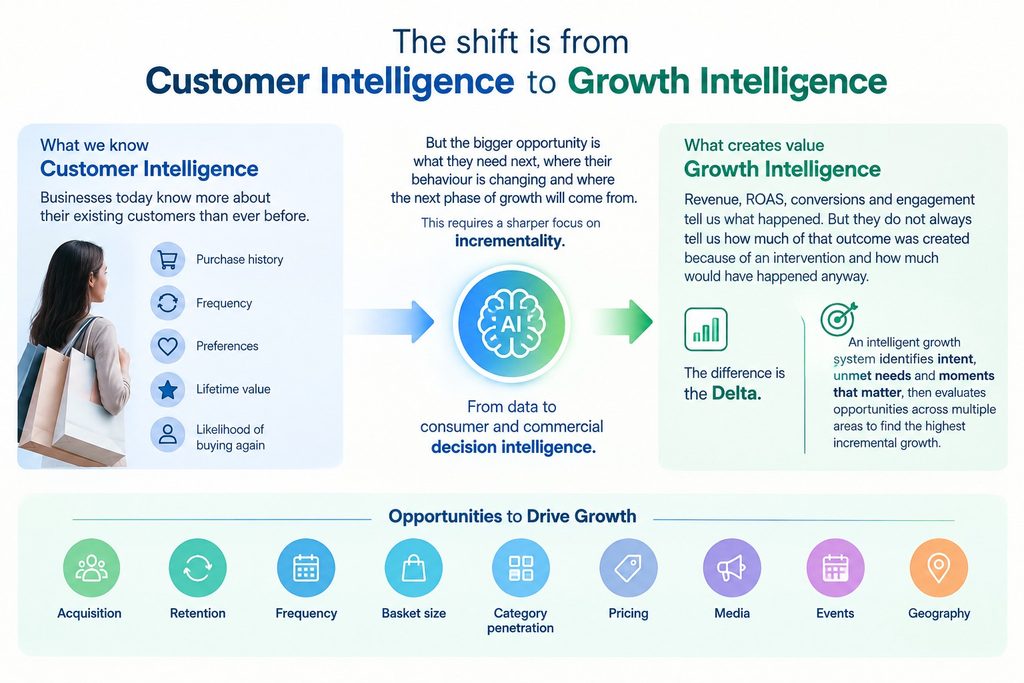
Revenue, ROAS, conversions and engagement tell us what happened. But they do not always tell us how much of that outcome was created because of an intervention and how much would have happened anyway.
That difference is the Delta. AI can help take CDPs beyond systems of customer intelligence and turn them into systems of consumer and commercial decision intelligence. Instead of simply identifying customers with a high propensity to purchase, an intelligent growth system could identify intent, unmet needs and moments that matter then evaluate opportunities across acquisition, retention, frequency, basket size, category penetration, pricing, media, events and geography to identify where the highest incremental growth opportunity lies.
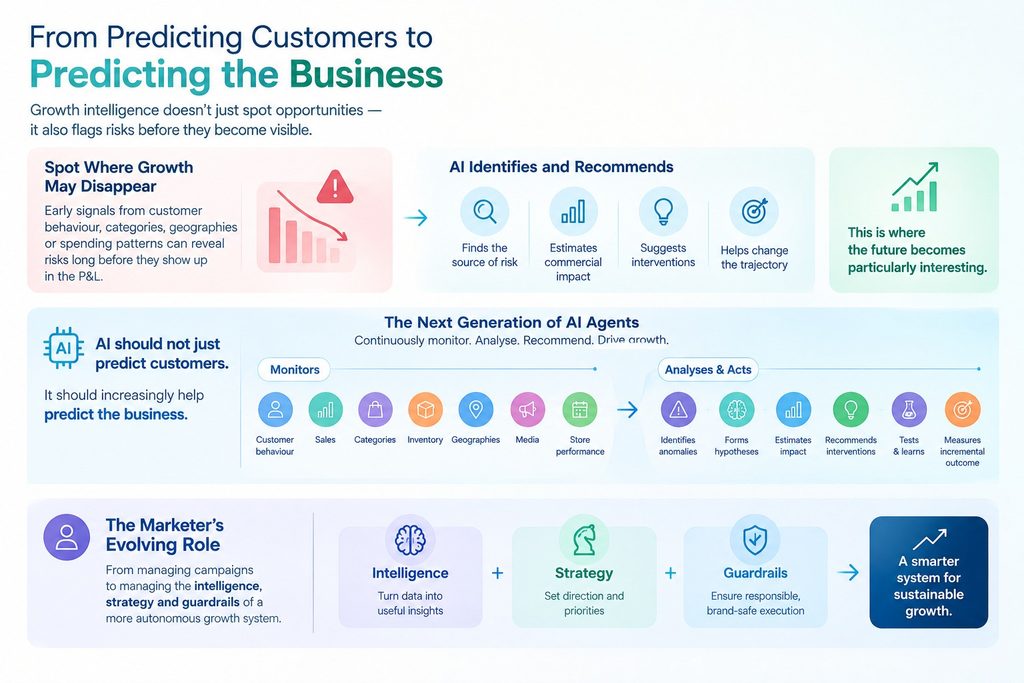
Growth intelligence should also help businesses identify where growth is likely to disappear. Early signals from customer behaviour, categories, geographies or spending patterns could reveal risks long before they become visible in the P&L. AI could identify the source of the risk, estimate its potential commercial impact and recommend interventions to change the trajectory. This is where the future becomes particularly interesting.
AI should not just predict customers. It should increasingly help predict the business.
The next generation of AI agents could continuously monitor customer behaviour, sales, categories, inventory, geographies, media and store performance. They could identify anomalies, form hypotheses, estimate commercial impact, recommend interventions, test them and measure the incremental outcome.
The role of the marketer would evolve from simply managing campaigns to managing the intelligence, strategy and guardrails around a more autonomous growth system.
This evolution can be built around three principles: Anticipate, Act and Account.
1. Anticipate where consumer needs and growth will emerge and where they may disappear.
2. Act by identifying and eventually executing the most relevant intervention for the consumer and the business.
3. Account for whether that intervention genuinely created incremental value.
The CDP of the future, therefore, should move beyond being a platform that simply manages customer data. It should become a Growth Decision Platform one that helps businesses understand consumers better, identify opportunities, detect risks, recommend actions, measure incrementality and continuously learn from every intervention. The ultimate measure of such a platform should not be the volume of data it manages.
It should be much simpler:
Show me the Delta you create.
Because ultimately, consumer centricity is not the opposite of growth. It is where sustainable growth begins.



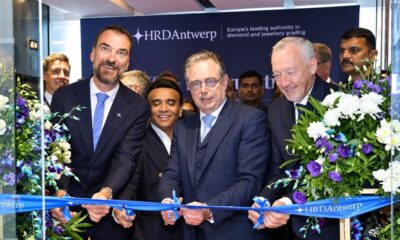
Belgian Prime Minister Bart De Wever opens expanded HRD Antwerp laboratory in Mumbai

Verlas Introduces the ‘Alyssa’ Collection in India, Bringing Modern Luxe Floral-Inspired Design to Lab-Grown Diamond Jewelry Crafted in Fine Gold

Gold rebounds,Silver reclaims Rs 2.33 lakh mark

Limelight Lab Grown Diamonds Inaugurates Showroom In Kalyan, Its 8th Exclusive Store MMR
Verlas Introduces the ‘Alyssa’ Collection in India, Bringing Modern Luxe Floral-Inspired Design to Lab-Grown Diamond Jewelry Crafted in Fine Gold
Belgian Prime Minister Bart De Wever opens expanded HRD Antwerp laboratory in Mumbai
-
 National News3 days ago
Limelight Lab Grown Diamonds Inaugurates Showroom In Kalyan, Its 8th Exclusive Store MMR
-
 BrandBuzz2 days ago
Verlas Introduces the ‘Alyssa’ Collection in India, Bringing Modern Luxe Floral-Inspired Design to Lab-Grown Diamond Jewelry Crafted in Fine Gold
-
 DiamondBuzz2 days ago
Belgian Prime Minister Bart De Wever opens expanded HRD Antwerp laboratory in Mumbai
-

 National News2 days ago
Value Addition Drives August Jewellery Exports as Studded Gold Jewellery Rises 51.22% to US$642.85 Million