DiamondBuzz
Alrosa’s Severalmaz hits 2025 production targets despite market slump


Severalmaz, a key branch of the Russian diamond giant Alrosa, has successfully hit its production goals for 2025. Despite a difficult year for the global diamond industry, the company reported that its mining and processing levels actually exceeded its original targets.
Throughout the year, Severalmaz maintained a high level of activity in the Arkhangelsk region, effectively exceeding its operational goals with ore output reaching 102% and processing hitting 104% of the original plan. These steady operations ensure that Severalmaz remains a vital asset for its parent company, accounting for approximately 10% of Alrosa’s total diamond supply.
Beyond its mining achievements, the company played a significant role in supporting the local economy by contributing over 2.4 billion rubles in taxes to regional budgets. Additionally, it invested 50 million rubles into social initiatives, funding essential community projects such as school repairs, the restoration of cultural heritage sites, and the development of local sports and creative groups.
Severalmaz runs the Lomonosov plant, which mines two major sites: the Arkhangelskaya and Karpinskogo-1 pipes. While the global diamond market has faced lower demand recently, these results show that Alrosa’s regional operations remain steady and productive.


DiamondBuzz
Divine Solitaires Named ‘Best Diamond Jewellery Brand’ At JewelZ South India 2026
The Recognition Acknowledges The Brand’s Approach To Quality Assurance, Standardised Pricing and Transparency In The Natural Diamond Solitaire Category.

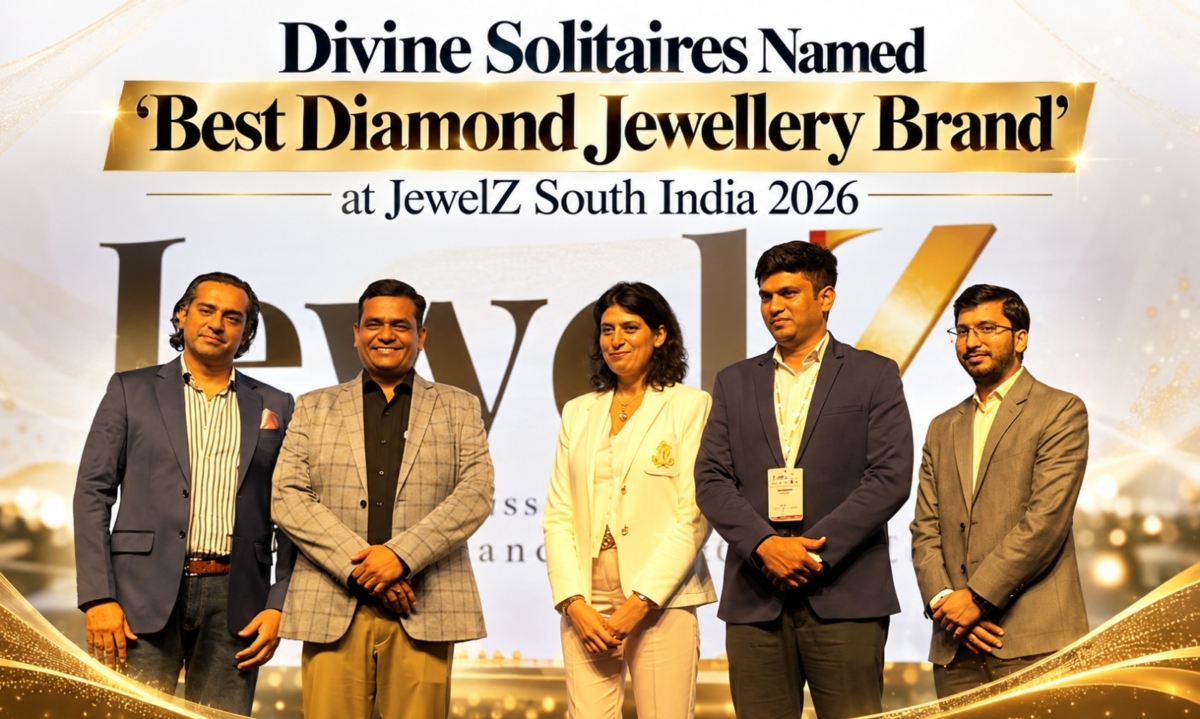
Hyderabad, 25 September 2026: Divine Solitaires, India’s natural diamond solitaire brand, has been honoured with the ‘Best Diamond Jewellery Brand’ award at JewelZ South India 2026, recognising its efforts to bring greater consistency, transparency and quality assurance to the natural diamond solitaire buying experience. The award was presented on 22 September at Novotel, HICC, Hyderabad.
The recognition comes as the natural diamond solitaire category evolves, with consumers increasingly seeking greater clarity around certification, quality and pricing when making high-value jewellery purchases. Divine Solitaires has built its proposition around addressing these expectations through its 123-parameter Quality Guarantee and Nationwide Standard & Transparent Pricing, which are applied uniformly across its retail network.
With a presence through 200+ partner jewellers across 100+ cities in India, the brand offers a portfolio of 3,000+ designs, alongside consumer-focused initiatives and long-term value programmes, including buyback and upgrade options.
Commenting on the recognition, Jignesh Mehta, Founder and Managing Director, Divine Solitaires, said:

“The way consumers buy diamonds is evolving. A solitaire is a significant purchase, and today’s buyer wants greater clarity on what they are buying, how quality is evaluated and how the price is determined. At Divine Solitaires, our endeavour has been to bring greater structure and consistency to this journey through clearly defined quality parameters and transparent pricing. This recognition at JewelZ South India is encouraging because it reflects the industry’s growing focus on building trust through greater accountability and standardisation.”
Adding to the brand’s presence at the event, Jignesh Mehta participated in the panel discussion “How the Jewellery Moguls are Crafting the New Jewellery Era”, moderated by Ritu Marya, Editor-in-Chief, Retailer Media. The session brought together senior industry leaders to discuss evolving consumer expectations, trust-building and changing retail models.
Mehta’s participation focused on the evolving natural diamond solitaire category, particularly the importance of consistent quality assurance, transparency and standardisation in building consumer confidence around high-value jewellery purchases.
The recognition reinforces Divine Solitaires’ focus on creating a more structured and transparent solitaire-buying ecosystem, as the category continues to evolve alongside changing consumer expectations.


Place Images Of Silver Jewellery Stalls and Silver Jewellery and Overhead Shots Of SSI

NSPL Season 2 Launched At SSI DELHI 3rd Edition Featuring SSI As Title Sponsor Season 2 Builds Upon The Inaugural Edition’s Success By Bringing Together Sports, Youth Engagement, and Trade Community Networking

Growth of the 925 Sterling Silver Gifting Segment
NSPL Season 2 Launched At SSI DELHI 3rd Edition Featuring SSI As Title Sponsor Season 2 Builds Upon The Inaugural Edition’s Success By Bringing Together Sports, Youth Engagement, and Trade Community Networking
Place Images Of Silver Jewellery Stalls and Silver Jewellery and Overhead Shots Of SSI
Growth of the 925 Sterling Silver Gifting Segment
-
 JB Exclusive21 minutes ago
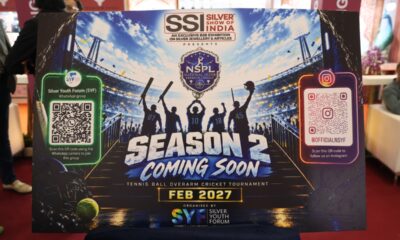
NSPL Season 2 Launched At SSI DELHI 3rd Edition Featuring SSI As Title Sponsor Season 2 Builds Upon The Inaugural Edition’s Success By Bringing Together Sports, Youth Engagement, and Trade Community Networking
-
 Special Reports10 minutes ago
Place Images Of Silver Jewellery Stalls and Silver Jewellery and Overhead Shots Of SSI
-
 Special Reports2 days ago
Growth of the 925 Sterling Silver Gifting Segment
-
 ShowBuzz2 days ago
TRENDS @ SSI DELHI 3RD EDITION