

International News
94 tonnes of tokenized gold moved instantly for 0.0016% in fees


94 tonnes of tokenized gold ( XAUt ) was moved instantly for 0.0016% in fees over the last 6 months – while central banks spend millions of dollars to move their bullion
That comparison, recently highlighted by Tether CEO Paolo Ardoino in February 2026, perfectly captures the “analog vs. digital” divide in modern finance.
Moving 94 tonnes of physical gold is a logistical nightmare involving armored convoys, specialized aircraft, and massive insurance premiums. Doing the same with Tether Gold (XAUt) is essentially just updating a ledger on a blockchain.
While the efficiency is undeniable, it is worth noting that central banks aren’t switching to XAUt just yet for one primary reason: Sovereignty. Central banks move gold to ensure they have physical possession within their own borders during geopolitical crises. For them, the “millions spent” is an insurance policy against systemic collapse. However, for every other use case—trading, hedging, and payments—the 0.0016% fee makes a very compelling argument for tokenization.
The efficiency gap between tokenized assets and legacy bullion logistics is most evident when comparing the movement of 94 tonnes of gold. Over the last six months, Tether Gold (XAUt) facilitated this massive transfer of value with a total fee of just 0.0016%, a figure that stands in stark contrast to the millions of dollars central banks must spend on armored transport, international security, and insurance for physical repatriation.
While physical gold movement is a sluggish process—often taking weeks or months to navigate the complexities of global logistics—tokenized gold operates with near-instant finality on the blockchain. Furthermore, the digital format allows for extreme utility; XAUt is divisible down to 0.000001 troy oz, whereas central banks are restricted to handling physical bars and coins, which are difficult to move, store, and fractionally trade.






Record-high gold prices and continued geopolitical uncertainty have strengthened gold’s appeal as a safe-haven asset. However, these same factors also create challenges for the jewellery industry, as rising prices increase the cost of entry for consumers. In response, the industry is exploring product innovation to sustain demand. In Greater China, Hard Pure Gold is emerging as a strategic initiative designed to balance high purity, design flexibility, and affordability.
Promoted by the World Gold Council, Hard Pure Gold combines traditional purity levels—typically above 99%—with advanced manufacturing technologies such as electroforming and lost-wax casting. These processes increase the hardness of pure gold, allowing jewellers to create more intricate designs, improve durability, and support gemstone settings. At the same time, hollow-forming techniques enable lighter pieces that maintain visual impact while reducing overall weight and price.
The category also benefits from the introduction of an industry-wide standard in 2025, which clarified production guidelines and unified marketing terminology across manufacturers. Standardisation has helped build consumer trust and strengthened the positioning of Hard Pure Gold as a distinct product segment.
A key driver of its growth is changing consumer demographics. Traditionally, pure gold jewellery in China appealed primarily to middle-aged buyers who valued gold for wealth preservation. Hard Pure Gold, however, is attracting younger consumers aged 20–35 by offering contemporary designs, lighter weight, and lower entry prices without sacrificing purity. Surveys conducted by the World Gold Council indicate that it is currently the fastest-growing category within the gold jewellery segment in Greater China.
In a high-price environment, the ability to produce jewellery that looks substantial yet weighs as little as 1.5 grams helps make gold more accessible to new buyers. At the same time, increasing trade-in activity—where consumers exchange older jewellery for newer designs—encourages repeat purchases and keeps demand active.
From a strategic perspective, Hard Pure Gold demonstrates how technological innovation and coordinated industry standards can reshape consumer perception. By merging investment-grade purity with modern design and affordability, it offers a compelling pathway for sustaining gold jewellery demand in Greater China



Hard Pure Gold to redefine China gold jewellery sector

Hong Kong International Jewellery Show 2026

Waman Hari Pethe Jewellers unveil new showroom at Aundh, Pune

Precious Metals Face Macro Headwinds Amid Persistent Inflation and Geopolitical Uncertainty: AUGMONT BULLION REPORT

Platinum Jewellery demonstrates resilience amidst record price rally

Bullion Dips in India Despite Safe-Haven Demand as Dollar Firms
-
 International News2 days ago
Precious Metals Face Macro Headwinds Amid Persistent Inflation and Geopolitical Uncertainty: AUGMONT BULLION REPORT
-
 International News2 days ago
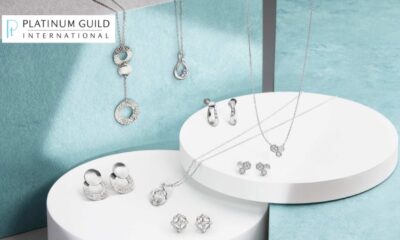
Platinum Jewellery demonstrates resilience amidst record price rally
-
 International News2 days ago
Bullion Dips in India Despite Safe-Haven Demand as Dollar Firms
-

 National News2 days ago
M P Ahammad, Chairman of Malabar Group, Conferred Maharashtrian of the Year Award 2026 by Maharashtra CM Devendra Fadnavis
