
International News
Bullion Dips in India Despite Safe-Haven Demand as Dollar Firms


Precious metals opened slightly softer in India on Thursday (March 12), tracking cautious sentiment in international markets as geopolitical developments and a firmer US dollar tempered buying interest in bullion.
On the Multi Commodity Exchange (MCX), gold futures eased 0.26% to Rs.1.61 lakh per 10 grams for 24-carat gold. Silver prices also moved lower, slipping 0.63% to Rs.2.67 lakh per kilogram.
The modest decline in domestic bullion largely reflected global price action. Internationally, gold edged down in early trading, with spot prices hovering near $5,151 per ounce, while US gold futures for April delivery traded around $5,156 per ounce.
Market pressure came primarily from a stronger US dollar, which gained roughly 0.3%. A firmer dollar typically makes dollar-denominated commodities like gold more expensive for holders of other currencies, reducing immediate buying interest.
At the same time, crude oil prices climbed sharply as tensions involving Iran intensified and concerns grew over potential supply disruptions through the strategic Strait of Hormuz, a crucial passage for global energy shipments. These developments added volatility to commodity markets, influencing investor positioning across precious metals.


International News
Fluorescent Diamonds: GIA to Introduce Clearer Guidance
According to GIA, around 25% to 35% of all diamonds show some level of fluorescence. Greater transparency about this significant segment of the market could help improve confidence among both consumers and the jewellery trade.

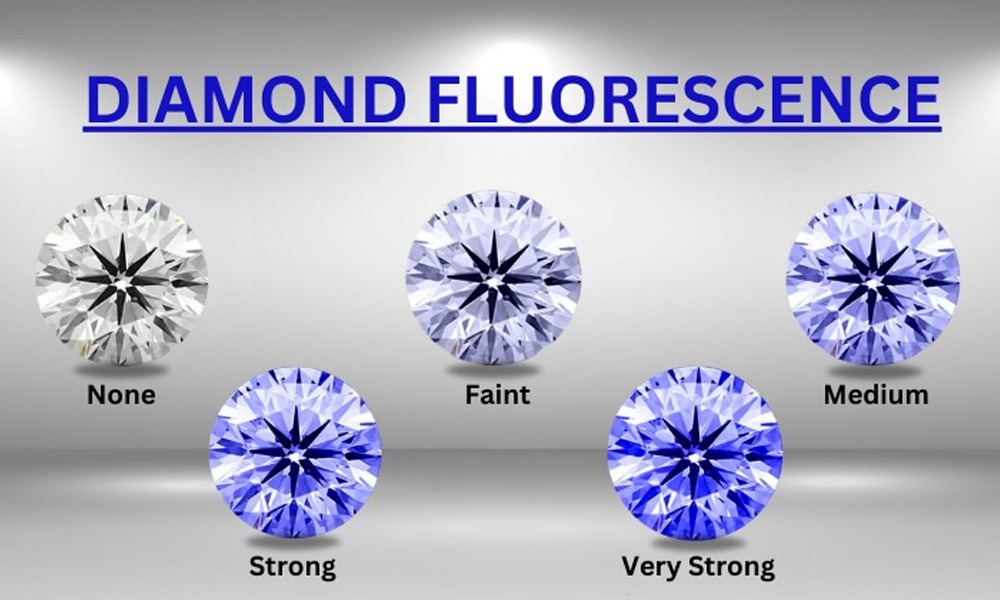
Later this year, the Gemological Institute of America (GIA) will introduce new wording in its diamond grading reports to reduce confusion about fluorescent diamonds. The update, expected in the fourth quarter, is one of the most important steps taken by a grading laboratory to explain this feature more clearly to both the jewellery trade and consumers.
Rapaport Intelligence Report explores what this change could mean for the diamond market. Fluorescence has had a long and complicated history. In the past, fluorescent diamonds often sold at premium prices. However, attitudes changed during the diamond boom of the 1970s and again after a grading controversy in South Korea in the early 1990s. Although later gemological research helped improve confidence in fluorescent diamonds, many buyers still view them negatively, and they often sell at discounted prices.
The report also looks at how these discounts have changed over the past six years through both strong and weak market conditions. In addition, the report explains two key questions: how fluorescence affects a diamond’s appearance and whether it influences its color grade. It also considers whether GIA’s new report comments could change how buyers view fluorescent diamonds.
The report revisits a long-debated issue—does fluorescence really affect a diamond’s beauty, or are today’s concerns mainly based on old perceptions that continue to influence buying decisions?
According to GIA, around 25% to 35% of all diamonds show some level of fluorescence. Greater transparency about this significant segment of the market could help improve confidence among both consumers and the jewellery trade.



Regal Jewellers appoints Vijay Sethupathi and Simran as brand ambassadors for Tamil Nadu

Fluorescent Diamonds: GIA to Introduce Clearer Guidance

India’s Consul General to Dubai, Shri V V Reddy, Interacts with BDB Committee
Fluorescent Diamonds: GIA to Introduce Clearer Guidance
Regal Jewellers appoints Vijay Sethupathi and Simran as brand ambassadors for Tamil Nadu
India’s Consul General to Dubai, Shri V V Reddy, Interacts with BDB Committee
-
 International News35 minutes ago
Fluorescent Diamonds: GIA to Introduce Clearer Guidance
-
 GlamBuzz24 minutes ago
Regal Jewellers appoints Vijay Sethupathi and Simran as brand ambassadors for Tamil Nadu
-
 National News1 hour ago
India’s Consul General to Dubai, Shri V V Reddy, Interacts with BDB Committee
-

 National News2 hours ago
Shankesh Jewellers Ltd. Unveils New Corporate Office at Kalbadevi Road, Mumbai
