
JB Insights
2026 The Road Ahead India’s GJ sector eyes explosive growth, bet big on precious metals surge


India’s gems and jewelry sector enters 2026 with strong optimism, as industry leaders project gold prices rising 10-15% and silver surging 20-25%. With gold crossing ₹1 lakh per 10 grams, weddings are emerging as a key catalyst while younger consumers embrace bridal jewelry as versatile everyday luxury. The market is witnessing robust demand for lightweight diamonds, color stones, and enduring traditional Kundan and temple designs, as reinvention becomes the defining theme—merging traditional craftsmanship with mindful minimalism to create aspirational pieces for modern self-expression. As reinvention defines the horizon, industry leaders are merging traditional craftsmanship with mindful minimalism, creating aspirational pieces that serve both self-expression and investment.

Kirit Bhansali, Chairman of GJEPC, underscores export stability at US$16.26 billion for the first seven months of FY 2025-26—in dollar terms—with rupee growth, crediting government measures like FTAs, the Export Promotion Mission, credit schemes, and the Maharashtra GJ Policy, alongside GJEPC’s expansions into the Middle East, Latin America, Cambodia, and Vietnam.
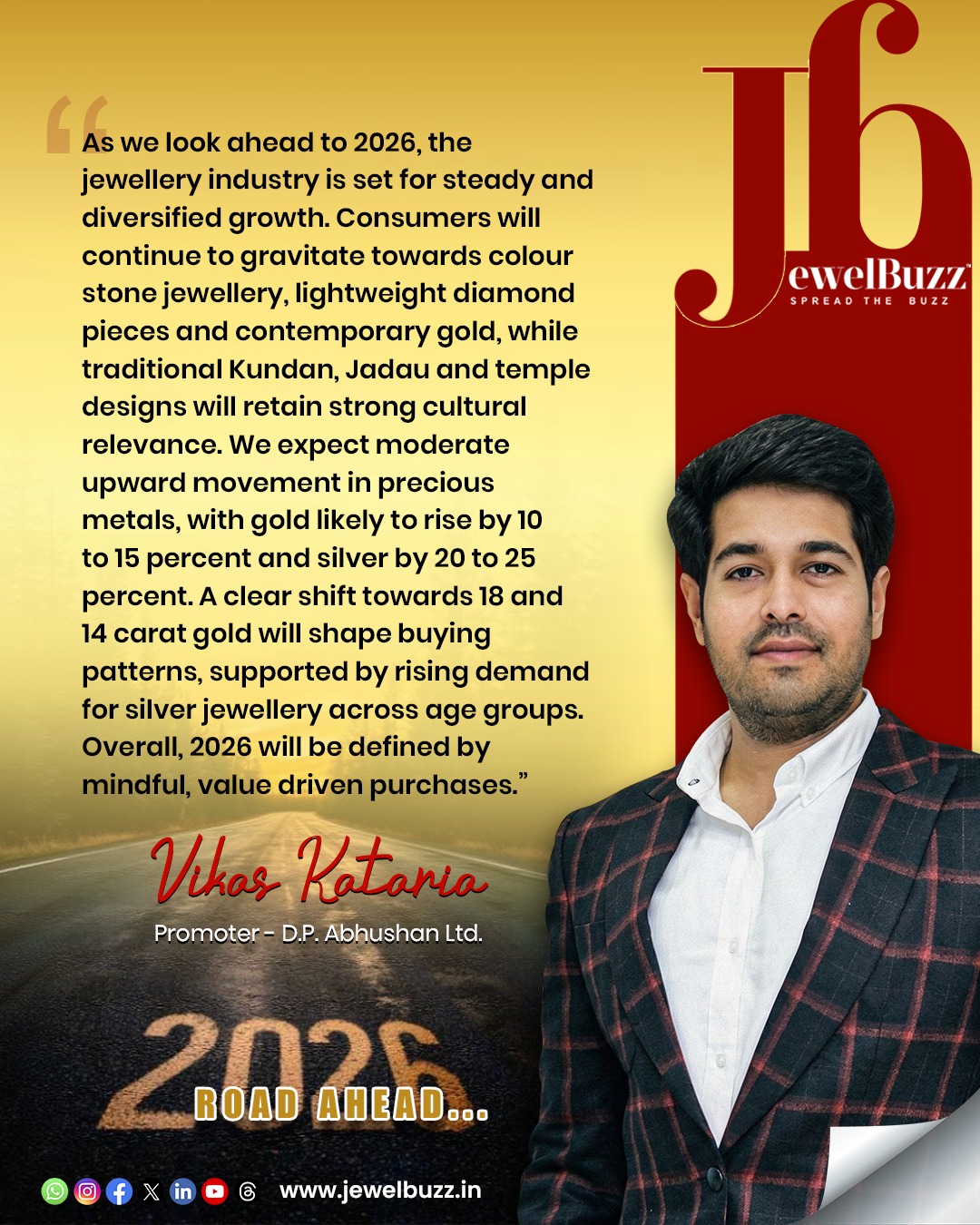
Vikas Kataria, Promoter of D.P. Abhushan Ltd., predicts gold up 10-15% and silver 20-25%, fueling demand for 18-14 carat gold, lightweight diamonds, color stone jewelry, and enduring traditional Kundan, Jadau, and temple designs amid value-driven buying.


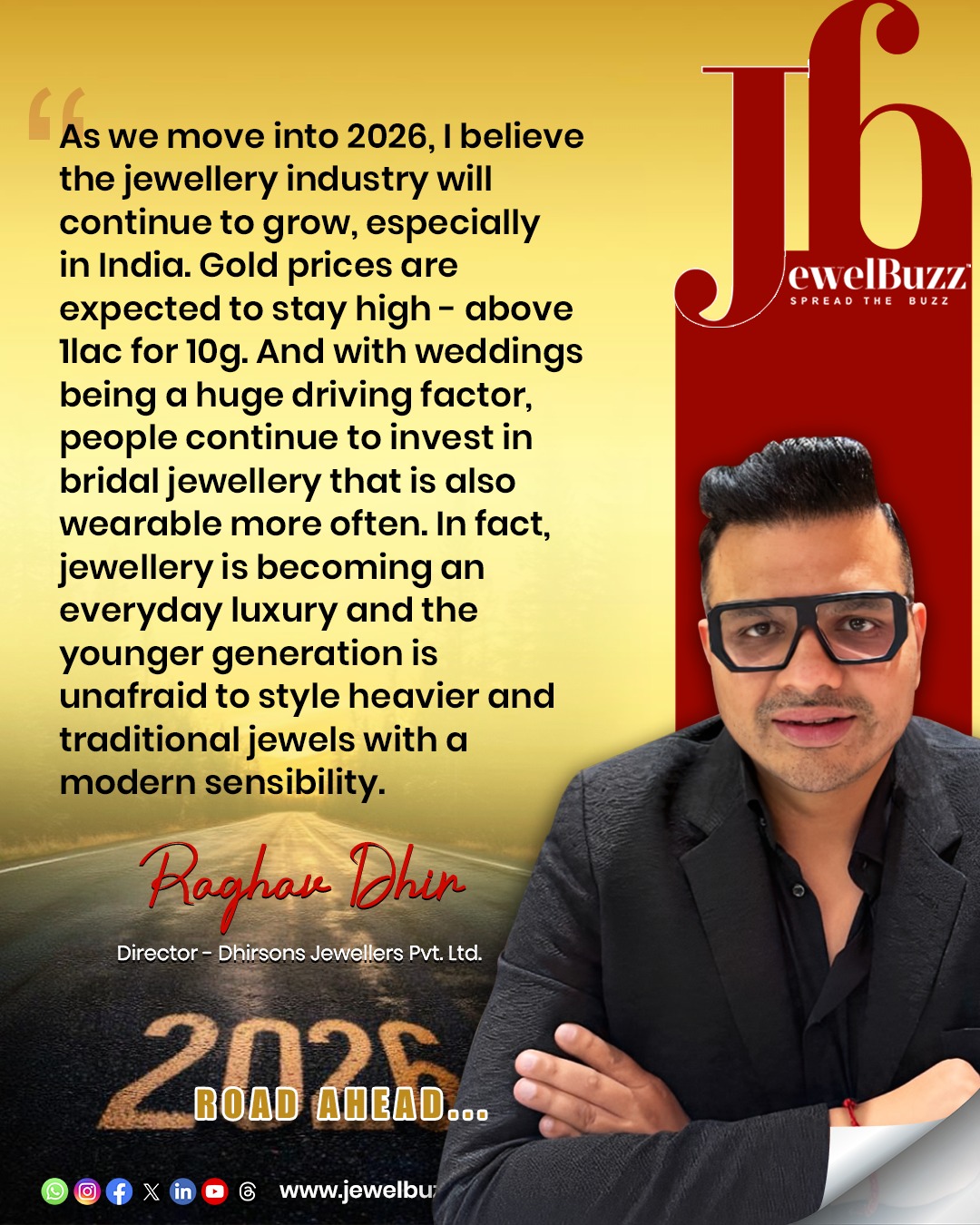
Raghav Dhir, Director of Dhirsons Jewellers Pvt. Ltd., highlights gold prices surpassing Rs1 lakh per 10g, positioning weddings as a key catalyst while younger consumers embrace bridal jewelry as versatile everyday luxury, blending heavier traditional pieces with modern styling.
Kishorkumar Jindatta Shah, Chairman of Chandukaka Saraf, frames gold’s appreciation as an opportunity to merge traditional craftsmanship with mindful minimalism, creating versatile, aspirational pieces for self-expression.


Shradha Keshri, Director of Operations at Hira Panna Jewellers, builds on 2025’s lightweight gold, intricate bridal work, certified gems, and personalization trends, anticipating silver’s rise in jewelry and gifting, with emphasis on ethical sourcing, transparency, immersive retail, and digital discovery to engage a tradition-rooted yet informed audience. And silver is going to rule
Tarun Kochar, Partner at KPS Silver in Bangalore, foresees a more aggressive 40-50% silver surge from current levels, sparking heightened interest in silver articles for investment, gifting, and self-use due to industrial and appreciation dynamics.





These insights reveal a sector adapting through diversification—lightweight and ethical options for youth, silver’s accessibility across demographics, and export momentum. Retailers and manufacturers can leverage festive seasons, weddings, and global outreach for expansion, prioritizing innovation that balances heritage with contemporary appeal. This multifaceted resilience positions India’s GJ industry for a prosperous, value-centric 2026.


JB Insights
From Customer Intelligence To Autonomous Growth Intelligence: Deepansh Bhargava Senior Vice President & Head Marketing at VBJ
From Customer Intelligence To AI-powered Growth Decisions, The Next-Gen CDP Is Built To Create Measurable Incremental Value.

For the last 6 years, Customer Data Platforms have transformed how brands understand their customers. They have brought fragmented data together, created unified customer profiles, enabled segmentation and made personalisation more intelligent. But the next evolution of CDPs will not be defined by how much customer data they can organise. It will be defined by how intelligently AI can convert that data into consumer value and incremental business outcomes.
The shift is from Customer Intelligence to Growth Intelligence.
Businesses today know more about their existing customers than ever before their purchase history, frequency, preferences, lifetime value and likelihood of buying again. Yet the larger opportunity lies in moving beyond what customers did to understanding what they need next, where their behaviour is changing and where the next phase of growth will come from. This also requires a sharper focus on incrementality.
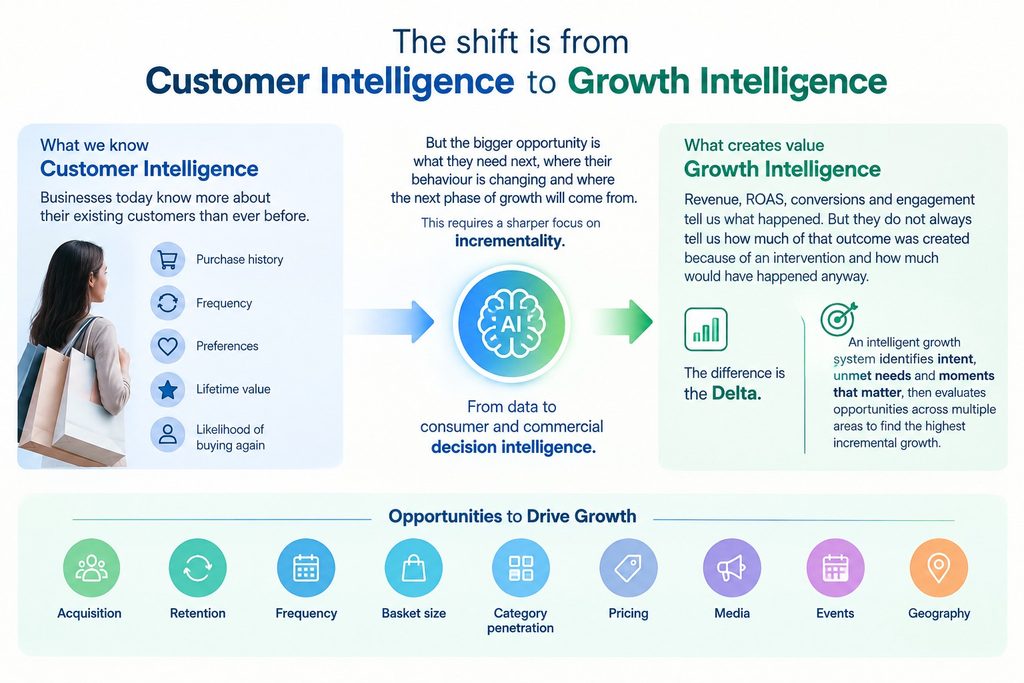
Revenue, ROAS, conversions and engagement tell us what happened. But they do not always tell us how much of that outcome was created because of an intervention and how much would have happened anyway.
That difference is the Delta. AI can help take CDPs beyond systems of customer intelligence and turn them into systems of consumer and commercial decision intelligence. Instead of simply identifying customers with a high propensity to purchase, an intelligent growth system could identify intent, unmet needs and moments that matter then evaluate opportunities across acquisition, retention, frequency, basket size, category penetration, pricing, media, events and geography to identify where the highest incremental growth opportunity lies.
Growth intelligence should also help businesses identify where growth is likely to disappear. Early signals from customer behaviour, categories, geographies or spending patterns could reveal risks long before they become visible in the P&L. AI could identify the source of the risk, estimate its potential commercial impact and recommend interventions to change the trajectory. This is where the future becomes particularly interesting.
AI should not just predict customers. It should increasingly help predict the business.
The next generation of AI agents could continuously monitor customer behaviour, sales, categories, inventory, geographies, media and store performance. They could identify anomalies, form hypotheses, estimate commercial impact, recommend interventions, test them and measure the incremental outcome.
The role of the marketer would evolve from simply managing campaigns to managing the intelligence, strategy and guardrails around a more autonomous growth system.
This evolution can be built around three principles: Anticipate, Act and Account.
1. Anticipate where consumer needs and growth will emerge and where they may disappear.
2. Act by identifying and eventually executing the most relevant intervention for the consumer and the business.
3. Account for whether that intervention genuinely created incremental value.
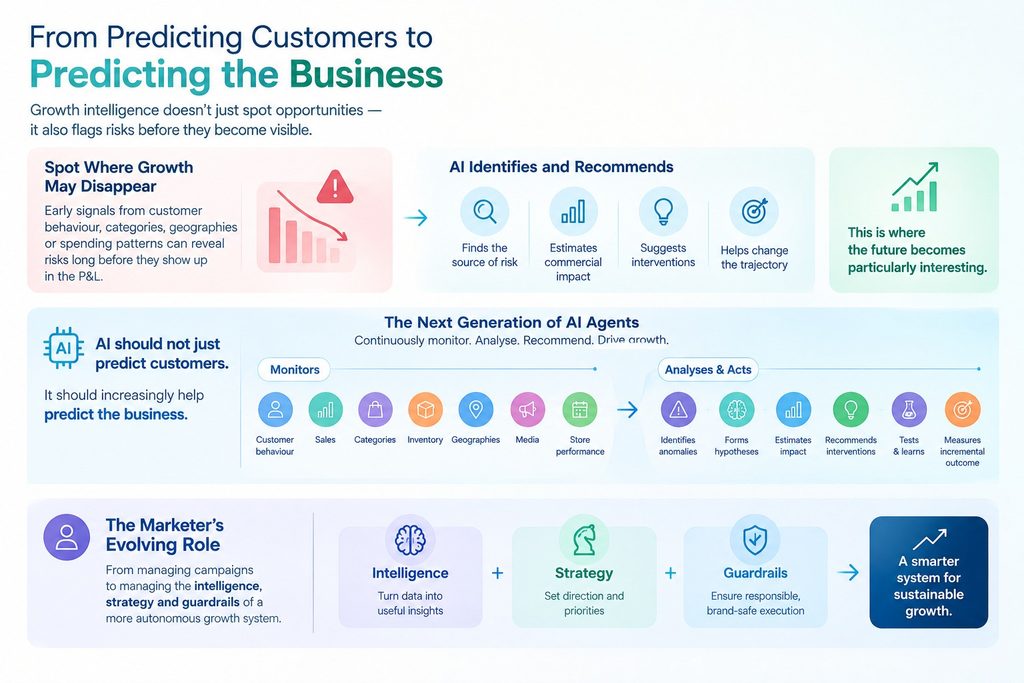
The CDP of the future, therefore, should move beyond being a platform that simply manages customer data. It should become a Growth Decision Platform one that helps businesses understand consumers better, identify opportunities, detect risks, recommend actions, measure incrementality and continuously learn from every intervention. The ultimate measure of such a platform should not be the volume of data it manages.
It should be much simpler:
Show me the Delta you create.
Because ultimately, consumer centricity is not the opposite of growth. It is where sustainable growth begins.



Belgian Prime Minister Bart De Wever opens expanded HRD Antwerp laboratory in Mumbai

Verlas Introduces the ‘Alyssa’ Collection in India, Bringing Modern Luxe Floral-Inspired Design to Lab-Grown Diamond Jewelry Crafted in Fine Gold

Gold rebounds,Silver reclaims Rs 2.33 lakh mark

Limelight Lab Grown Diamonds Inaugurates Showroom In Kalyan, Its 8th Exclusive Store MMR
Verlas Introduces the ‘Alyssa’ Collection in India, Bringing Modern Luxe Floral-Inspired Design to Lab-Grown Diamond Jewelry Crafted in Fine Gold
Belgian Prime Minister Bart De Wever opens expanded HRD Antwerp laboratory in Mumbai
-
 National News2 days ago
Limelight Lab Grown Diamonds Inaugurates Showroom In Kalyan, Its 8th Exclusive Store MMR
-
 BrandBuzz15 hours ago
Verlas Introduces the ‘Alyssa’ Collection in India, Bringing Modern Luxe Floral-Inspired Design to Lab-Grown Diamond Jewelry Crafted in Fine Gold
-
 DiamondBuzz15 hours ago
Belgian Prime Minister Bart De Wever opens expanded HRD Antwerp laboratory in Mumbai
-
 National News17 hours ago
Gold rebounds,Silver reclaims Rs 2.33 lakh mark
