JB Insights
IIJS Bharat Signature 2026 set to open the year with scale, innovation and global momentum
IIJS Bharat Signature 2026 set to open the year with scale, innovation and global momentum


As preparations gather pace for IIJS Bharat Signature 2026, JewelBuzz spoke with Nirav Bhansali, Convener – National Exhibitions, GJEPC, to understand what lies ahead for the industry’s first major show of the year. From record-breaking scale and expanding international participation to deeper integration of technology, sustainability initiatives and the new ‘IIJS Bharat’ identity, NiravBhansali shared how the upcoming edition is set to open 2026 with renewed confidence and global momentum for the Indian gems and jewellery sector.
IIJS Bharat Signature 2026 is shaping up to be the largest edition of the show to date, setting a confident and forward-looking tone for the Indian gems and jewellery industry at the start of the New Year. With preparations in their final stages, the upcoming edition promises unprecedented scale, stronger international participation, deeper technology integration, and a renewed focus on sustainability.

Largest-Ever Signature Edition
The 2026 edition marks a milestone in the evolution of IIJS Signature, emerging as the largest Signature show ever organised. Hosted across two venues—Jio World Convention Centre and BEC NESCO, Mumbai, the exhibition will feature approximately 1,500 companies spread across 3,100+ booths.
Every section within the show has expanded significantly, underscoring the growing depth and diversity of the Indian jewellery ecosystem. The silver jewellery section has grown from 60 booths in earlier editions to over 110 booths, while the Select Club, showcasing fine jewellery, has expanded from 97 to 159 booths and has been relocated to the Jasmine Hall at Jio, aligning with the positioning introduced at IIJS Premiere.

The machinery section has been shifted to a newly revamped Hall 6 at BEC NESCO, expanding to 250+ booths, making it one of the largest dedicated machinery showcases in the country. Gold and diamond jewellery sections continue to grow, while the lab-grown diamond segment has also expanded, reflecting rising industry interest and adoption.
With its current scale, IIJS Bharat Signature is already the second-largest jewellery show in India, closely approaching IIJS Premiere, and is on track to rank among the largest jewellery exhibitions globally.
Stronger Visitor Growth and Global Participation
Visitor targets for IIJS Bharat Signature 2026 are set over 20% higher than the previous year, with registrations already tracking ahead of last year’s figures. The show expects to welcome more than 25,000 domestic visitors and 1,500–2,000 international visitors, including official delegations.

International participation is being bolstered by more favourable show dates, resulting in stronger overseas engagement. Delegations are expected from GCC countries, the Indian subcontinent (Bangladesh, Nepal and Sri Lanka), and the Far East, including Malaysia, Thailand, Vietnam, Hong Kong and Korea. Additional visitors are also anticipated from Europe and the US.
Technology, AI and Digital Innovation Take Centre Stage
IIJS Bharat Signature 2026 marks the second phase of the show’s innovation journey, with a strong emphasis on AI-driven technology and digital integration. Building on earlier initiatives such as facial recognition and unified venue entry, the focus now shifts to enhancing business efficiency and visitor experience.
Key technology-led features include:

- QR codes at every booth, enabling visitors to scan, save notes and receive a consolidated visit summary
- AI-powered visitor–exhibitor matching, improving relevance and discovery
- App-based appointment scheduling and engagement tools
- Advanced data analytics to better understand visitor behaviour and preferences
These initiatives aim to make visits more productive while extending business engagement beyond the exhibition floor.
Sustainability at the Core
Sustainability continues to be a central pillar of IIJS. All booths at IIJS Bharat Signature are now 100% sustainable, with PVC flex materials largely eliminated in favour of digital and eco-friendly alternatives. Paper usage has been removed entirely, physical badges phased out, and venues are operated using green energy.

A pilot initiative for boxed water is also planned, with the aim of reducing single-use plastic further. In a long-term commitment, GJEPC is working with sustainability consultants to make all exhibitions 100% carbon neutral by 2030–2035.
‘IIJS Bharat’: A New Identity, A Bigger Vision
The rebranding to IIJS Bharat reflects a broader shift in the global jewellery landscape. At a time when several international markets face headwinds, India has emerged as a key growth driver for the global gems and jewellery industry.

The ‘Bharat’ identity is positioned not merely as a name change, but as a declaration of India’s growing leadership in manufacturing, design, retail and consumption. Over the next decade, India is expected to play a defining role across all jewellery categories, and IIJS Bharat aims to serve as the platform through which the world recognises this transformation.
Adapting to Changing Consumer Mindsets

The evolving preferences of younger consumers are also shaping the industry’s approach. Shorter trend cycles, faster product refreshes, new materials, digital communication, and experiential retail are becoming essential. Manufacturers and retailers alike are responding with agile production, updated branding, and sharper storytelling—areas that will also be reflected in IIJS seminars and knowledge sessions.
A Confident Start to the Year
With its expanded scale, global participation, technological innovation and sustainability leadership, IIJS Bharat Signature 2026 is poised to deliver a strong start to the year for the Indian gems and jewellery industry—positioning India as one of the most dynamic and influential jewellery markets in the world.

As IIJS Bharat Signature 2026 prepares to open its doors, the exhibition stands as a reflection of the Indian gems and jewellery industry’s scale, resilience and forward-looking ambition. With record participation, growing global engagement, advanced use of technology and a clear sustainability roadmap, the show is positioned not just as a marketplace, but as a statement of India’s leadership in the global jewellery ecosystem. For exhibitors, buyers and stakeholders alike, IIJS Bharat Signature 2026 promises to set the direction and momentum for the year ahead.


JB Insights
Silver Wholesale Goes Digital: How India’s 925 Silver Trade Is Changing The Way It Buys and Sells
The buyers on the wholesale side have changed too. Alongside the traditional jeweller, the trade now serves Instagram and WhatsApp sellers working from home, marketplace sellers, and first-time founders building their own jewellery brands online

By BanwariLal Bamalwa CEO | Director, GlamBug Mart Pvt Ltd

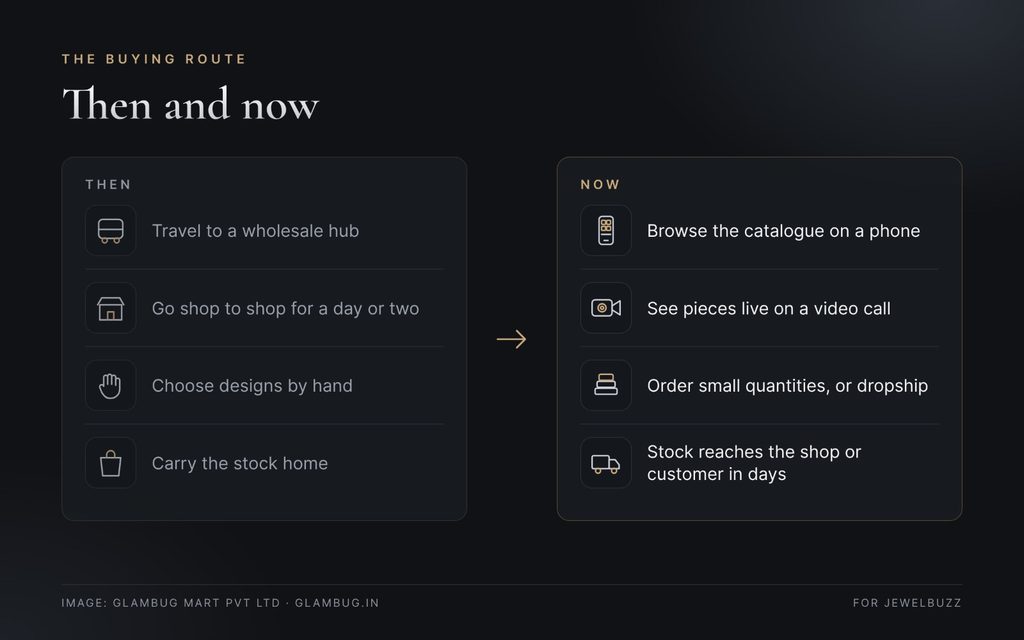
For decades, buying silver jewellery wholesale in India followed a familiar route. A retailer from a smaller town would travel to a wholesale hub, spend a day or two going from shop to shop, choose designs by hand, settle the price by weight, and carry the stock home. The model worked, but it favoured buyers with time, travel budgets and the capital to hold inventory.
That route is now changing quickly.
A New Kind Of Buyer
925 sterling silver has become one of the most active categories in Indian jewellery. As gold has grown more expensive, silver has found a wider audience in everyday fashion, gifting and festive wear, especially among younger customers.
The buyers on the wholesale side have changed too. Alongside the traditional jeweller, the trade now serves Instagram and WhatsApp sellers working from home, marketplace sellers, and first-time founders building their own jewellery brands online. Many of them have never visited a wholesale market. They want to see designs on a phone, order in small quantities, and have stock reach them, or their customer, within days.
Four Shifts In How The Trade Works
1. Catalogue apps are replacing market visits. Wholesalers are moving their catalogues into B2B apps where approved buyers can see designs, weights and per-gram rates, and send an enquiry for a quotation. Pricing by weight, once negotiated at the counter, is becoming visible and consistent.
2. Video calls are replacing the showroom. For buyers who still want to see a piece before ordering, live video selection lets them check finish, size, clasps and hallmarks on camera without travelling.
3. Dropshipping is lowering the cost of entry. A growing number of small sellers start with no inventory. They list designs online, and the wholesaler packs and ships each order directly to the end customer. For a home-based reseller, this removes the biggest barrier to starting: the cost of stock.
4. Integration is replacing manual updates. Online brands on platforms such as Shopify increasingly expect a supplier’s catalogue, stock levels and order flow to connect directly to their store, rather than copying product details and updating stock by hand.
Trust Becomes The Product
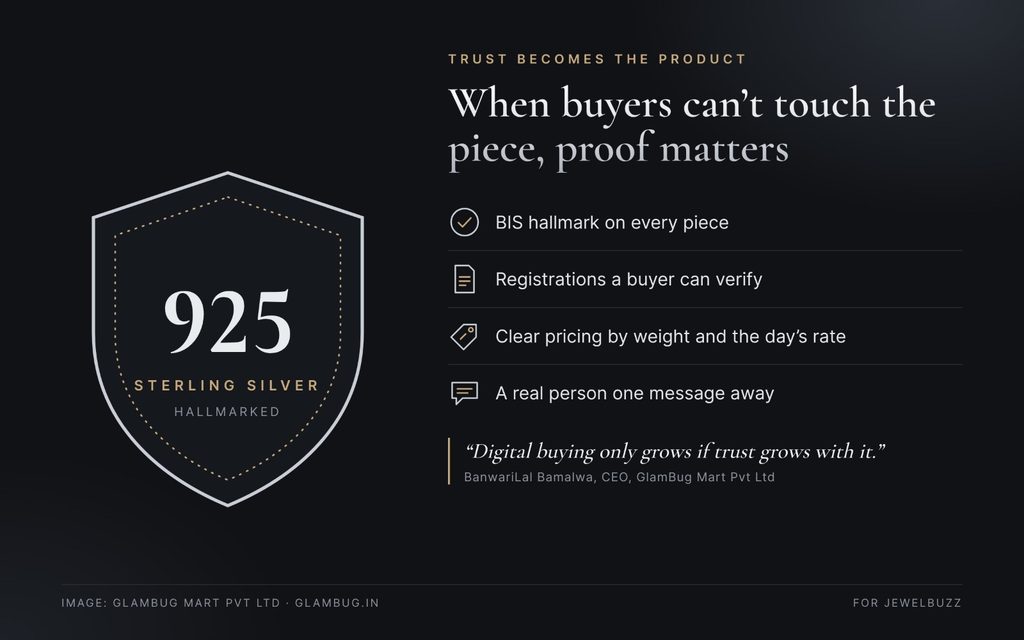
When buyers can no longer hold a piece before paying for it, trust becomes the deciding factor. Purity concerns are among the biggest worries for online jewellery shoppers and new resellers, and this is pushing hallmarking and verifiable registrations to the front of the buying decision.
Online, a buyer cannot touch the piece, so the first question is whether the silver is genuine. A supplier who openly shares their BIS registration and other credentials makes that question easy to answer. Digital buying only grows if trust grows with it.
GlamBug’s own path reflects the wider shift. The company, which imports from Italy, Turkey and Hong Kong and has held BIS hallmark registration since 2020, has over the past two years added a B2B catalogue app, video-call selection, dropshipping, a Shopify app and an API for partners, alongside its traditional wholesale business.
Our buyers changed before we did.A jeweller in a smaller town and a reseller working from home both want the same thing: to order quickly, with clear pricing and genuine silver. Technology is simply how we meet them where they already are.
The Challenges Ahead
The shift is not without friction. Silver prices can move sharply, which makes quotations harder to hold. Many traders now attach a validity window to each quote and price strictly by weight and the day’s rate. Small orders and direct shipping add packaging and logistics costs. And as more sellers enter the market, discounting can quickly erode thin margins.
Industry participants also point out that technology does not replace relationships. Many jewellers still value a call with a trusted supplier, and the most successful digital models keep a human contact a message away.
What It Means For The Trade
Digital wholesale is not replacing the traditional jeweller. It is widening the market. The same retailer who once bought only at the counter can now reorder from an app, and sellers who could never afford a showroom can build a business on hallmarked silver.
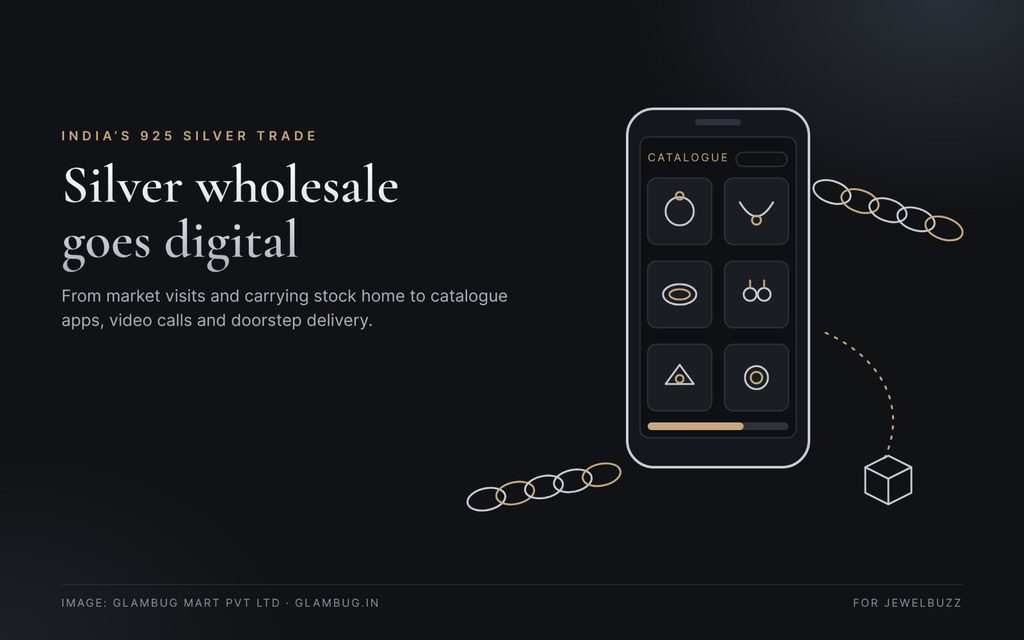
For wholesalers, the message is becoming clear: digitise the catalogue, make purity and registrations easy to verify, lower the barriers for small buyers, and connect to the platforms buyers already use. The buyers have already moved online. The trade is now catching up.


Rhenium, Iridium In Gold Under Scrutiny; GJC Urges Industry To Stay Calm and Alert, BIS Assures Vigilance and Action

GJEPC Conducts IIJS Bharat Retailers’ Connect In Kozhikode

CaratLane’s Retail Network Reaches 400 Stores In India With Chennai’s 16th Store In Pallikaranai
CaratLane’s Retail Network Reaches 400 Stores In India With Chennai’s 16th Store In Pallikaranai

Bengaluru Based Inventor Claims To Turn Elements Into Gold & Silver Using GNT
Rhenium, Iridium In Gold Under Scrutiny; GJC Urges Industry To Stay Calm and Alert, BIS Assures Vigilance and Action
-
 New Premises11 hours ago
CaratLane’s Retail Network Reaches 400 Stores In India With Chennai’s 16th Store In Pallikaranai
-
 National News15 hours ago
Bengaluru Based Inventor Claims To Turn Elements Into Gold & Silver Using GNT
-
 National News8 hours ago
Rhenium, Iridium In Gold Under Scrutiny; GJC Urges Industry To Stay Calm and Alert, BIS Assures Vigilance and Action
-

 JB Insights1 day ago
Silver Wholesale Goes Digital: How India’s 925 Silver Trade Is Changing The Way It Buys and Sells