
International News
World Gold Council to develop shared infrastructure for digital gold
The World Gold Council (WGC) today announced a pioneering initiative to build new market infrastructure designed to unlock the next era of digital gold’s development.

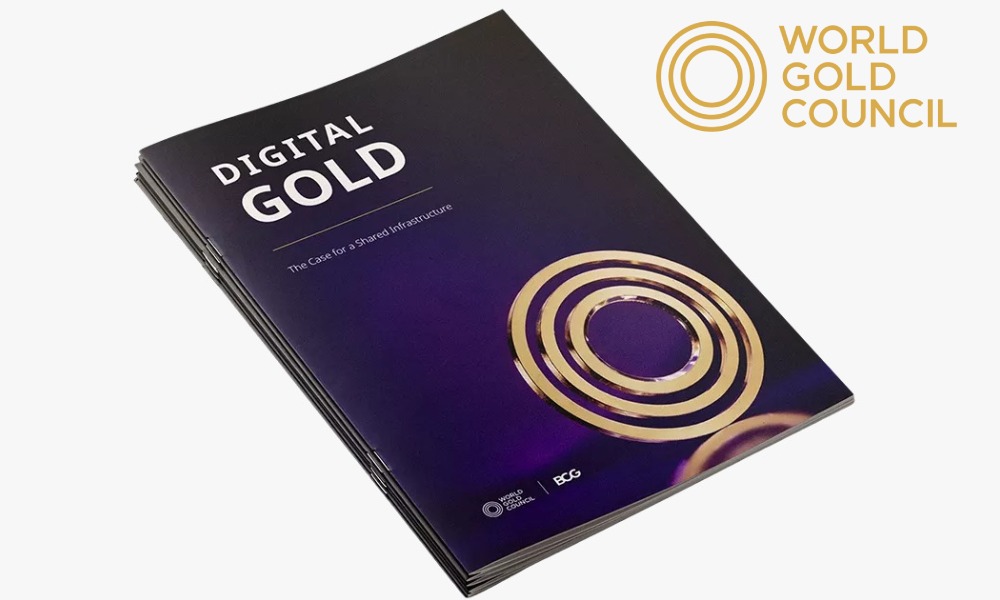
WGC has co-authored a White paper titled Digital Gold: The Case for a Shared Infrastructure with Boston Consulting Group (BCG) which explores “Gold as a Service” – a new platform to support the issuance and operation of scalable, interoperable digital gold products.
Gold as a Service would act as an open platform, connecting the physical custody of gold with the digital systems used to issue and manage gold-backed products. By standardising essential market processes such as custody coordination, reconciliation, compliance and redemption, the model aims to reduce operational complexity, improve access and enable greater consistency across digital gold products.
Addressing the Structural Barriers to Digital Gold
The White paper acknowledges that gold has already undergone meaningful digitalisation, with trading, clearing and recordkeeping now largely electronic and a growing range of digital gold products such as tokens, now available. Yet despite these innovations, digital gold remains limited in scale largely due to structural constraints. Launching and operating digital gold products remains complex, with limited standardisation and reduced fungibility restricting its ability to integrate with modern financial systems.
Gold as a Service is proposed as a response to these challenges. Recognising the physical nature of gold, it is designed to modernise how gold integrates with an increasingly digital financial ecosystem, while preserving the asset’s foundational attributes that have underpinned its role and relevance for millennia.
Key Features of the Platform Would Include:
- Seamless Product Issuance and Management: Standardised infrastructure and operating models would simplify the creation, issuance and ongoing management of digital gold products, reducing operational complexity.
- Ease of Trade: By standardising processes, Gold as a Service aims to increase digital gold’s fungibility, allowing it to function as a single asset with consistent value and legal rights across the ecosystem.
- Embedded Trust and Assurance: Continuous reconciliation, audit and assurance would be built into shared infrastructure, strengthening confidence in digital gold by supporting consistent proof of physical backing and clearly defined ownership and redemption frameworks.
- Interoperability by Design: Shared infrastructure would enable digital gold products to integrate more easily with existing financial market infrastructure and emerging digital rails, improving mobility across platforms, venues and use cases.
- Broader Utility: As fungibility and liquidity improve, digital gold could extend beyond its traditional role as a diversifier and store of value. Gold can become deployable capital, enabling new use cases like pledging gold as collateral for borrowing.
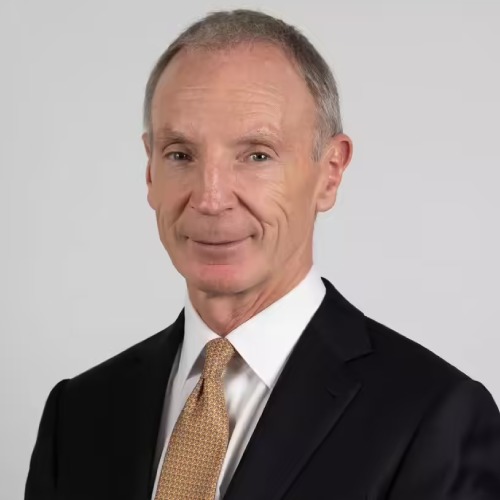
David Tait, Chief Executive Officer, World Gold Council commented:
“Financial services are undergoing a rapid and pervasive digital transformation and gold must also evolve to maintain its role in the global financial system. Gold as a Service is the latest step in the World Gold Council’s digital gold innovation programme, designed to strengthen trust, transparency and market efficiency. Shared infrastructure can help gold become more accessible, more easily traded and fully integrated into modern financial systems — ensuring it remains as relevant tomorrow as it has been for millennia.”
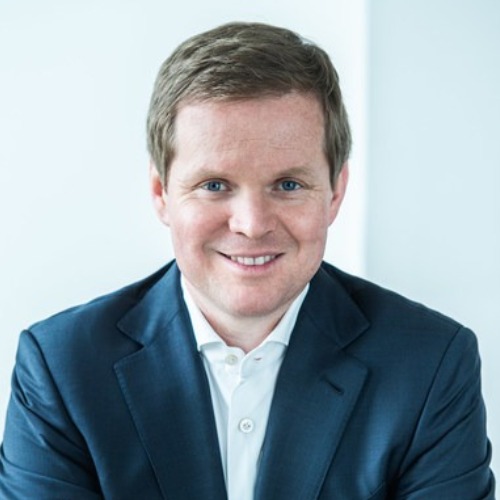
Matthias Tauber, Managing Director and Senior Partner, BCG added:
“The question is no longer whether gold will be digital, it’s how it can participate in modern financial systems without compromising physical integrity. Together with the World Gold Council, we explored what it takes to build trusted rails for digital gold, at market scale.”
The World Gold Council is calling for innovators and market participants from inside and outside the gold industry to convene, challenge and contribute to the development of this shared infrastructure that the WGC will build.


International News
Gold Prices On Track To Reach $4,900/oz By End 2026 :Goldman Sachs
Goldman’s $4,900/oz Forecast Assumes Central Bank Demand Averages 50 Tonnes Per Month In 2026 and 40 Tonnes Per Month In 2027

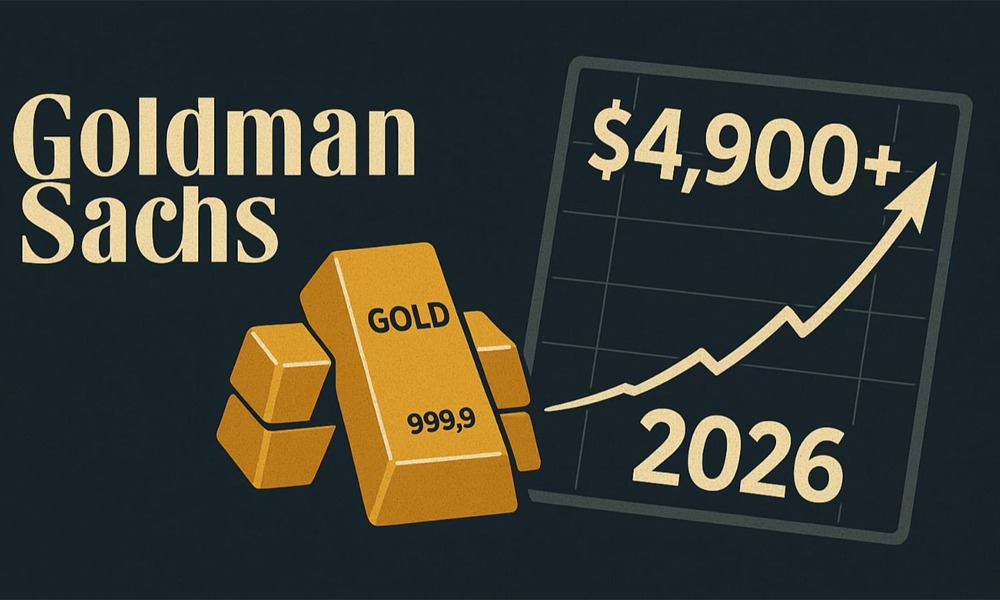
Gold prices are on track to reach $4,900 per ounce by the end of 2026, driven by aggressive central bank purchases—led by undisclosed buying from China—and recovering exchange-traded fund (ETF) demand, Goldman Sachs said in a research note.
The bank maintained its bullish base-case target for bullion while warning that positioning in options markets could amplify price volatility in both directions. Central banks accumulated an estimated 44 tonnes of gold in July, well above the pre-2022 monthly average of 17 tonnes, according to Goldman Sachs’ nowcast model. On a three-month seasonally adjusted basis, central bank buying stood at 91 tonnes per month.
China was the primary driver, with Goldman estimating the People’s Bank of China bought 35 tonnes in July—roughly 75% more than official public disclosures indicated.
To account for unreported sovereign purchases, Goldman’s model tracks physical bullion flows through London’s over-the-counter (OTC) market into custodian vaults. The Bank of England’s central bank holdings alone rose by 63 tonnes in July, exceeding outflows from the Federal Reserve Bank of New York.
Price Risks and Volatility
Goldman’s $4,900/oz forecast assumes central bank demand averages 50 tonnes per month in 2026 and 40 tonnes per month in 2027, alongside steady Federal Reserve policy and a rebound in private ETF inflows.
However, analysts noted that elevated demand for gold call options—used by investors to hedge against macroeconomic and geopolitical risks—creates mechanical upside and downside risks:
Bullish Case: Continued strong ETF inflows combined with existing call option positioning could force options dealers to buy underlying metal to hedge short exposure, pushing prices “well above” $4,900.
Bearish Case: If the Federal Reserve resumes interest rate hikes, unwinding hedge positions and triggering ETF outflows, gold could drop to $4,440/oz by end-2026. Goldman noted that ongoing central bank buying would limit further downside.
Goldman expects the Federal Reserve to remain on hold through 2026 as inflation cools, removing a key interest rate headwind for the non-yielding asset.


-

 ShowBuzz1 hour ago
SSI 2026 SETS A BIGGER STAGE FOR SILVER
-

 ShowBuzz5 hours ago
Silver Show Of India- Delhi 3rd Edition Unveiled At Yashobhoomi, Delhi
-

 ShowBuzz5 hours ago
Silver Trends To Watch At SSI Delhi 2026
-

 ShowBuzz9 hours ago
GJIIF 2026 Sets New Benchmarks As India’s Biggest-Ever Jewellery Trade Show Opens In Chennai
