
TechBuzz
Waste and Pollution Control : Enabling compliance with environmental regulations, reducing hazardous emissions

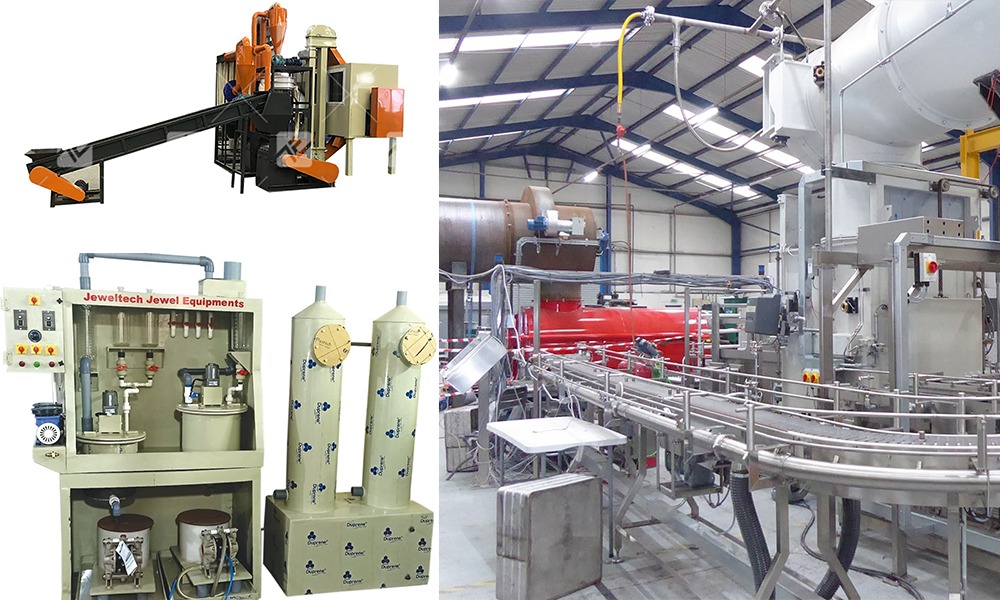
Machinery for waste and pollution control plays a critical role in the jewellery industry by enabling compliance with environmental regulations, reducing hazardous emissions, and recovering valuable metals from scraps, thereby minimizing ecological damage and operational costs.
Jewellery manufacturing generates significant waste from processes like mining, refining, casting, and polishing, including toxic chemicals, heavy metals, and wastewater that pollute water and soil. Air pollution from smelting releases sulphur dioxide, while e-waste and workshop sweeps contain recoverable gold and silver if not managed properly. In India, stricter DGFT wastage norms effective January 2025 and CPCB guidelines mandate pollution controls to prevent ecosystem harm.
Essential Machinery Types
Refining and recovery systems: Automated aqua regia plants and e-waste recycling machines extract 99%+ of gold/silver from scraps, sweeps, and plating waste, cutting landfill disposal.
Air pollution controls: Fume scrubbers, vacuum casting, and induction melters with inert gas capture acidic fumes and particulates during rhodium polishing and assaying.
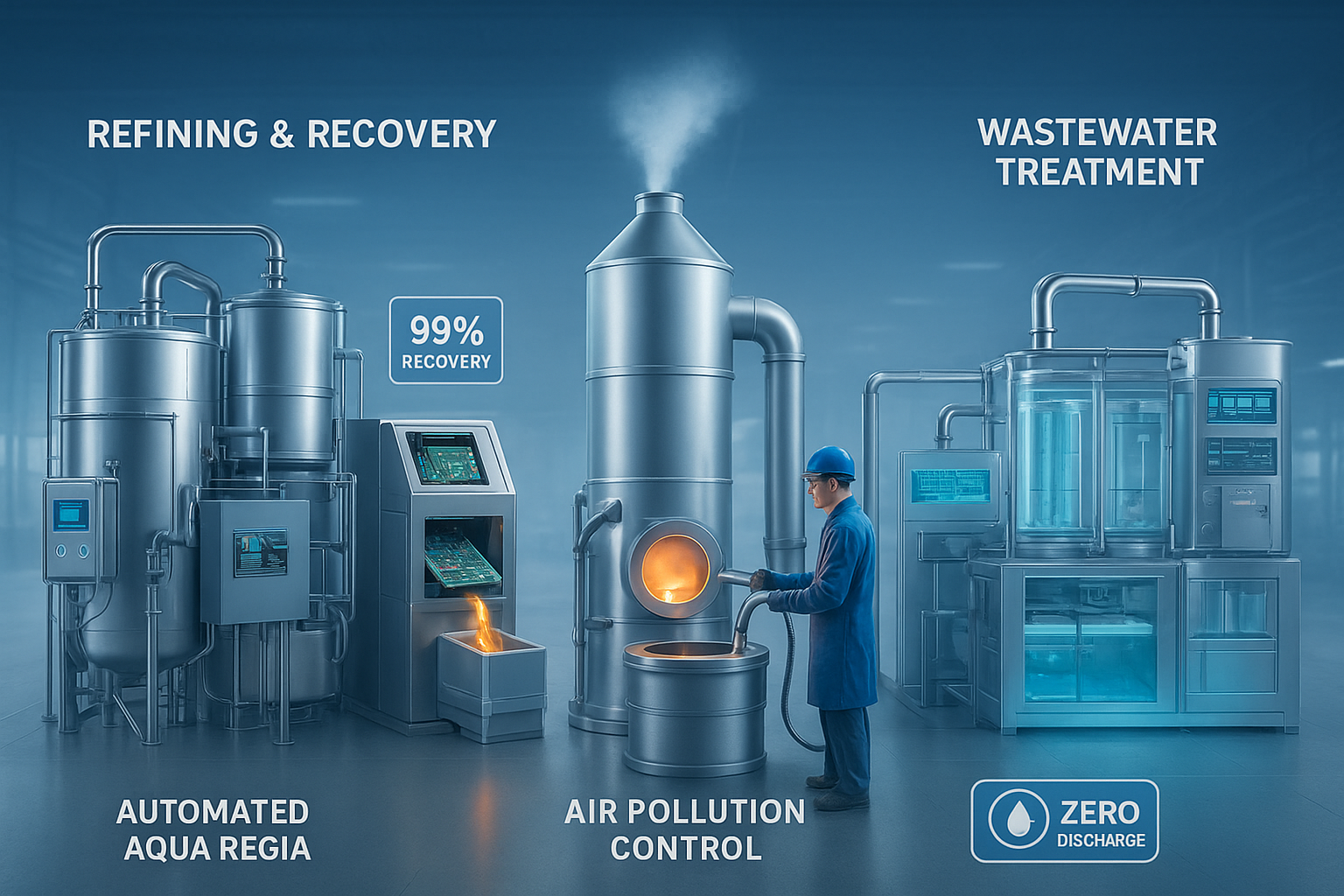
Wastewater treatment: On-site systems with e-coating and real-time monitoring (CEMS/OCEMS) treat chemical runoff from plating, ensuring zero harmful discharge per MPCB consents.
Several types of machinery and associated technologies are used in the jewelry industry to reduce pollution, primarily by improving material recovery, enhancing energy efficiency, and replacing hazardous chemicals.
Machinery for Waste and Pollution Control
- Precious Metal Recovery Incinerators: Specialized incinerators are used to burn organic waste, such as polishing dusts and floor sweepings, leaving behind ash containing precious metals that can be safely recovered. These systems often include integrated air pollution control equipment like wet venturi scrubbers and bag filters to capture escaping dust particles and neutralize harmful gases.
- Fume Control and Acid Neutralization Scrubbers: These systems remove harmful materials from industrial exhaust gases, such as those produced during acid leaching or refining processes, before they are released into the environment. They work by conveying fumes into washing columns where harmful substances are neutralized.
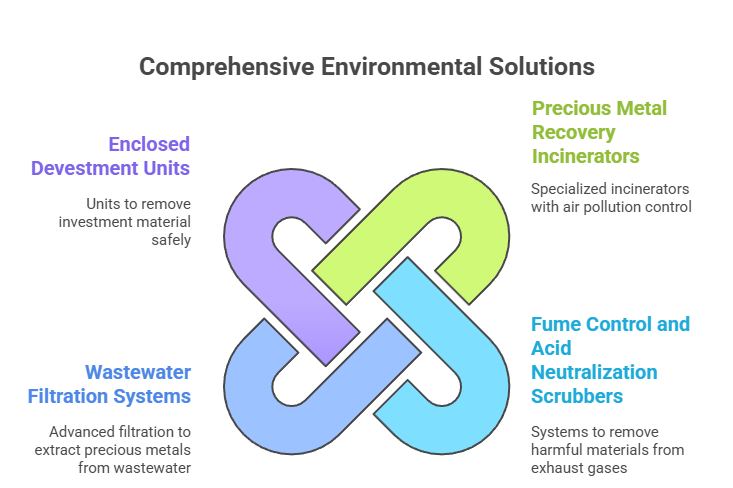
- Wastewater Filtration Systems: Advanced filtration systems, some using premium-grade resin, are designed to extract trace amounts of gold and silver particles from wastewater generated during refining and cleaning processes. This ensures a fully loss-free process and prevents water pollution.
- Enclosed Devestment Units: Instead of manual knockout, enclosed dry flask strippers with dust collection systems or high-pressure water jet wash cabinets are used to remove investment material from cast trees. This prevents worker exposure to harmful silica dust and contains the waste for proper disposal.
Production Machinery for Efficiency and Material Reduction
- Induction Melting Furnaces: These electric furnaces use electromagnetic induction to melt metals efficiently, avoiding the fossil fuels used in traditional methods. They have no open flame and are smoke-free, significantly reducing greenhouse gas emissions and air pollution.
- 3D Printers (Additive Manufacturing): By creating jewelry directly from digital designs using only the necessary material (wax, resin, or metal powder), 3D printing significantly minimizes material waste. Excess metal powder can be collected and reused, reducing the demand for newly mined materials.
- Automated Mass Finishing and Magnetic Tumblers: These machines use fine steel pins or various media to polish jewelry without the need for highly toxic chemicals like cyanide or strong acids, which were traditionally used for fire scale removal.
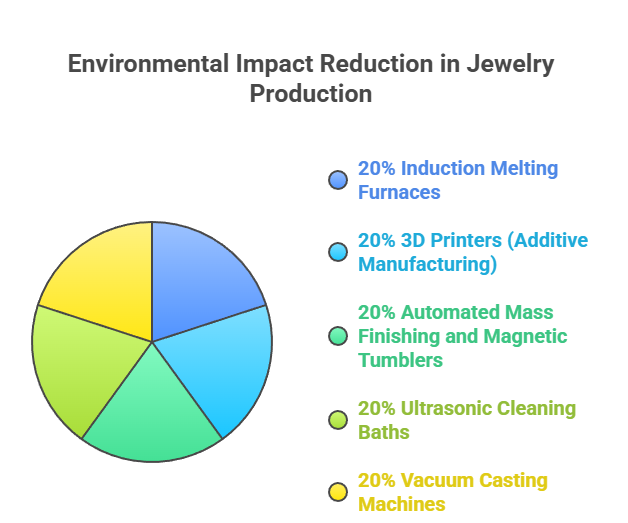
- Ultrasonic Cleaning Baths: These machines use high-frequency sound waves and mild, often eco-friendly, cleaning solutions (e.g., ammonium phosphate or hydrogen peroxide) to remove dirt and oxidation, eliminating the need for hazardous cleaning agents and strong acids.
- Vacuum Casting Machines: Modern vacuum and centrifugal casting machines prevent oxidation during the casting process by using inert gases, which reduces or eliminates the need for subsequent acid cleaning and polishing steps.
These technologies, combined with the use of recycled metals, ethically sourced lab-grown diamonds, and general energy-efficient practices (like LED lighting), are transforming the industry towards more sustainable operations.


TechBuzz
C4i4 Team Explores AI, Industry 4.0 Applications At IIGJ, Mega CFC
The Visit Focused On Identifying Opportunities To Apply AI and Industry 4.0 Technologies Across Jewellery Manufacturing, Skills Development and Cluster Infrastructure

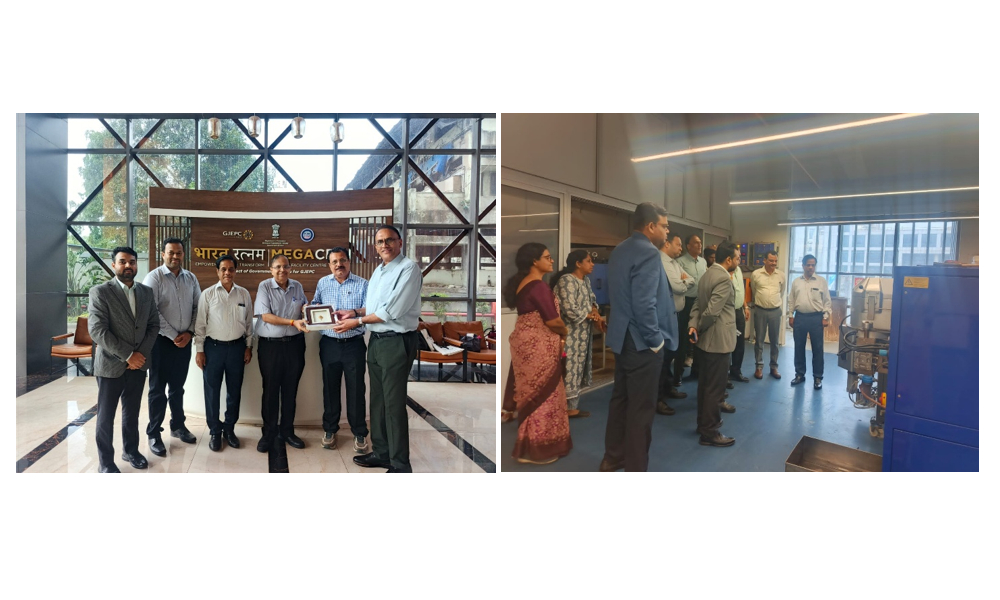
The Centre for Industry 4.0 (C4i4), Pune, which works with Indian manufacturers to support the adoption of advanced digital and smart manufacturing technologies, visited the Indian Institute of Gems & Jewellery (IIGJ) and Mega Common Facility Centre (Mega CFC), Mumbai, on 8 September to explore applications of Artificial Intelligence (AI) and Industry 4.0 in jewellery manufacturing and skilling.
The C4i4 team comprised Dattatraya Navalgundkar, Bilal Ahmed and Sunil Bhatambrekar. At IIGJ, Siddhartha H., COO, GJEPC, provided an overview of the institute, while Dr. Anju Singh, Dean (Academics), IIGJ Mumbai, briefed the team on its curriculum and academic programmes. Koushik S.V., Head – Skill Development Division, IIGJ Udupi, shared details of skilling initiatives, including the PM Vishwakarma scheme and its relevance to artisans and traditional skills. Discussions also covered jewellery valuation programmes conducted for Customs and GST officials.
Ravi Menon, CEO, Mega CFC, outlined the centre’s establishment and facilities, while Mithilesh Pandey, Senior Director, GJEPC, briefed the delegation on cluster development initiatives and the role of common facilities in strengthening the jewellery manufacturing ecosystem.
The visit focused on identifying opportunities to apply AI and Industry 4.0 technologies across jewellery manufacturing, skills development and cluster infrastructure.



Belgian Prime Minister Bart De Wever opens expanded HRD Antwerp laboratory in Mumbai

Verlas Introduces the ‘Alyssa’ Collection in India, Bringing Modern Luxe Floral-Inspired Design to Lab-Grown Diamond Jewelry Crafted in Fine Gold

Gold rebounds,Silver reclaims Rs 2.33 lakh mark

Limelight Lab Grown Diamonds Inaugurates Showroom In Kalyan, Its 8th Exclusive Store MMR
Verlas Introduces the ‘Alyssa’ Collection in India, Bringing Modern Luxe Floral-Inspired Design to Lab-Grown Diamond Jewelry Crafted in Fine Gold
Belgian Prime Minister Bart De Wever opens expanded HRD Antwerp laboratory in Mumbai
-
 National News2 days ago
Limelight Lab Grown Diamonds Inaugurates Showroom In Kalyan, Its 8th Exclusive Store MMR
-
 BrandBuzz19 hours ago
Verlas Introduces the ‘Alyssa’ Collection in India, Bringing Modern Luxe Floral-Inspired Design to Lab-Grown Diamond Jewelry Crafted in Fine Gold
-
 DiamondBuzz19 hours ago
Belgian Prime Minister Bart De Wever opens expanded HRD Antwerp laboratory in Mumbai
-
 National News21 hours ago
Gold rebounds,Silver reclaims Rs 2.33 lakh mark
