
International News
US ends sub $800 import exemption wef Aug 29, intensifies cost pressures on diamond, jewellery trade

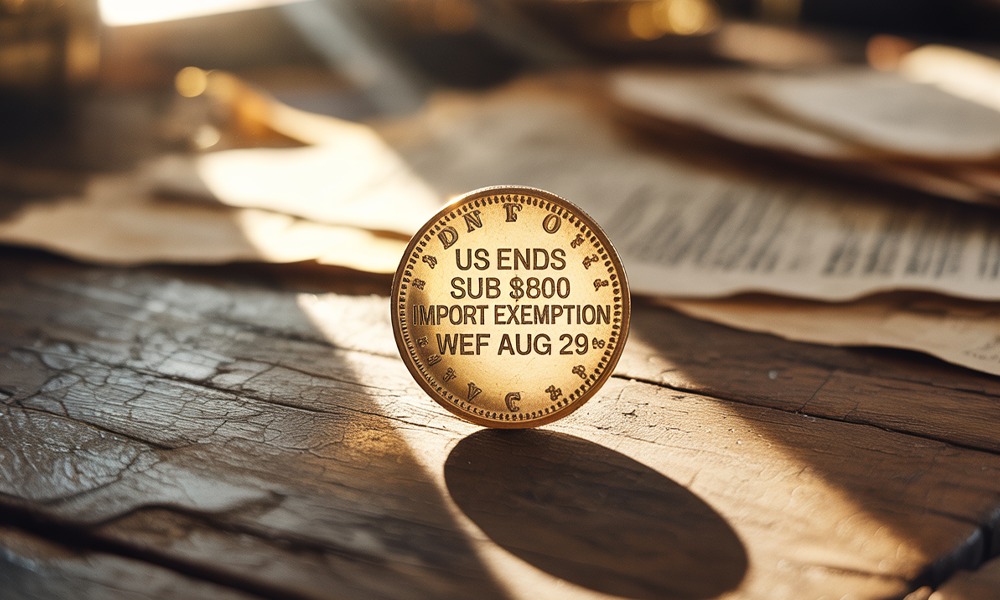
As of 29 August, the long-standing loophole that allowed goods worth under $800 to enter the United States duty-free has officially closed. Known as the de minimis exemption, this facility was widely used by exporters across industries—including the diamond and jewelry sector—to ship smaller parcels without attracting customs duties.
The end of this exemption comes at a particularly challenging time for the trade. The industry is already reeling under reciprocal tariffs of at least 10% on all US trading partners and a punitive 50% tariff on Indian imports, measures that have significantly disrupted supply chains and increased costs.
The removal of de minimis—Latin for “about minimal things”—signals a major shift in US trade policy, as all shipments, regardless of their value, will now attract tariffs and customs duties. The move was formalized in an executive order issued on 30 July, titled Suspending Duty-Free De Minimis Treatment for All Countries. While China and Hong Kong lost their exemption earlier on 2 May, the measure has now been extended to all countries without exception.
For the diamond and jewelry industry, which often relies on multiple small consignments to fulfill just-in-time retail orders, the impact is expected to be significant. Exporters will now face not only higher duties but also additional administrative and compliance costs.
In anticipation of the change, the Jewelers Vigilance Committee (JVC) has issued a set of guidelines urging businesses to prepare for the new trade environment:
- Review supply chains to identify goods previously imported under de minimis.
- Recalculate landed costs, incorporating duty rates into pricing models.
- Engage suppliers and customs brokers to ensure readiness for the new regime.
- Communicate transparently with customers about expected cost increases.
- Reconsider shipping strategies, such as consolidating orders or adjusting shipment sizes, to minimize administrative overheads.
Industry observers warn that the removal of de minimis could reshape the way international jewelry trade with the US is conducted, forcing companies to adopt more consolidated and cost-efficient shipment models. For Indian exporters, already under heavy tariff pressure, this marks yet another hurdle in maintaining competitiveness in the world’s largest jewelry consumer market.








International News
GJEPC Promotes Key Trade Events At IGI Dubai Event
The Dubai Event Created Opportunities For Participating Indian Exporters To Connect Directly With Potential Buyers.

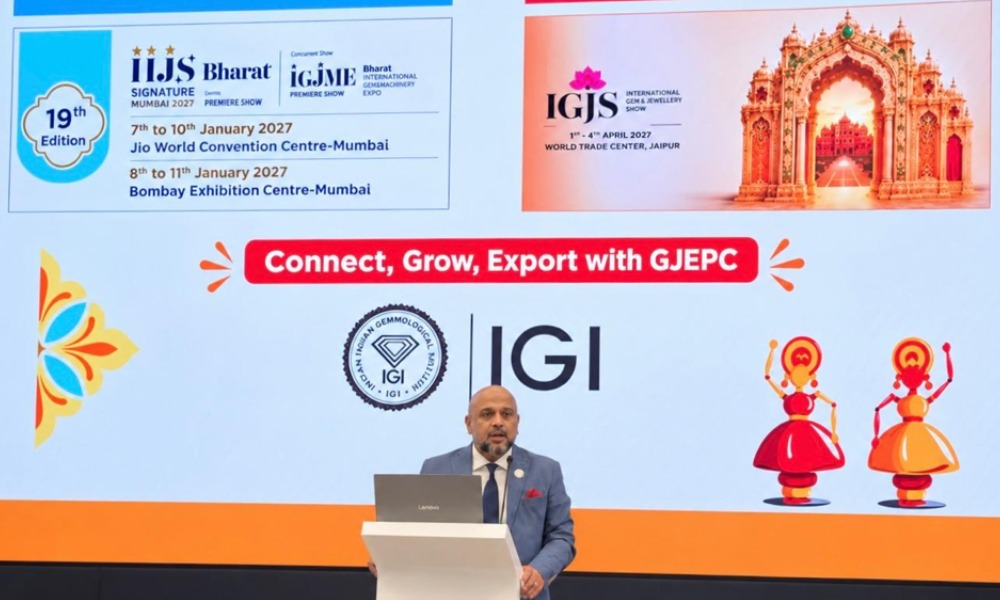
GJEPC stepped up its international buyer outreach for IIJS Bharat – Signature 2027, IGJS Jaipur and IJEX at an industry event organised by the International Gemological Institute (IGI) in Dubai.
Held at the Almas Tower Ballroom in Jumeirah Lake Towers, the IGI Ornamental QC Seminar brought together an audience of more than 70 jewellers, with leading retailers including Jawhara, Joyalukkas, Tajvi, Vinsmera, La Marquise, Bhima and Cara among the expected participants.
Ashish Sakhardande, Head – IJEX, GJEPC, represented the Council and delivered a presentation on its upcoming exhibitions and initiatives, placing particular emphasis on IIJS Bharat – Signature 2027, IGJS Jaipur and IJEX, highlighting its new features and inviting UAE buyers to register for the Mumbai and Jaipur shows.
The UAE remains an important market for Indian jewellery exporters, making direct engagement with retailers and jewellery companies a key part of the buyer mobilisation strategy.
The Dubai event created opportunities for participating Indian exporters to connect directly with potential buyers. Business meetings and networking interactions were facilitated with several UAE-based companies, allowing exporters participating through IJEX to develop new commercial contacts.



Focus Should Remain On Price Stability, Consumer Confidence and Healthy Jewellery Demand: GJC Comment On RBI Rate Hike Impact On Gold Prices

Natural Diamond Brand ZOORI Unveils Ambitious National Expansion Plan, Targets 25 Stores In A Year!

India–UK FTA: Opening A New Chapter For Indian Jewellery
Focus Should Remain On Price Stability, Consumer Confidence and Healthy Jewellery Demand: GJC Comment On RBI Rate Hike Impact On Gold Prices

GJEPC Conducts Industry Knowledge Session In Meerut

Navigating Gold Loans During Repo Rate Hikes
-
 National News54 minutes ago
Focus Should Remain On Price Stability, Consumer Confidence and Healthy Jewellery Demand: GJC Comment On RBI Rate Hike Impact On Gold Prices
-
 National News3 hours ago
GJEPC Conducts Industry Knowledge Session In Meerut
-
 National News3 hours ago
Navigating Gold Loans During Repo Rate Hikes
-
 JB Insights3 hours ago
India–UK FTA: Opening A New Chapter For Indian Jewellery
