
International News
U.S. gold prices decline on geopolitical and economic developments
By Steve Fernandes


U.S. gold prices have experienced a notable decline, falling from a recent high of $3,509 to $3,310. This $199 drop can be attributed to a combination of geopolitical and economic developments that have reduced market demand for safe-haven assets.

Key Factors Driving the Decline
- Stability in U.S. Monetary Policy
Investor concerns over potential instability in U.S. monetary policy were mitigated following former President Donald Trump’s remarks reaffirming his support for Federal Reserve Chair Jerome Powell. By ruling out any intention to replace Powell, Trump contributed to a sense of continuity and stability in monetary leadership, reducing speculative demand for gold. - Positive Signals in U.S.-China Trade Relations
Sentiment was further boosted by optimistic statements from Trump regarding ongoing trade negotiations with China. His characterization of the discussions as “progressing positively” and his expressed confidence in achieving a mutually beneficial agreement have lowered immediate fears of trade disruptions, easing the flight to gold. - Geopolitical Easing in Eastern Europe
Russian President Vladimir Putin’s willingness to initiate talks with Ukrainian President Volodymyr Zelenskyy has raised hopes for a ceasefire agreement. This development has encouraged a shift in investor sentiment toward riskier assets, further weakening gold’s appeal as a safe haven.
Contrasting Forecast: Bullish Outlook from JP Morgan
Despite the current decline, JP Morgan has issued a bullish long-term outlook, projecting that gold prices could exceed $4,000 per ounce by Q2 2026. The forecast is driven by concerns over a potential U.S. recession and the impact of renewed trade tensions stemming from Trump-era tariffs.
The recent decline in gold prices underscores the complexity and volatility of today’s economic landscape. While current developments have encouraged a risk-on sentiment, longer-term forecasts suggest persistent uncertainty could reignite demand for gold. In a volatile, uncertain, complex, and ambiguous (VUCA) world, forecasting commodity movements remains inherently challenging.








International News
US Holiday Shopping Expected To Top $1 Trillion For The First Time: NRF
While Overall Buying Power Remains High, Ongoing Inflation and Rising Household Costs Mean Some Families Will Have To Watch Their Spending More Carefully Than Others

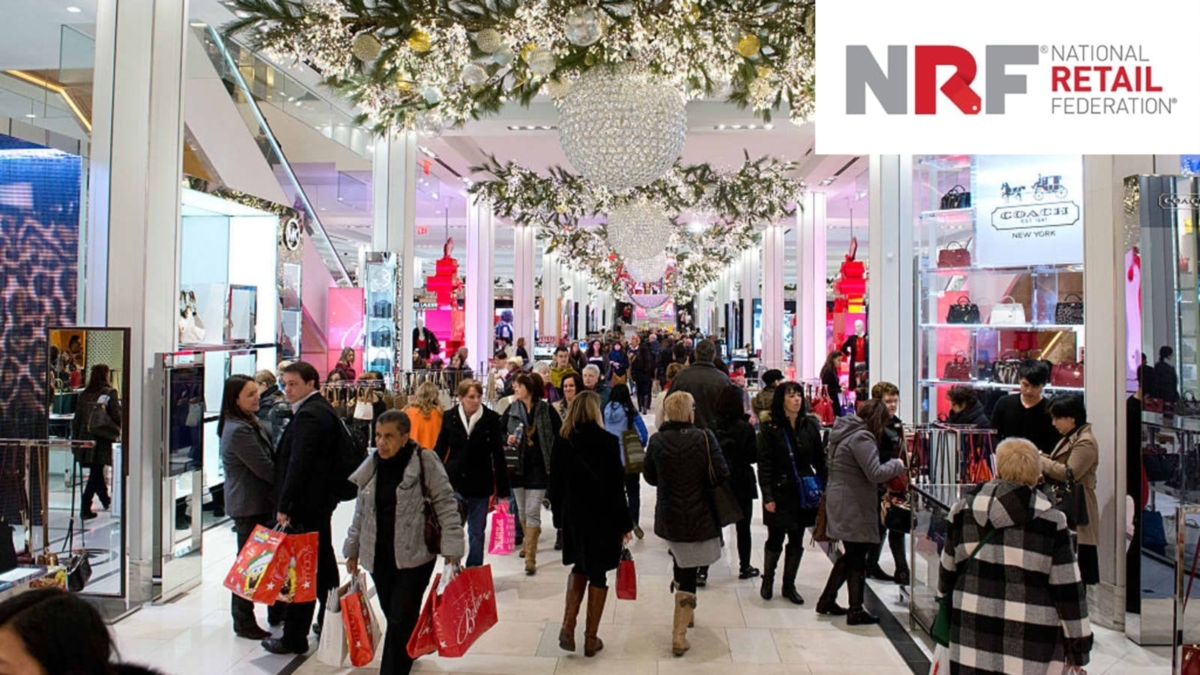
The National Retail Federation (NRF) predicts Americans will spend $1.01 trillion on holiday shopping in November and December. That is a 4.2% jump from $972 billion last year.
NRF said its forecast was based on economic modeling that incorporates consumer spending, employment, wages and historical retail sales data. It excludes automobile, gasoline and restaurant sales
Extra Hiring: To handle the surge in shoppers, stores plan to hire 325,000 to 375,000 temporary holiday workers.
Mixed Budget Impact: Higher gas prices and inflation could still strain some family budgets, affecting low- and high-income shoppers differently.
Retailers expect a strong shopping season because people continue to make holiday spending a priority.
Store owners are ready to attract shoppers by offering competitive prices, deals, and choices for every budget.
While overall buying power remains high, ongoing inflation and rising household costs mean some families will have to watch their spending more carefully than others.



Belgian Consul General H. E. Mr. Pierre Stverlynck Graces BDB Annual Day

Limelight Lab Grown Diamonds Crosses 100 Stores Milestone This Dussehra: Targets 200 In 2027

Joyalukkas Opens Its 2nd Bengaluru Showroom in Jayanagar

US Holiday Shopping Expected To Top $1 Trillion For The First Time: NRF
Belgian Consul General H. E. Mr. Pierre Stverlynck Graces BDB Annual Day
Limelight Lab Grown Diamonds Crosses 100 Stores Milestone This Dussehra: Targets 200 In 2027
-
 International News18 hours ago
US Holiday Shopping Expected To Top $1 Trillion For The First Time: NRF
-
 National News12 hours ago
Belgian Consul General H. E. Mr. Pierre Stverlynck Graces BDB Annual Day
-
 National News13 hours ago
Limelight Lab Grown Diamonds Crosses 100 Stores Milestone This Dussehra: Targets 200 In 2027
-
 New Premises13 hours ago
Joyalukkas Opens Its 2nd Bengaluru Showroom in Jayanagar
