JB Insights
The New Diamond Code: Why Today’s Brides Are Choosing ANOR Pioneers in Premium Grown Diamond Jewellery
How Premium Grown Diamonds Are Redefining Bridal Luxury Through Craftsmanship, Conscious Choice and Modern Values


A major shift is underway in the bridal jewellery market. As consumer awareness grows and priorities evolve, a new pattern is emerging: modern brides are increasingly gravitating toward premium grown diamonds and at the centre of this shift is ANOR, with a registered trademark on its Premium Grown Diamond.
What began as a niche category is now reshaping the definition of luxury occasion wear and bridal jewellery. For many brides, the diamond they choose is no longer just a symbol of tradition; it is a statement of identity, values, and informed choice.
An Industry at a Turning Point
For decades, mined diamonds dominated the narrative of love and commitment. But today’s consumer is more conscious about sustainability, transparency, and what truly determines quality. The modern bride is looking for a balance in their budget with spending equally as much on a memorable destination wedding as their Jewellery and clothes.
Grown diamonds, especially those in the premium segment, now offer an alternative that does not compromise on luxury. ANOR has positioned itself at this intersection of sustainability and craftsmanship, introducing grown diamonds to a space traditionally reserved for high-end fine jewellery.
The Quality Equation: Cut, Clarity, Craftsmanship
Diamond specialists often refer to cut, clarity, and craftsmanship as the backbone of a diamond’s identity. A Grown Diamond is no different in its grading and ANOR’s approach to these fundamentals is rooted in precision and selectivity
cut
Experts agree that the cut of a diamond more than any other factor dictates its brilliance. ANOR’s diamonds are shaped using advanced cutting techniques that ensure optimal light reflection. Every facet is engineered to deliver maximum fire and sparkle, meeting the expectations of customers accustomed to premium jewellery.

Clarity
Premium Grown diamonds are produced in controlled environments, which often result in fewer natural flaws. ANOR builds on this advantage, selecting only high-clarity stones and subjecting them to an additional layer of scrutiny. The clarity allows for stronger light performance and contributes to a cleaner, more refined visual profile.
Craftsmanship
While technology plays a role, the outcome depends on human expertise. ANOR’s jewellery pieces are crafted by artisans trained to achieve fine-jewellery-level finishes. Precision in setting, attention to detail, and proportionate design ensure that each diamond is showcased at its best. ANOR’s jewellery are all hand-made and made as unique pieces, where quality check is the cornerstone of the brand.

Premium Grown Diamonds: The Foundation of Premium Jewellery
Research indicates that grown diamonds have become increasingly popular among younger buyers due to their consistent quality and ethical appeal. But their transition into luxury jewellery has been slower largely because not every brand invests in elevating them to high-jewellery standards. ANOR’s strategy addresses exactly this gap. By combining high-grade grown diamonds with luxury craftsmanship, the brand creates jewellery that mirrors the refinement of traditional premium pieces while offering a modern alternative rooted in innovation. Perhaps the most captivating element of an ANOR diamond is how it interacts with light. Engineered with precision and finished with artisanal finesse, each diamond releases a spectrum of brilliance fire, sparkle, and scintillation that shift with movement. When worn by a bride, this play of light creates a subtle yet unforgettable drama, capturing every moment with elegance.


JB Insights
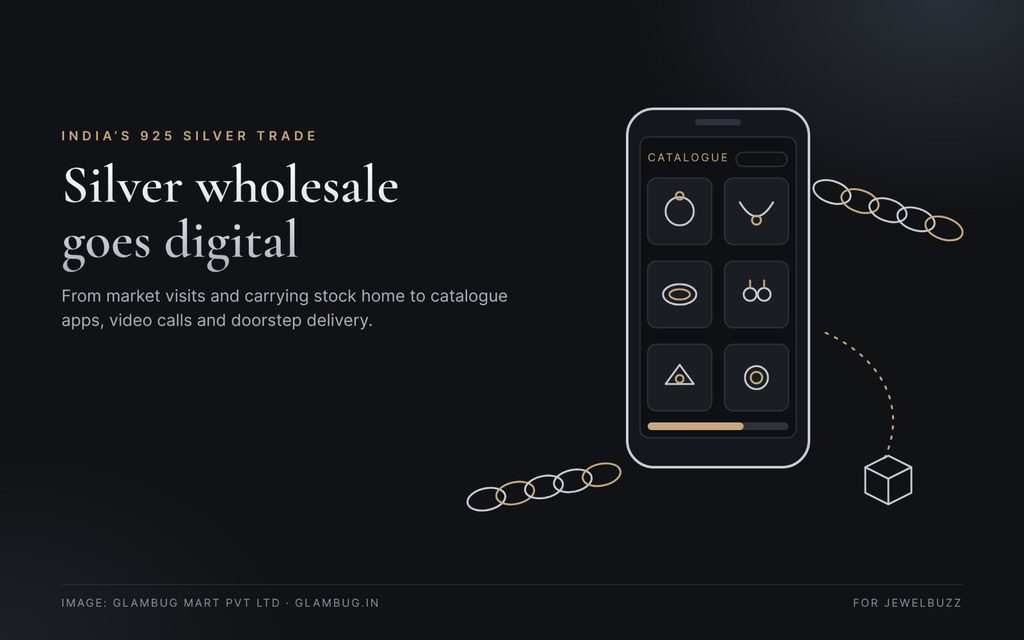
Silver Wholesale Goes Digital: How India’s 925 Silver Trade Is Changing The Way It Buys and Sells
The buyers on the wholesale side have changed too. Alongside the traditional jeweller, the trade now serves Instagram and WhatsApp sellers working from home, marketplace sellers, and first-time founders building their own jewellery brands online

By BanwariLal Bamalwa CEO | Director, GlamBug Mart Pvt Ltd

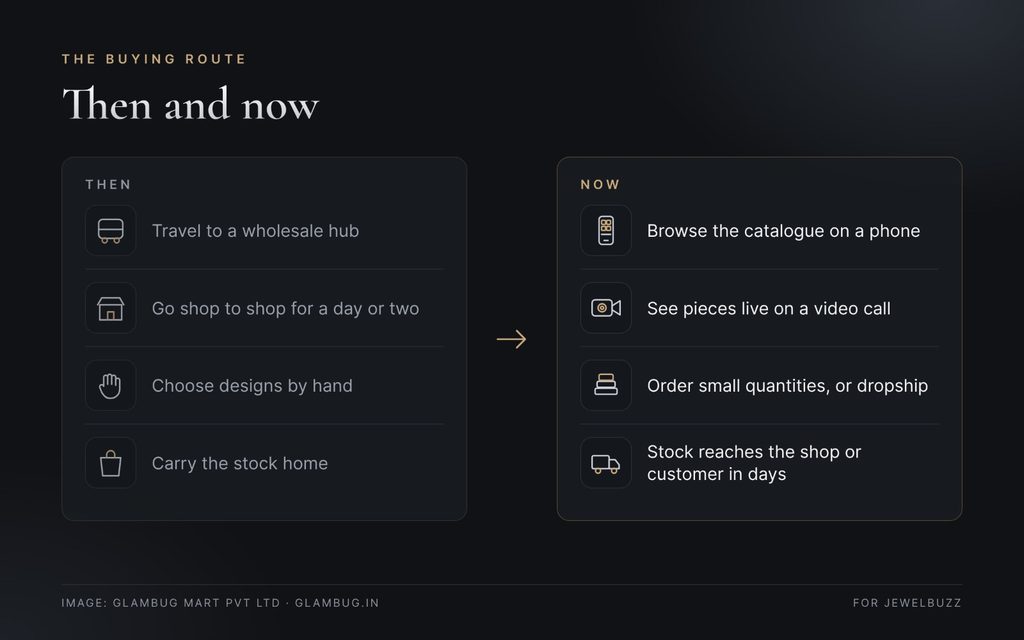
For decades, buying silver jewellery wholesale in India followed a familiar route. A retailer from a smaller town would travel to a wholesale hub, spend a day or two going from shop to shop, choose designs by hand, settle the price by weight, and carry the stock home. The model worked, but it favoured buyers with time, travel budgets and the capital to hold inventory.
That route is now changing quickly.
A New Kind Of Buyer
925 sterling silver has become one of the most active categories in Indian jewellery. As gold has grown more expensive, silver has found a wider audience in everyday fashion, gifting and festive wear, especially among younger customers.
The buyers on the wholesale side have changed too. Alongside the traditional jeweller, the trade now serves Instagram and WhatsApp sellers working from home, marketplace sellers, and first-time founders building their own jewellery brands online. Many of them have never visited a wholesale market. They want to see designs on a phone, order in small quantities, and have stock reach them, or their customer, within days.
Four Shifts In How The Trade Works
1. Catalogue apps are replacing market visits. Wholesalers are moving their catalogues into B2B apps where approved buyers can see designs, weights and per-gram rates, and send an enquiry for a quotation. Pricing by weight, once negotiated at the counter, is becoming visible and consistent.
2. Video calls are replacing the showroom. For buyers who still want to see a piece before ordering, live video selection lets them check finish, size, clasps and hallmarks on camera without travelling.
3. Dropshipping is lowering the cost of entry. A growing number of small sellers start with no inventory. They list designs online, and the wholesaler packs and ships each order directly to the end customer. For a home-based reseller, this removes the biggest barrier to starting: the cost of stock.
4. Integration is replacing manual updates. Online brands on platforms such as Shopify increasingly expect a supplier’s catalogue, stock levels and order flow to connect directly to their store, rather than copying product details and updating stock by hand.
Trust Becomes The Product
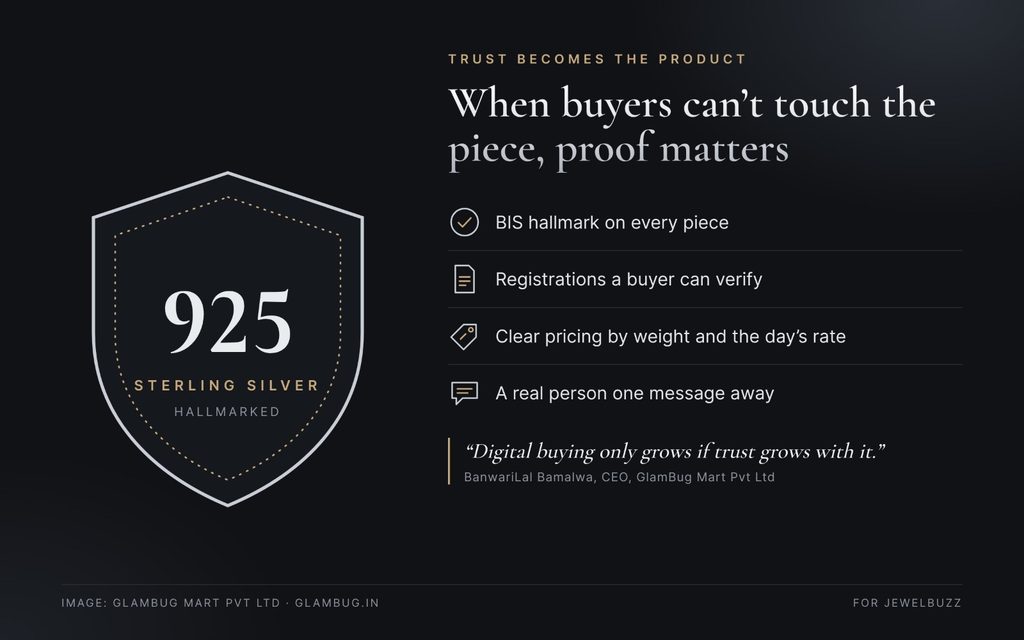
When buyers can no longer hold a piece before paying for it, trust becomes the deciding factor. Purity concerns are among the biggest worries for online jewellery shoppers and new resellers, and this is pushing hallmarking and verifiable registrations to the front of the buying decision.
Online, a buyer cannot touch the piece, so the first question is whether the silver is genuine. A supplier who openly shares their BIS registration and other credentials makes that question easy to answer. Digital buying only grows if trust grows with it.
GlamBug’s own path reflects the wider shift. The company, which imports from Italy, Turkey and Hong Kong and has held BIS hallmark registration since 2020, has over the past two years added a B2B catalogue app, video-call selection, dropshipping, a Shopify app and an API for partners, alongside its traditional wholesale business.
Our buyers changed before we did.A jeweller in a smaller town and a reseller working from home both want the same thing: to order quickly, with clear pricing and genuine silver. Technology is simply how we meet them where they already are.
The Challenges Ahead
The shift is not without friction. Silver prices can move sharply, which makes quotations harder to hold. Many traders now attach a validity window to each quote and price strictly by weight and the day’s rate. Small orders and direct shipping add packaging and logistics costs. And as more sellers enter the market, discounting can quickly erode thin margins.
Industry participants also point out that technology does not replace relationships. Many jewellers still value a call with a trusted supplier, and the most successful digital models keep a human contact a message away.
What It Means For The Trade
Digital wholesale is not replacing the traditional jeweller. It is widening the market. The same retailer who once bought only at the counter can now reorder from an app, and sellers who could never afford a showroom can build a business on hallmarked silver.
For wholesalers, the message is becoming clear: digitise the catalogue, make purity and registrations easy to verify, lower the barriers for small buyers, and connect to the platforms buyers already use. The buyers have already moved online. The trade is now catching up.


5 Solitaire Engagement Rings by Divine Solitaires for Brides with Different Personal Styles

RBI To Meet Top NBFC Chiefs; Gold Loan Repayments, Cyber Risks To Be Focus Areas

De Beers Group In Collaboration With Grandview Klein Diamond Unveils Namibia’S 176 Carat Owishi Natural Diamond In Washington, Dc
De Beers Group In Collaboration With Grandview Klein Diamond Unveils Namibia’S 176 Carat Owishi Natural Diamond In Washington, Dc
RBI To Meet Top NBFC Chiefs; Gold Loan Repayments, Cyber Risks To Be Focus Areas
5 Solitaire Engagement Rings by Divine Solitaires for Brides with Different Personal Styles
-
 DiamondBuzz19 hours ago
De Beers Group In Collaboration With Grandview Klein Diamond Unveils Namibia’S 176 Carat Owishi Natural Diamond In Washington, Dc
-
 DiamondBuzz19 hours ago
RBI To Meet Top NBFC Chiefs; Gold Loan Repayments, Cyber Risks To Be Focus Areas
-
 National News18 hours ago
5 Solitaire Engagement Rings by Divine Solitaires for Brides with Different Personal Styles
-

 National News20 hours ago
Koskii Announces The SuperBride Season 4 With Indriya By Aditya Birla As Official Jewellery Partner