

National News
Surge in Gold Prices Triggers Flood of Sellers in Asia and the Middle East

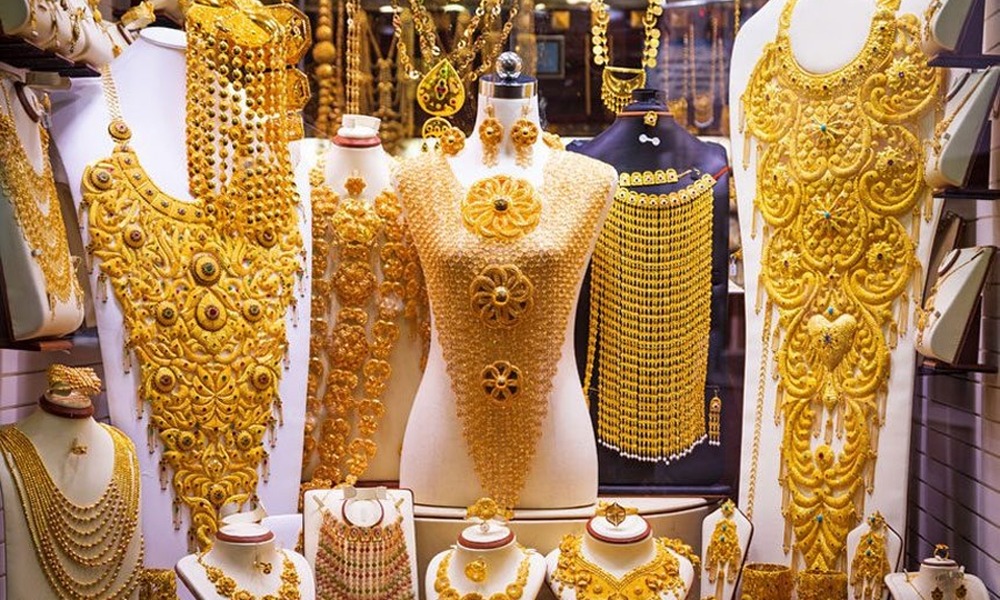
As gold prices soar to record highs, jewellers across Asia and the Middle East are witnessing a growing trend of customers selling off old jewellery and coins, leading to a noticeable decline in demand for new pieces. If this selling spree persists, experts warn that it could slow down imports into key markets, potentially dampening the ongoing rally in gold prices.
Spot gold hit $3,000 per ounce for the first time on March 14, continuing to climb last week, marking an impressive 15% increase year-to-date, driven by global political and financial uncertainty. The price surge follows a nearly 30% jump in 2024, prompting a rise in business for scrap gold buyers in India’s Zaveri Bazaar, the country’s largest bullion market.
Unmesh Patel, a textile trader in India, recently earned a 25% return on four 10-gram gold coins purchased less than seven months ago, after the Indian government reduced import duties on gold. Patel chose to sell instead of waiting for prices to rise even further. Domestic gold prices in India have risen over 32% since the import duty reduction, reaching a record high of 89,796 rupees per 10 grams.
According to Prithviraj Kothari, president of the India Bullion and Jewellers Association (IBJA), if these high prices persist throughout the year, India’s overall gold demand could fall by more than 30% in 2025. With budgets stretched, buyers are increasingly unable to keep up with soaring prices.
Despite it being India’s wedding season, jewellers are seeing significantly reduced foot traffic, with many customers opting to exchange old jewellery for new in order to manage costs. India’s scrap gold supply, which totaled 114.3 tons last year, is expected to rise in 2025, further reflecting these changes in consumer behavior.
Similar trends are evident in the Middle East. In Dubai, a key jewellery hub, a decline in demand is being noted, with many Indian tourists opting to hold off on purchases, despite the appeal of avoiding import taxes. In the UAE, where 60% of gold demand is for jewellery, consumers are gravitating toward lower-weight products in response to high prices.
China, the world’s largest gold consumer, is also seeing a dip in retail gold purchases, with many buyers turning to coins and bars rather than paying premiums for crafted jewellery. Other major Asian markets are experiencing the same shift toward selling existing gold or using it as loan collateral.
These market dynamics reflect a delicate balance between gold’s cultural significance as a commodity and its growing role as a financial asset. Looking forward, experts predict continued strong demand for gold bullion, but the outlook for jewellery sales remains uncertain.









India’s appetite for borrowing against gold is reshaping the country’s credit landscape. Outstanding gold-backed loans have surged 128% from a year earlier, crossing Rs.4 lakh crore ($48 billion) for the first time, according to data from the Reserve Bank of India. As of Jan. 31, loans secured by gold jewellery stood at Rs.4,00,517 crore, marking one of the fastest expansions in retail credit in recent years.
The boom in gold loans has helped propel overall non-food bank credit growth to 14.4% year-on-year. Personal loans now account for 34.5% of total bank lending, outpacing other segments and underscoring a broader shift toward consumer-driven credit expansion
Gold loans alone contributed roughly 9% of incremental bank credit during the period. Between January 2024 and January 2026, outstanding gold-backed credit rose by nearly Rs.3.1 lakh crore—an increase of about 338% over two years—more than quadrupling the size of the portfolio.
Two factors are driving the surge. First, gold prices have climbed roughly 152% over the past two years, increasing the collateral value of household holdings. Second, regulatory guidance requiring banks to classify loans secured by gold explicitly as gold loans has sharpened reporting and accelerated balance-sheet growth in the segment.
The trend highlights a distinctive feature of India’s financial system: households’ vast stock of physical gold, long viewed primarily as a store of wealth, is increasingly being mobilized as collateral for formal credit.
While personal lending and credit to nonbank financial companies within the services sector continue to expand rapidly, industrial credit remains uneven. Loans to micro, small and medium enterprises are growing steadily, but borrowing by large corporations has stayed relatively muted.
Since March 21, 2025, banks have added Rs.21.8 lakh crore to their non-food loan books, translating into 12% growth for the financial year to date. Yet it is gold—rather than factories or infrastructure—that is emerging as one of the most dynamic engines of India’s current credit cycle.


-

 National News4 days ago
IIBS-11: Navigating the ‘New Gold Rush’ in a fragmenting global economy
-

 International News4 days ago
Oroarezzo 2026, with Italian Exhibition Group, Manufacturing Explores New Markets
-

 International News4 days ago
Gemfields nets $53m in Bangkok ruby auction
-

 New Premises4 days ago
Limelight Diamonds Unveils Exclusive Visakhapatnam Store in the Presence of Union Minister of Civil Aviation Shri Kinjarapu Ram Mohan Naidu
