
International News
Precious Metals kick off 2026 with resilience


As 2026 begins, the precious metals market remains volatile following 2025’s historic rally, with gold up around 65% to levels exceeding $4,300–$4,400 per ounce and silver surging 140–170% amid record highs. Driven by safe-haven demand, central bank purchases, geopolitical risks, and industrial shortages (especially for silver in solar, EVs, and electronics), recent profit-taking caused corrections, yet fundamentals support resilience with expected Fed rate cuts and ongoing tensions.
Gold’s Technical Outlook and Drivers
COMEX gold trades near $4,330–$4,360, consolidating after peaks above $4,500. Short-term support holds at $4,300–$4,275, with potential upside to $4,600–$5,000 if resistance breaks. Central banks (e.g., from India and China) sustained buying as a USD/inflation hedge, while lower yields and risks from Middle East conflicts and US policies fuel flows. Analysts like those at State Street and J.P. Morgan see $5,000 feasible in 2026. In India, where gold imports impact the current account deficit, this offers hedging opportunities despite rupee pressures.
Silver’s Trajectory and Industrial Demand
Silver has rebounded to around $71–$73 per ounce after dipping from highs near $83–$86, maintaining an ascending channel with support at $68–$70 and targets of $75–$80+. Its dual role—investment and industrial (50–60% of demand)—amplifies volatility but boosts growth, with deficits exceeding 200 million ounces due to lagging mine supply and booming green tech needs. India’s jewellery and silverware sectors (15% of global consumption) benefit, competing with lab-grown diamonds and aligning via MCX.
Implications for Investors and Policymakers
Precious metals act as portfolio hedges, with gold’s negative equity correlation (~−0.4 long-term) providing stability and silver offering higher-beta returns. Strategies include dollar-cost averaging on dips and monitoring FOMC signals. For India’s jewellery industry, trends demand enhanced e-gold platforms, origin certification, and analytics for pricing. Policymakers could ease import burdens via domestic refining incentives, similar to PLI schemes.
Early 2026 volatility conceals strong bullish fundamentals, with gold targeting $4,600+ and potentially $5,000, and silver eyeing $75–$80+. Geopolitical and macro tailwinds persist, positioning metals favorably—especially in hubs like Mumbai tracking.



International News
De Beers Assumes 100% Control Of Gahcho Kué Diamond Mine
A Global Slump In Diamond Demand Hit The Company Hard. Its Revenue Dropped 42% In 2025, and Average Diamond Prices Plummete

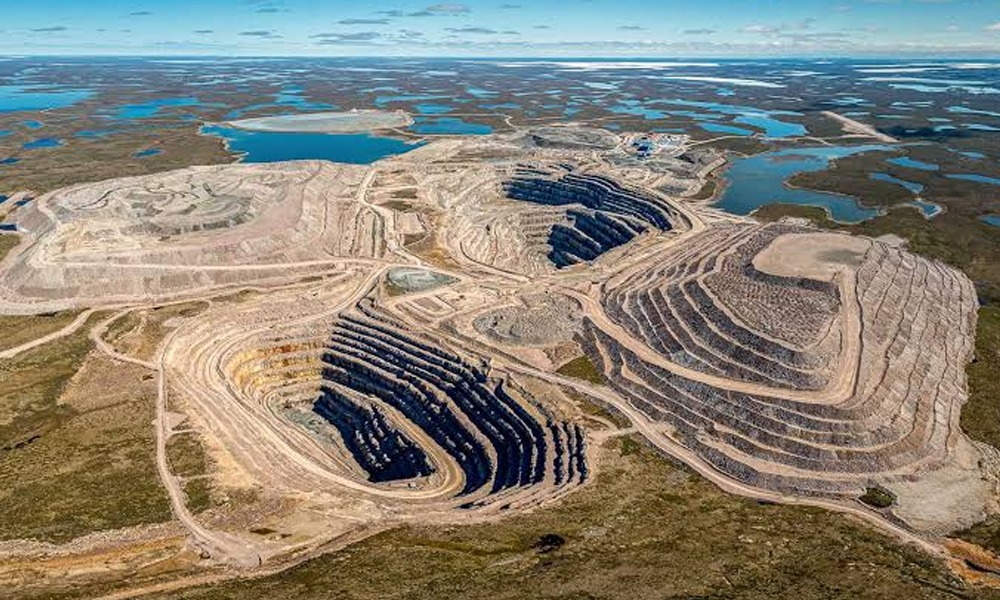
De Beers is taking 100% control of the Gahcho Kué diamond mine in Canada’s Northwest Territories. Its partner, Mountain Province Diamonds, was facing major financial trouble and agreed to hand over its 49% share in exchange for being cleared of all its debts to De Beers.
Here is why Mountain Province ran into trouble:
Falling Diamond Prices: A global slump in diamond demand hit the company hard. Its revenue dropped 42% in 2025, and average diamond prices plummeted—falling to just $36 per carat in the second quarter.
Massive Debt: Mountain Province was struggling to pay back tens of millions of dollars in short-term loans. Ratings agency S&P warning that the company was at high risk of defaulting on its debts.
Cost-Cutting and Emergency Funds: To stay afloat, the company paused expansion plans at the mine, delayed payments into environmental cleanup funds, and sold future diamond sales rights to major investor Dermot Desmond (an Irish billionaire) for quick cash.
Despite selling twice as many diamonds recently, prices were too low to cover their debts.
CEO Jonathan Comerford explained that trade tariffs and Middle East conflicts crushed diamond prices, leaving handing over their share of the mine as the best option to cancel liabilities and secure local jobs.



GJS 2026 Diwali Edition Concludes On A High Note With Record Sales

GJEPC Launches UNNATI: Powering Women In GJ Sector To Drive Industry Growth Towards Viksit Bharat

Divine Solitaires and SGL Launch The Know Your Diamond Zone At GJS Diwali Edition 2026
GJEPC Launches UNNATI: Powering Women In GJ Sector To Drive Industry Growth Towards Viksit Bharat

KEYA By Adbhut Brings Wearable Art and Indian Craftsmanship To Delhi Art Weekend 2026

Titan, Kalyan, Malabar, Senco and Indriya Lead 54 Champions Crowned At The First India International Jewellery Awards
-
 National News1 day ago
GJEPC Launches UNNATI: Powering Women In GJ Sector To Drive Industry Growth Towards Viksit Bharat
-
 National News1 day ago
KEYA By Adbhut Brings Wearable Art and Indian Craftsmanship To Delhi Art Weekend 2026
-
 National News1 day ago
Divine Solitaires and SGL Launch The Know Your Diamond Zone At GJS Diwali Edition 2026
-
 National News1 day ago
Titan, Kalyan, Malabar, Senco and Indriya Lead 54 Champions Crowned At The First India International Jewellery Awards
