
International News
Platinum Jewellery Gains Share Amid Record Gold Prices, PGI Reports Q4 2025 Market Shifts
Momentum key Regions In The Q4 Validates Platinum’s Growing Relevance In Today’s Jewellery Market.

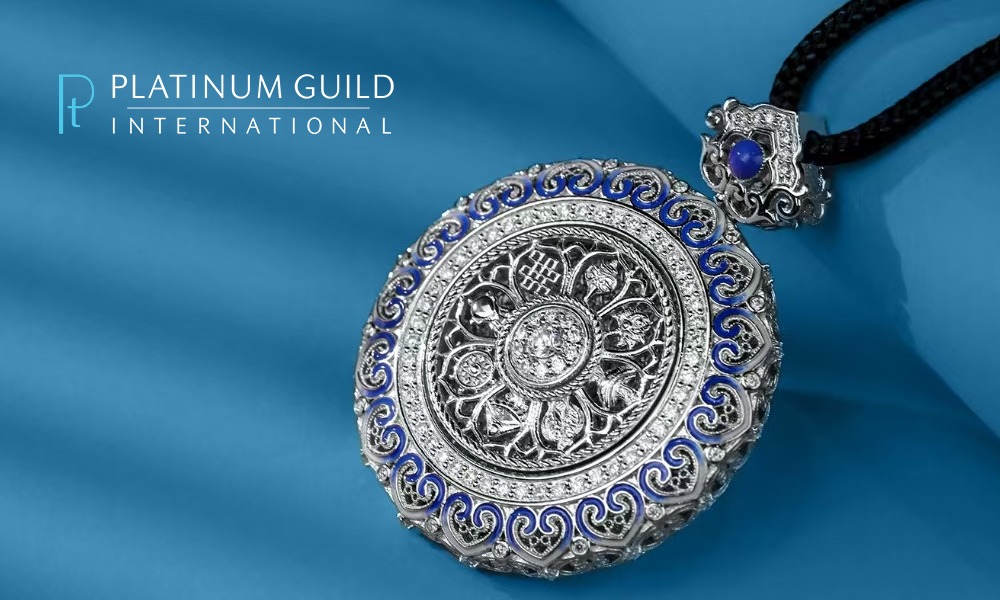
The Platinum Guild International (PGI) today released its Q4 2025 Platinum Jewellery Business Review (PJBR), highlighting varying regional performance trends, with platinum’s value proposition remaining supportive in key markets against a backdrop of record-high gold prices and evolving trade dynamics.

Tim Schlick, CEO of Platinum Guild International, Said:

“The momentum we observed across key regions in the fourth quarter validates platinum’s growing relevance in today’s jewellery market. With gold prices remaining elevated, platinum continues to offer a premium yet accessible alternative that appeals to value-conscious consumers and luxury buyers alike. Looking ahead, PGI remains committed to partnering with the trade to capitalise on this favourable price dynamic—driving innovation, supporting strategic marketing initiatives, and reinforcing platinum’s enduring value in bridal, fashion, and other key segments.”
Regional Market Highlights
China
China’s platinum fabrication softened further in Q4 after a strong first half, but still recorded a 56% annual increase for 2025. The slowdown was driven by a combination of slower inventory turnover and elevated metal prices, which diverted retailer capital towards gold and dampened restocking sentiment. Wholesalers liquidated generic stock to realise capital gains, while retailers prioritised operational resilience. Despite significant challenges, PGI’s retail partners outperformed the broader market, achieving a 7% year-over-year increase in platinum jewellery sales volume during the last quarter of 2025.
India and the Middle East
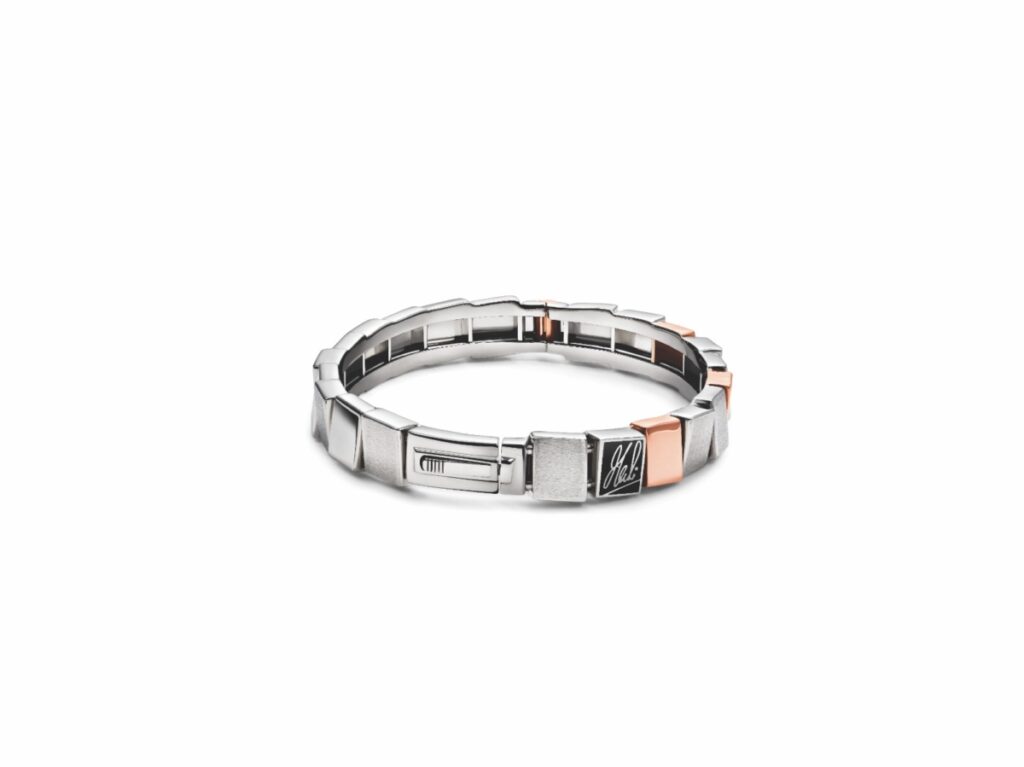
In India, platinum jewellery continued to outperform the broader market, with strategic partners’ retail sales growing 10% year-over-year. Overall jewellery demand saw a marginal uptick, supported by the festive season and a shift toward lightweight purchases, though volume growth was constrained by a high comparison base and sharp gold price increases. Promotional efforts for brands such as Men of Platinum reinforced platinum’s value amidst price volatility.
PGI continued expanding its UAE presence by onboarding new retailers, bringing the total to 174 stores at the end of 2025.
Japan
Japan’s jewellery market saw value recover in Q4 due to sustained price increases, while platinum jewellery unit sales recorded a notable 1.5% year-on-year recovery. This upturn was partly supported by substitution away from gold amid extreme price volatility. For the full year, platinum’s share of unit sales rose, whilst white gold’s share declined.
United States
In the U.S., platinum jewellery sales reflected a clear divergence between declining unit volumes and strong value growth, with dollar sales significantly outpacing volumes. Record-high gold prices cooled volume demand across the broader industry, but platinum’s price—remaining less than half that of gold—bolstered its appeal. Despite tariff-related headwinds, the shift from white gold to platinum accelerated, with strategic partners reporting double-digit revenue growth.



International News
WGC Report-Digital Gold: Unlocking a $700bn Opportunity
Yes—Digital Gold Could Become The Next Major Growth Market For Gold, But Only If The Industry Solves Trust, Access, Utility and Cost.
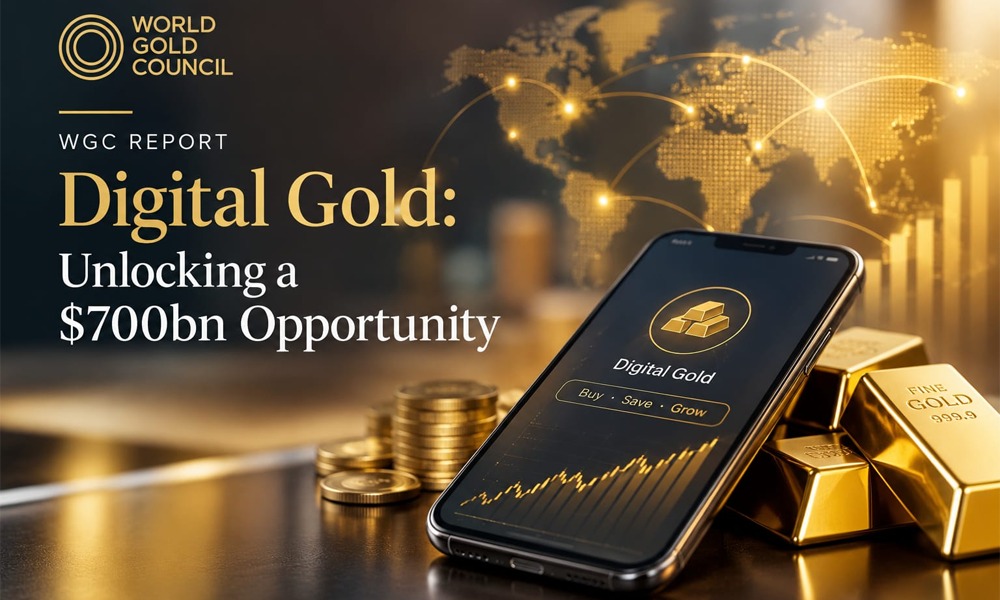
The World Gold Council (WGC) and Boston Consulting Group estimate that digital gold could unlock up to US$700 billion in latent demand over the long term, although this is a potential-demand estimate rather than a five-year forecast.
What “digital gold” means
The report defines digital gold as two related product categories: vaulted digital gold (digitally represented claims on allocated physical gold) and tokenised gold (blockchain-based tokens backed by physical gold). Together, they currently account for roughly US$45–55 billion, less than 1% of the global gold market, which the WGC values at about US$13 trillion.
Momentum is nonetheless visible. Tokenised gold has grown about fivefold since late 2024 to around US$6 billion, while cumulative spot trading volumes exceeded US$90 billion in Q1 2026—more than during all of 2025.
The $700bn opportunity
The headline figure represents the additional demand that could emerge if the main barriers to adoption were removed at scale. Nearly nine in ten surveyed retail investors said they would consider digital gold under the right conditions, based on a survey of more than 12,000 investors and interviews with 20 industry experts.
The global digital-gold market—currently valued at US $ 45–55 billion—is positioned for significant expansion. In their base-case outlook, the market is projected to grow at an annual rate of approximately 27%, reaching US $ 160–170 billion by 2031. Under a bull-case scenario, market valuation could climb even higher, reaching US $ 270–280 billion over the same period. Furthermore, if key adoption barriers such as regulatory clarity, pricing, and platform trust are fully addressed, the long-term latent demand for digital gold could unlock up to US700 billion.
Genuinely new gold demand by 2031. About US$95 billion, net of displacement
The crucial distinction is that US$700bn is not a market-size prediction for 2031. It is the theoretical upside if trust, distribution, product usefulness and pricing improve sufficiently; the base case is far more conservative.
Four barriers to adoption
Trust is the decisive barrier. Nearly four in five investors prioritise trusting the provider, and they want proof that products are safe, legitimate, transparently backed and redeemable for physical gold; clearer regulation and consumer protection are also central.
Access matters because familiar distribution channels dramatically increase uptake. In markets such as China, India and Indonesia, where digital gold is embedded in super-apps, payment platforms and banking apps, penetration is up to seven times higher than in markets without such channels.
Utility could transform gold from a passive store of value into a usable financial asset. The most attractive new feature is yield generation through lending or collateral use, followed by payments functionality.
Cost remains a prerequisite. Digital gold must be price-competitive with physical bullion and gold ETFs; an uncompetitive price is the second most common barrier cited by investors.
Why it may create new demand
The report argues that digital gold is more likely to expand the gold market than merely shift investors from ETFs, coins or bars. About 65% of latent demand comes from people who do not yet own gold, and 52% of current digital-gold investors held no gold before their first digital purchase.
This makes digital gold a potential on-ramp: among those first-time digital-gold buyers, 92% subsequently bought other forms of gold. Even after allowing for some switching between gold formats, the base case implies around US$95 billion of genuinely new demand by 2031.
Who will drive growth
Younger investors are the immediate growth engine. Awareness reaches 50% among 25–34-year-olds, versus 23% among those aged 55 and older, and younger cohorts are twice as likely to say they would invest if entry barriers were addressed.
This aligns with the broader tokenisation of finance. As blockchain-based investment products become more mainstream, gold’s physical backing may give it a credibility advantage over purely digital assets—provided issuers can demonstrate custody, redemption rights and regulatory compliance.
Could it be the next major gold growth market?
Potentially, yes—but conditionally. The case for digital gold is strong because it combines gold’s established safe-haven and store-of-value role with digital accessibility, fractional ownership, faster transferability and possible new financial uses. The WGC’s own base case implies a market roughly three times its current size by 2031.
However, digital gold will remain a niche if providers cannot deliver:
- Transparent, auditable proof that tokens are fully backed by physical gold.
- Simple, legally robust redemption into physical gold or cash.
- Clear regulation and investor protections.
- Distribution through mainstream banking, payments and investment apps.
- Fees competitive with ETFs and physical bullion.
- Useful features such as collateral, lending or payments—without compromising safety.
Assessment
Digital gold is best viewed as a high-potential distribution and product innovation, not an automatic replacement for physical gold or ETFs. Its biggest contribution may be bringing first-time, younger and digitally native investors into gold, then encouraging them to hold other gold formats as their allocations mature.
If the industry establishes trusted infrastructure and interoperable standards, the US$700bn latent-demand estimate becomes a plausible long-run ceiling. If not, the market may still grow, but likely toward the report’s bear-case trajectory of roughly US$70–80 billion by 2031, driven mainly by wealth growth rather than conversion of untapped demand.



Dhanteras 2026: Can Festive Shopping Spark A Golden Opportunity For india’s Jewellery Industry?

Dhanteras Shopping Guide 2026:Gold, Silver, Diamonds & Festive Jewellery Trends To Watch

Indriya, Aditya Birla Jewellery Unveiled India’s Largest Sustainable Jewellery Rangavalli
Dhanteras Shopping Guide 2026:Gold, Silver, Diamonds & Festive Jewellery Trends To Watch
Indriya, Aditya Birla Jewellery Unveiled India’s Largest Sustainable Jewellery Rangavalli

From Diya Puja To Diwali Soirées: Jewellery Designed To Go Beyond The Festive Season
-
 JB Insights9 hours ago
Dhanteras Shopping Guide 2026:Gold, Silver, Diamonds & Festive Jewellery Trends To Watch
-
 National News9 hours ago
Indriya, Aditya Birla Jewellery Unveiled India’s Largest Sustainable Jewellery Rangavalli
-
 BrandBuzz10 hours ago
From Diya Puja To Diwali Soirées: Jewellery Designed To Go Beyond The Festive Season
-

 BrandBuzz11 hours ago
The Solenne Collection: A Celebration Of Diwali By Bharti Bangur Fine Jewels
