International News
World Silver Survey 2026: A Transformative Era For The Silver Market, Characterized By Extreme Price Volatility
Landmark Year Where Supply-Demand Imbalances Finally Triggered Explosive Price Action


The World Silver Survey 2026 details a transformative era for the silver market, characterized by extreme price volatility, a shifting industrial landscape, and a definitive end to the era of “unlimited liquidity.” After years of structural deficits, 2025 emerged as a landmark year where supply-demand imbalances finally triggered explosive price action.
Price Performance and Market Dynamics
Silver witnessed a spectacular ascent in 2025, surging from under $29/oz to a December peak of $84/oz. This momentum culminated in an all-time record of $121.60/oz in January 2026, before a hawkish Federal Reserve pivot and geopolitical conflict in Iran induced a sharp correction. Despite this volatility, the gold-to-silver ratio compressed significantly, reaching a decade-low of 55:1 by late 2025, signaling silver’s outperformance relative to gold.
Supply: Record Margins and Recycling
Global mine production rose 3% to 846.6 Moz in 2025. Growth was fueled by high-grade ramp-ups in Chile, Peru, and Russia, offsetting a 5% decline in Mexico caused by regulatory shifts and falling grades. Notably, primary silver mines now account for only 26% of global supply, leaving the market increasingly dependent on by-product output from copper and gold operations.
While production rose, the real story lay in profitability. Record gold prices boosted by-product credits, driving silver miners’ All-In Sustaining Costs (AISC) down to $12.21/oz. This created a staggering 75% increase in profit margins, with nearly the entire primary silver sector remaining profitable. Additionally, recycling hit a 13-year high of 197.6 Moz, though refinery bottlenecks limited its full impact.
Demand: A Tale of Two Sectors
For the first time since the pandemic, total silver demand contracted by 2% to 1,130.6 Moz. This was driven by two main factors:
- Industrial Thrifting: Industrial demand fell 3%, primarily due to the solar industry. As silver costs spiked to 20% of cell manufacturing costs, manufacturers accelerated “thrifting” technologies, reducing silver loading in photovoltaic (PV) cells.
- Price Sensitivity: High prices crushed jewelry and silverware demand, particularly in India, where fabrication dropped 20%.
Conversely, physical investment remained robust. Demand for coins and bars rose 14%, led by a massive 33% surge in India and a doubling of investment demand in China.
The Liquidity Squeeze and 2026 Outlook
A critical theme of the report is the structural fragility of inventories. In October 2025, a convergence of ETP inflows and physical demand led to a liquidity squeeze in London, sending overnight lease rates to 200%. With London’s non-ETP stocks hitting record lows, the market proved it no longer has a “buffer” for sudden demand spikes.
Looking ahead to 2026, Metals Focus projects a sixth consecutive deficit of 46.3 Moz. While industrial and jewelry demand may continue to soften under price pressure, silver’s new status as a U.S. Critical Mineral and its growing role in AI data centers provide a strong floor. The market remains in a state of “permanent deficit,” where cumulative shortfalls (totaling 716 Moz over five years) ensure that silver remains a high-stakes, strategically vital asset.


International News
US Holiday Shopping Expected To Top $1 Trillion For The First Time: NRF
While Overall Buying Power Remains High, Ongoing Inflation and Rising Household Costs Mean Some Families Will Have To Watch Their Spending More Carefully Than Others
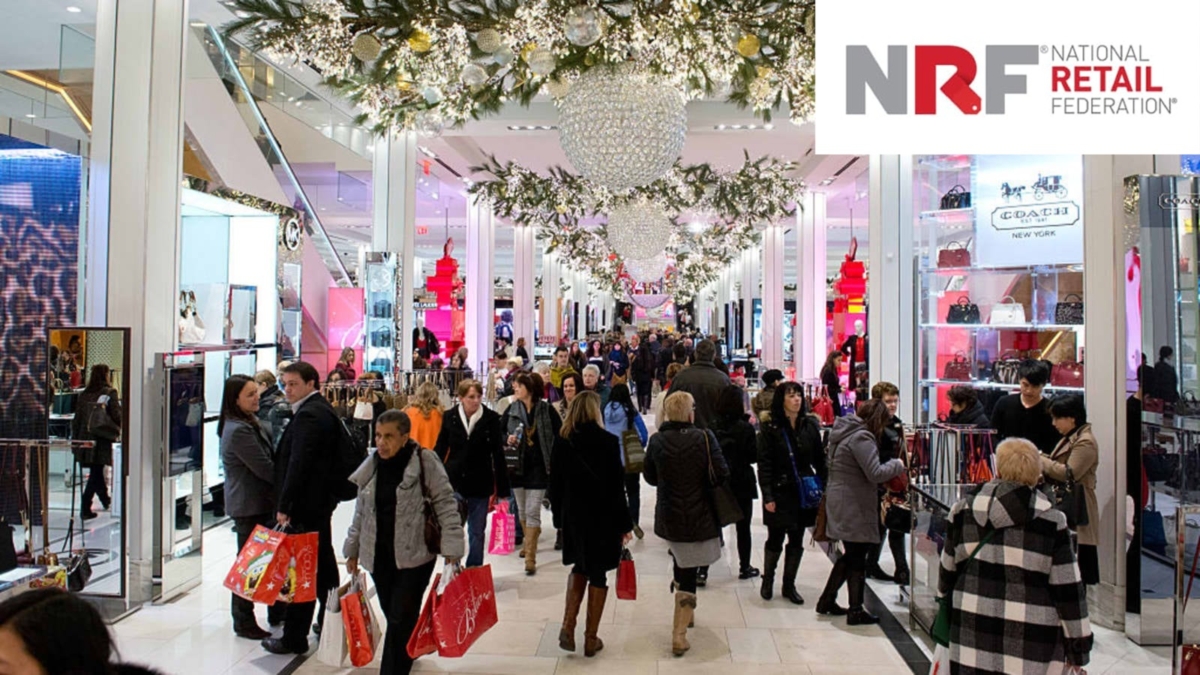
The National Retail Federation (NRF) predicts Americans will spend $1.01 trillion on holiday shopping in November and December. That is a 4.2% jump from $972 billion last year.
NRF said its forecast was based on economic modeling that incorporates consumer spending, employment, wages and historical retail sales data. It excludes automobile, gasoline and restaurant sales
Extra Hiring: To handle the surge in shoppers, stores plan to hire 325,000 to 375,000 temporary holiday workers.
Mixed Budget Impact: Higher gas prices and inflation could still strain some family budgets, affecting low- and high-income shoppers differently.
Retailers expect a strong shopping season because people continue to make holiday spending a priority.
Store owners are ready to attract shoppers by offering competitive prices, deals, and choices for every budget.
While overall buying power remains high, ongoing inflation and rising household costs mean some families will have to watch their spending more carefully than others.


-

 International News12 hours ago
US Holiday Shopping Expected To Top $1 Trillion For The First Time: NRF
-

 National News6 hours ago
Belgian Consul General H. E. Mr. Pierre Stverlynck Graces BDB Annual Day
-

 National News7 hours ago
Limelight Lab Grown Diamonds Crosses 100 Stores Milestone This Dussehra: Targets 200 In 2027
-

 New Premises7 hours ago
Joyalukkas Opens Its 2nd Bengaluru Showroom in Jayanagar