International News
Pandora Lowers 2025 Profit Outlook Amid Tariff Concerns and Weaker Dollar


Danish jewellery giant Pandora has trimmed its 2025 profit margin forecast, citing a decline in the U.S. dollar and potential cost pressures from looming U.S. tariffs. The company, which counts the U.S. as its largest market, now expects its earnings before interest and tax (EBIT) margin to be around 24% for the year—down from its previous estimate of approximately 24.5%. However, it maintained its organic growth target of 7–8%.
The charm bracelet maker faces mounting risks if former U.S. President Donald Trump reinstates a 37% “reciprocal” tariff on goods from Thailand, home to Pandora’s two key manufacturing sites. While the tariff has been temporarily paused for 90 days to allow negotiations, Pandora warned of significant cost implications depending on the outcome.
If existing tariffs remain, Pandora estimates a hit of 250 million Danish crowns ($38 million) in 2025 and 300 million crowns annually thereafter. But if the full 37% tariff returns, the impact could rise to 500 million crowns this year and 900 million annually—though lower than the company’s earlier forecast of 1.2 billion crowns annually. The downward revision reflects plans to reroute product shipments directly to Canada and Latin America by 2026, bypassing its current U.S. warehouse in Baltimore.
“In both scenarios, Pandora will consider further price increases,” the company stated, signaling more potential cost burdens for U.S. consumers. The jeweller already implemented a 4% price hike in April, following a 5% increase in October, driven by the surging cost of silver.
Despite the challenging backdrop, Pandora’s first-quarter revenue stood at 7.35 billion Danish crowns ($1.12 billion), slightly above analyst expectations, with organic growth at 7%.

“We are pleased with how we’ve started the year, especially given the very high volatility in the world around us,” said CEO Alexander Lacik. Still, the company acknowledged ongoing economic uncertainty as it continues to invest in marketing and brand strength.








International News
US Holiday Shopping Expected To Top $1 Trillion For The First Time: NRF
While Overall Buying Power Remains High, Ongoing Inflation and Rising Household Costs Mean Some Families Will Have To Watch Their Spending More Carefully Than Others

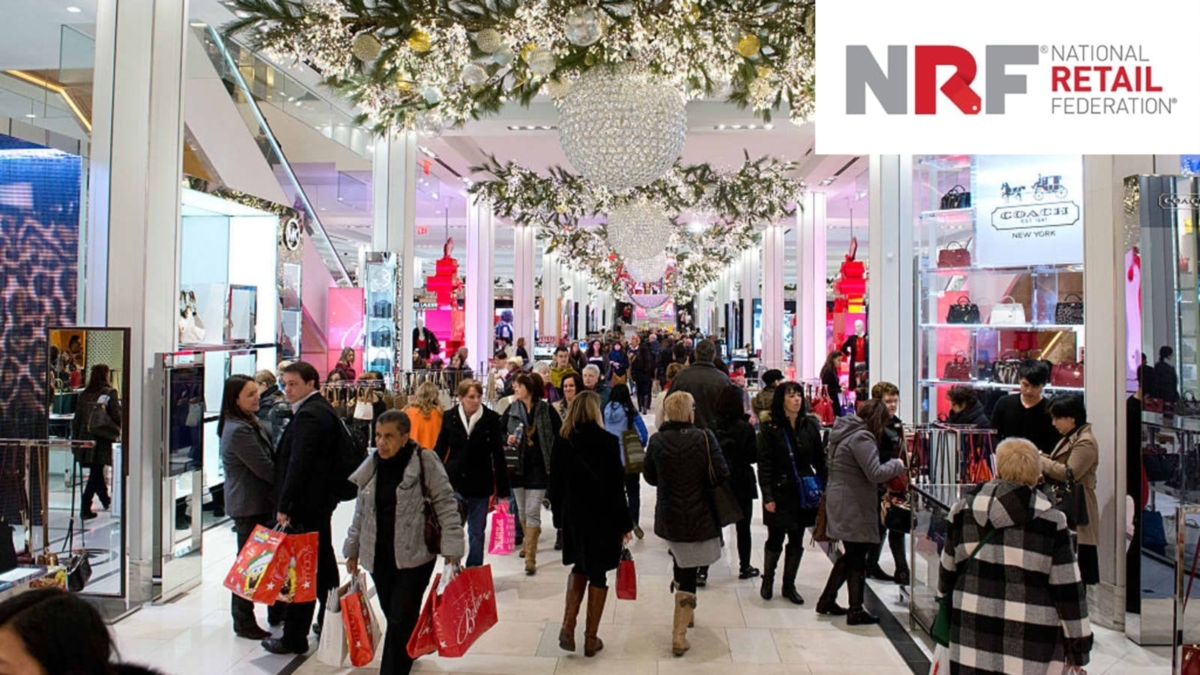
The National Retail Federation (NRF) predicts Americans will spend $1.01 trillion on holiday shopping in November and December. That is a 4.2% jump from $972 billion last year.
NRF said its forecast was based on economic modeling that incorporates consumer spending, employment, wages and historical retail sales data. It excludes automobile, gasoline and restaurant sales
Extra Hiring: To handle the surge in shoppers, stores plan to hire 325,000 to 375,000 temporary holiday workers.
Mixed Budget Impact: Higher gas prices and inflation could still strain some family budgets, affecting low- and high-income shoppers differently.
Retailers expect a strong shopping season because people continue to make holiday spending a priority.
Store owners are ready to attract shoppers by offering competitive prices, deals, and choices for every budget.
While overall buying power remains high, ongoing inflation and rising household costs mean some families will have to watch their spending more carefully than others.



Belgian Consul General H. E. Mr. Pierre Stverlynck Graces BDB Annual Day

Limelight Lab Grown Diamonds Crosses 100 Stores Milestone This Dussehra: Targets 200 In 2027

Joyalukkas Opens Its 2nd Bengaluru Showroom in Jayanagar

US Holiday Shopping Expected To Top $1 Trillion For The First Time: NRF
Belgian Consul General H. E. Mr. Pierre Stverlynck Graces BDB Annual Day
Limelight Lab Grown Diamonds Crosses 100 Stores Milestone This Dussehra: Targets 200 In 2027
-
 International News15 hours ago
US Holiday Shopping Expected To Top $1 Trillion For The First Time: NRF
-
 National News9 hours ago
Belgian Consul General H. E. Mr. Pierre Stverlynck Graces BDB Annual Day
-
 National News10 hours ago
Limelight Lab Grown Diamonds Crosses 100 Stores Milestone This Dussehra: Targets 200 In 2027
-
 New Premises11 hours ago
Joyalukkas Opens Its 2nd Bengaluru Showroom in Jayanagar