
JB Insights
Mastering Communication, People Skills Across The Jewellery Value Chain
Industry Depends On Education and Training That Prepares People To Communicate Well, Develop Emotional Intelligence, and Adapt To Change

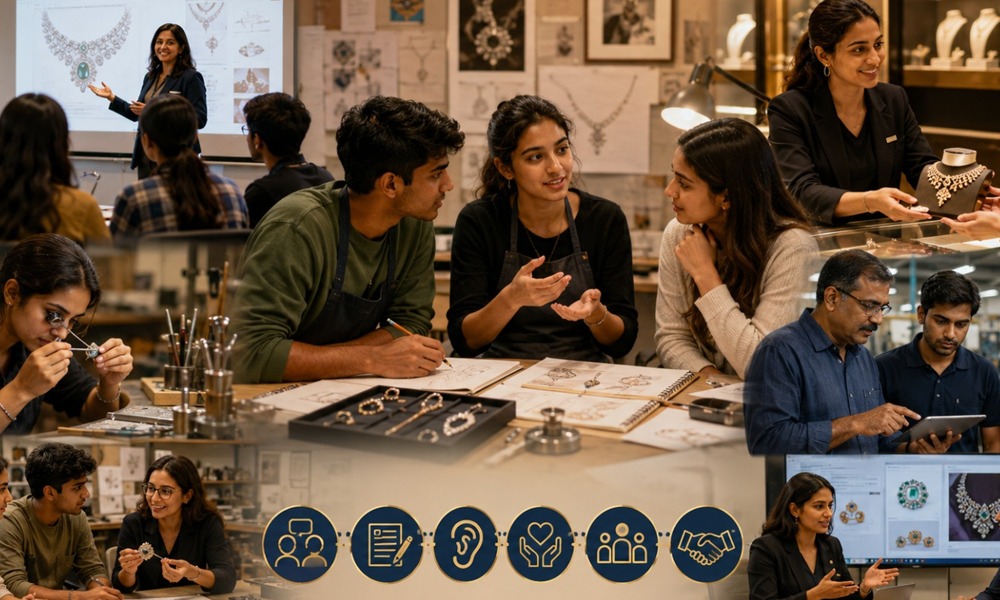
Communication and people skills are a core part of jewellery education because jewellery work is not only technical; it also depends on how well students explain ideas, understand clients, collaborate with teams, and teach or guide others. Industry guidance highlights the need for effective verbal and written communication, patience with different backgrounds and learning styles, and the ability to work with many stakeholders across the jewellery field.
Why these skills matter
In jewellery education, communication skills help learners present design ideas clearly, discuss materials and craftsmanship, and respond professionally to feedback. People skills matter just as much because jewellery careers often involve client interaction, teamwork, sales, training, and relationship building. Resources on jewellery careers also note that the future of the industry depends on education and training that prepares people to communicate well and adapt to change.
Key skills in jewellery education
- Clear verbal communication, for explaining design concepts, techniques, and project choices to classmates, teachers, clients, and employers.
- Written communication, for documenting design notes, production details, and feedback in a professional way.
- Listening and empathy, for understanding client preferences, customer concerns, and team input.
- Patience and adaptability, for working with different learning styles and backgrounds in a classroom or workshop setting.
- Teamwork and relationship building, for collaborating in studios, retail environments, manufacturing, and training roles.
Role in classroom learning
Jewellery education often includes hands-on practical work, so students must communicate during demonstrations, critiques, and group assignments. Good people skills make it easier to ask questions, accept corrections, and work safely in shared studio spaces. Training-focused jewellery roles also require educators to give feedback clearly and create a positive learning environment.
Role in careers
These skills are especially important in career pathways such as design, retail, manufacturing, sourcing, and education. A jewellery professional may need to explain a custom design to a client, coordinate with suppliers, or train others on tools and processes. In these settings, strong interpersonal ability can directly affect trust, customer satisfaction, and long-term success.
Student readiness is required across specialised career tracks
The jewellery and luxury industry demands far more than technical expertise—it requires emotional intelligence, creativity, communication precision, and commercial acumen tailored to diverse professional pathways. student readiness is required across specialised career tracks: Retail & Boutique (B2C), Design & Atelier (Creative/Technical), and Supplier, Wholesaler & Manufacturing (B2B), benchmarking development from foundational to advanced professional competency.

In Retail & Boutique roles, the focus lies on a student’s ability to connect emotionally with consumers through luxury storytelling, active listening, and objection handling. Success in a client-facing environment depends on transforming technical product information into meaningful narratives, understanding hidden emotional motivations behind purchases, and confidently reframing objections around craftsmanship, rarity, and long-term value rather than price alone.
The Design & Atelier track assesses how effectively students translate creative concepts into practical, manufacturable outcomes. Students are evaluated on their ability to articulate design inspiration, communicate technical specifications with precision, collaborate seamlessly with production teams, and respond constructively to feedback. Advanced performance reflects a balance between artistic vision and realistic execution, ensuring design integrity while managing client expectations.
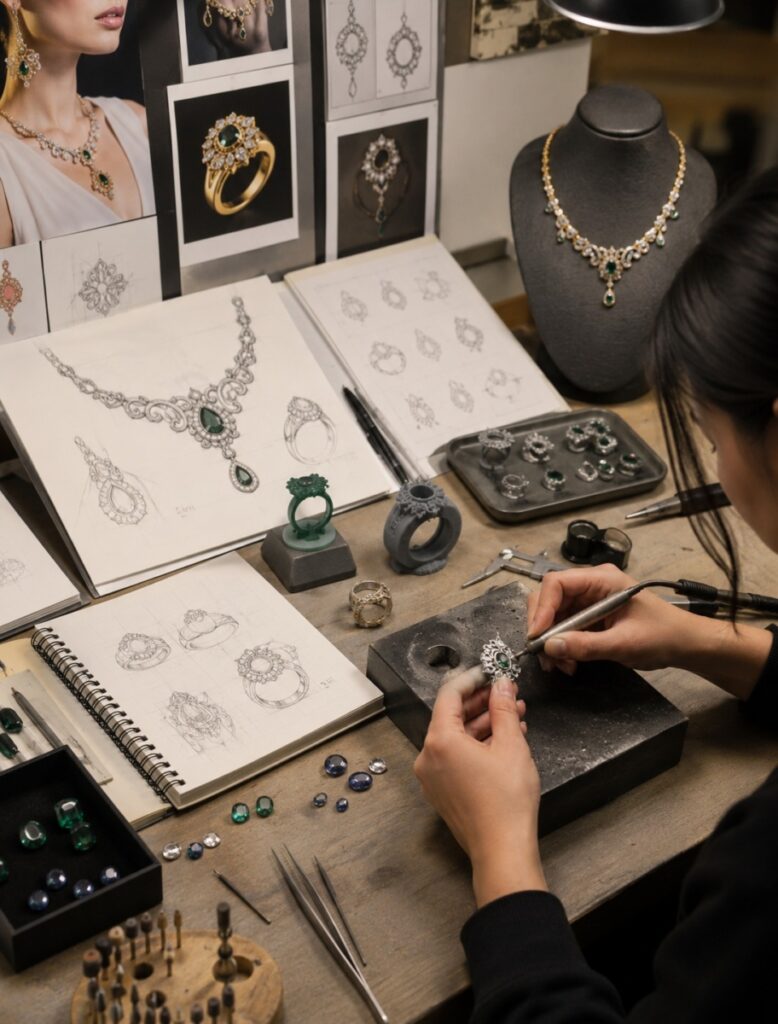

For Supplier, Wholesaler, and Manufacturing roles, the emphasis shifts to operational excellence, negotiation, and supply-chain responsiveness within a B2B ecosystem. Students are assessed on communication accuracy, commercial negotiation strategies, and crisis management under pressure. High-performing candidates demonstrate professionalism through precise documentation, margin-conscious negotiations, and proactive problem-solving during disruptions.
Collectively, this competency framework provides a structured assessment of how students evolve from developing professionals into industry-ready talent capable of thriving across the jewellery value chain, where technical proficiency must be matched by emotional intelligence, strategic thinking, and collaborative excellence.
Communication and people skills should be treated as essential, not optional, in jewellery education. Alongside technical craftsmanship, they help students become better designers, stronger team members, and more effective professionals in a customer-facing industry.



JB Insights
US Holiday Sales Will See 5.5% Growth For 2026 : Mastercard Economics Institute
This Resilience Reflects A Robust Labor Market, Rising Household Wealth, and Broad-Based Consumer Demand Across Income Cohorts. Overall, The 2026 Holiday Season Showcases An Adaptable U.S. Consumer Using Digital and AI Tools To Maximize Value While Continuing To Drive Broader Economic Momentum.
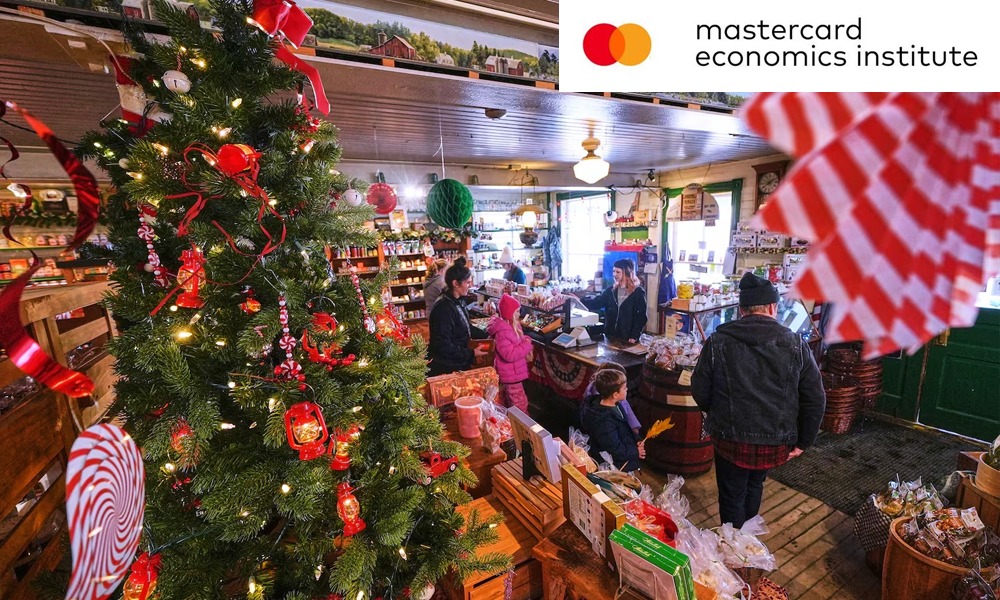
The Mastercard Economics Institute (MEI) forecasts a strong 2026 U.S. holiday shopping season (November 1–December 24), projecting retail sales excluding gas and autos to grow 5.5% year-over-year (YoY). This resilience reflects a robust labor market, rising household wealth, and broad-based consumer demand across income cohorts.
Key Drivers and Growth Channels
- Channel Performance: E-commerce continues to lead with an expected 11% YoY growth, but in-store sales are set to grow 3.6%—their strongest pace since 2022. This highlights the critical role of omnichannel strategies.
- Inflation Dynamics: Inflation accounts for 2.8 percentage points of the total 5.5% growth. Unlike last year’s tariff pressures, current price increases are driven by elevated energy/diesel costs and the massive AI infrastructure buildout.
- Calendar Shifts: A late Thanksgiving compresses the shopping window, pushing retailers toward early promotions. Additionally, Cyber Monday falling in November will shift significant online volume into the month.
The Role of Artificial Intelligence
AI is reshaping both prices and consumer behavior:
- Tech Inflation: High demand for memory chips and data infrastructure components has driven a 12.2% YoY increase in prices for info-processing equipment. Consequently, the consumer electronics category is projected to post outsized nominal sales growth (+10.7% YoY).
- AI Power Users: Consumers with paid AI subscriptions demonstrate distinct “optimization” habits. Data shows these users plan early, shop across a wider variety of boutique and specialty merchants, and aggressively target promotions during Thanksgiving weekend before transitioning to experience and hospitality spending in December.
Last-Minute Shopping Behavior
The final rush to Christmas offers key operational insights for retailers:
- In-Person and Malls: The final week before Christmas sees heavy physical store foot traffic, especially in enclosed shopping malls where consumers can complete multi-category purchases. Climate also plays a role: warmer-state residents (e.g., Florida, Nevada) are far more likely to make last-minute in-store runs than those in colder states.
- Transaction Value Trends: Average order values for children’s items peak near Black Friday, while premium categories—such as jewelry, cosmetics, luxury handbags, and department stores—see transaction values climb steadily from December 15, peaking on Christmas Eve as procrastinating shoppers pay a premium for convenience.
AI tools lower search costs for consumers, making price transparency higher than ever. Retailers must capture early November demand through targeted promotions before comparison tools push shoppers toward alternative or boutique brands.
Last-minute shoppers are price-inelastic and seeking speed. Malls and physical stores should maximize inventory for high-margin, rush-gift items (jewelry, cosmetics, designer goods, gift cards) in the final 10 days, leveraging store availability over promotional discounting.
Overall, the 2026 holiday season showcases an adaptable U.S. consumer using digital and AI tools to maximize value while continuing to drive broader economic momentum.



Kangana Ranaut Unveils PNG Jewellers New Showroom In Ayodhya~

GGJS 2026 Concludes With High-Volume Trade and Strategic Focus On Next-Gen Leadership

The Solitaire Festival Of India Concludes; Bumper Prize Winner At Ranka Jewellers Wins XUV 7XO
GGJS 2026 Concludes With High-Volume Trade and Strategic Focus On Next-Gen Leadership

ABARAN Commemorates The 125th Birth Anniversary Of Founder Shri Burde Sadananda Kamath With Special Gold Coin Launch

MCX Gold Silver Futures See Dip
-
 National News2 hours ago
GGJS 2026 Concludes With High-Volume Trade and Strategic Focus On Next-Gen Leadership
-
 National News7 hours ago
ABARAN Commemorates The 125th Birth Anniversary Of Founder Shri Burde Sadananda Kamath With Special Gold Coin Launch
-
 National News7 hours ago
MCX Gold Silver Futures See Dip
-
 National News1 hour ago
Kangana Ranaut Unveils PNG Jewellers New Showroom In Ayodhya~
