

By Invitation
Limelight Lab Grown Diamonds: Leading India’s Lab Grown Diamond Revolution
By Pooja Sheth Madhavan ,Founder & MD Limelight Lab Grown Diamonds.

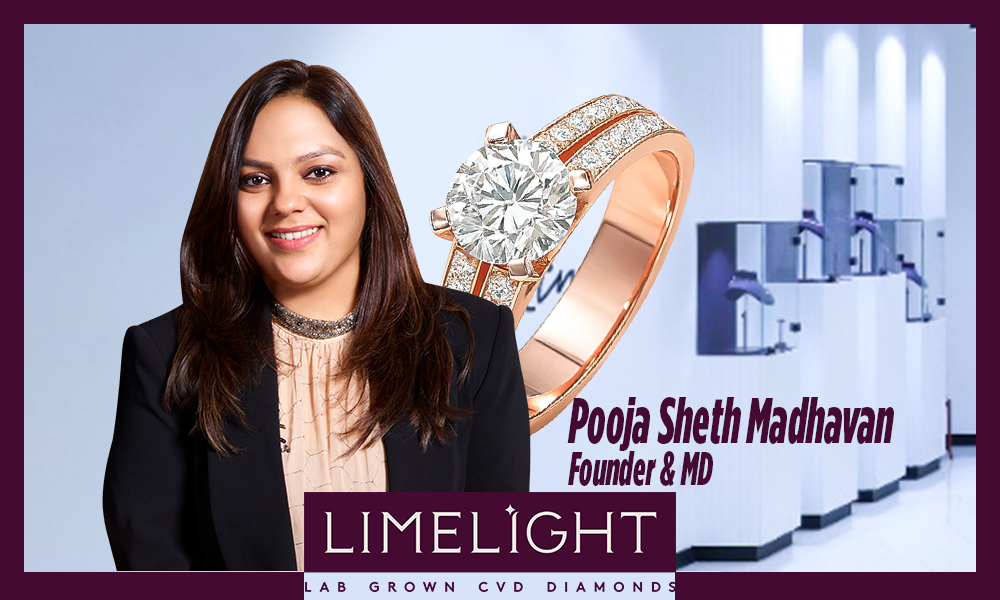
The lab grown diamond category in India has moved from niche curiosity to mainstream retail opportunity and Limelight Lab Grown Diamonds sits squarely at the center of that transition. For franchise partners, retailers trade buyers and investors Limelight has become the benchmark for scale, sustainability and consumer trust in the CVD lab-grown space.
From awareness to scale: leadership that matters
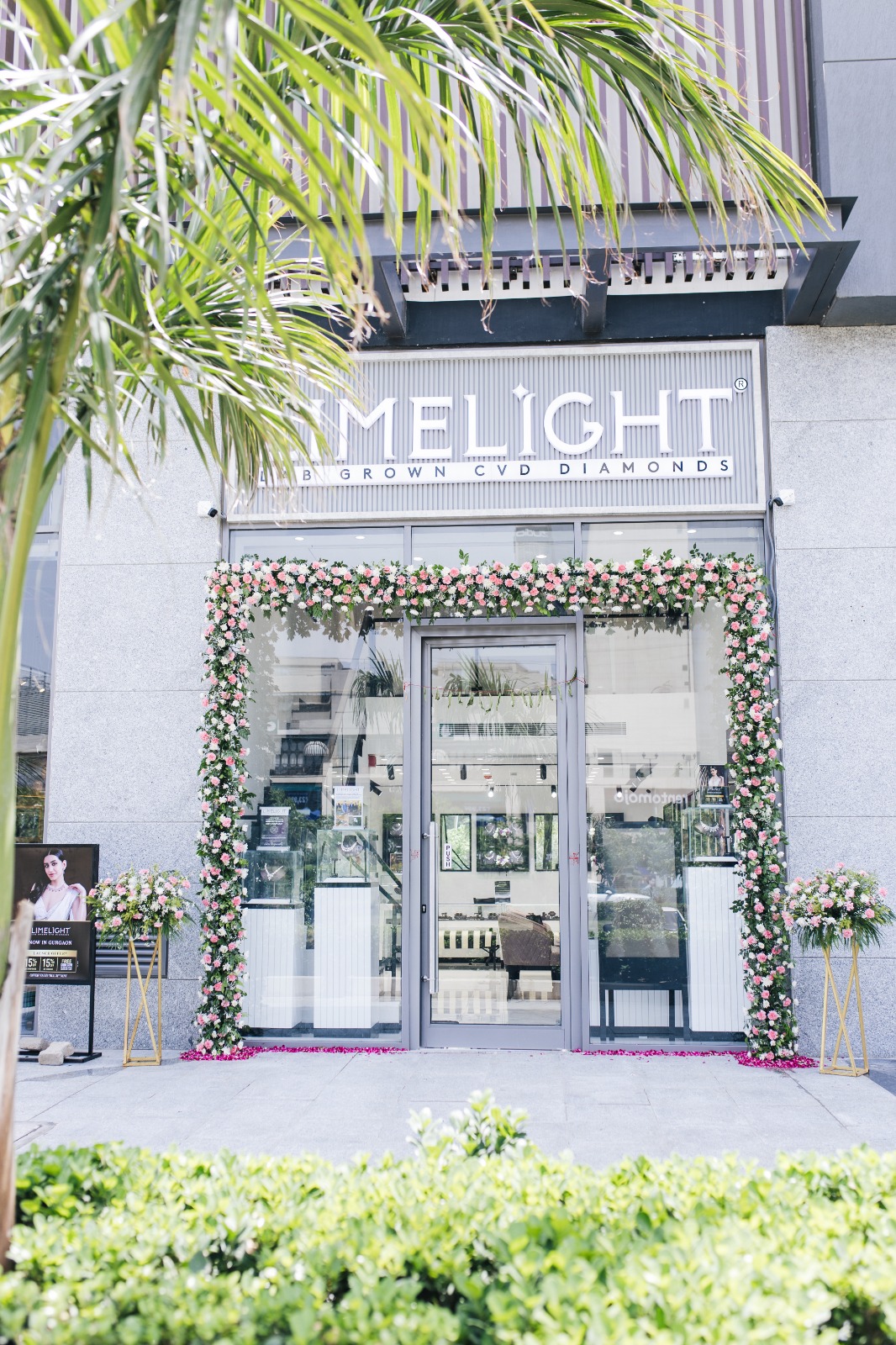
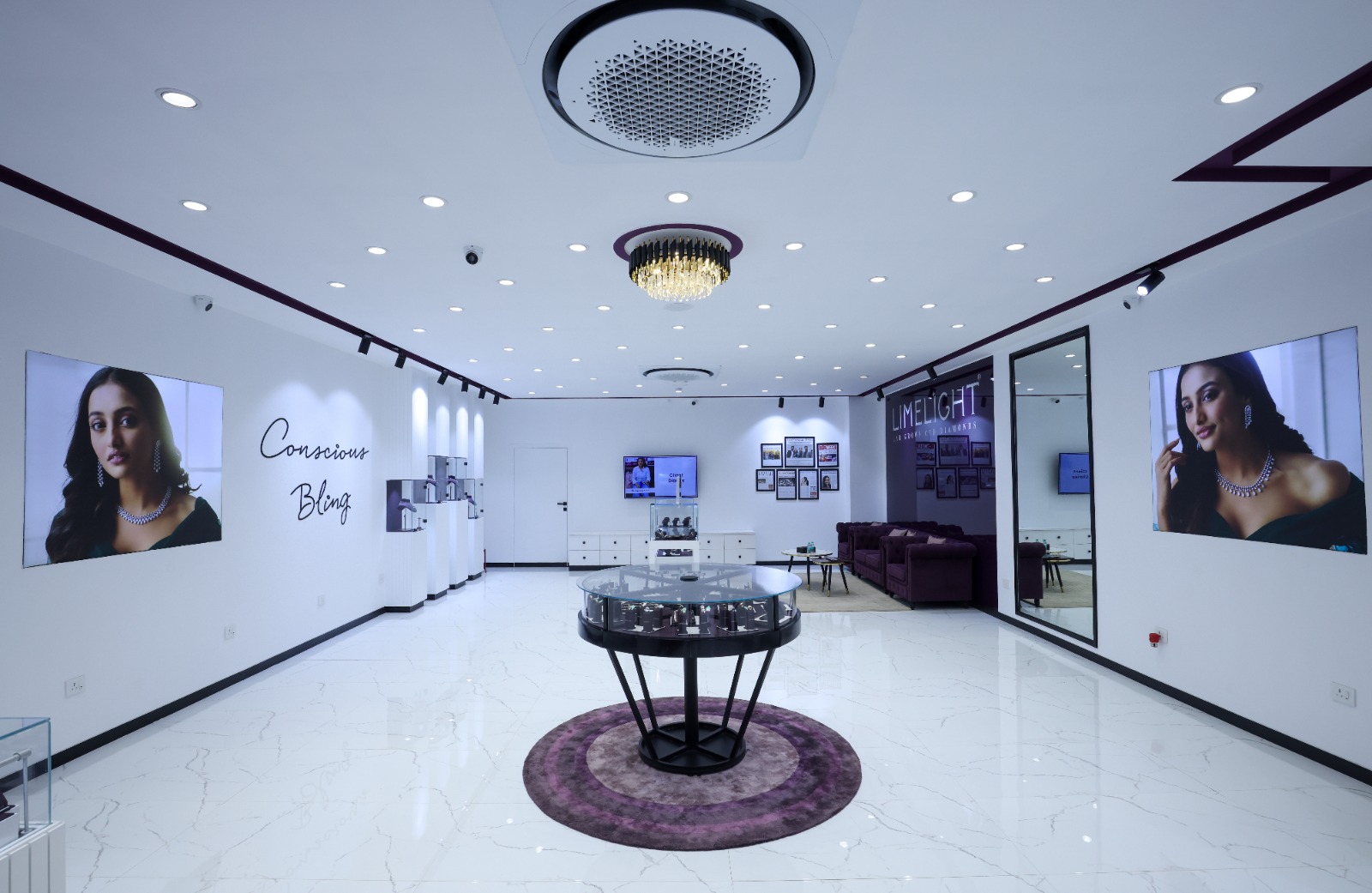
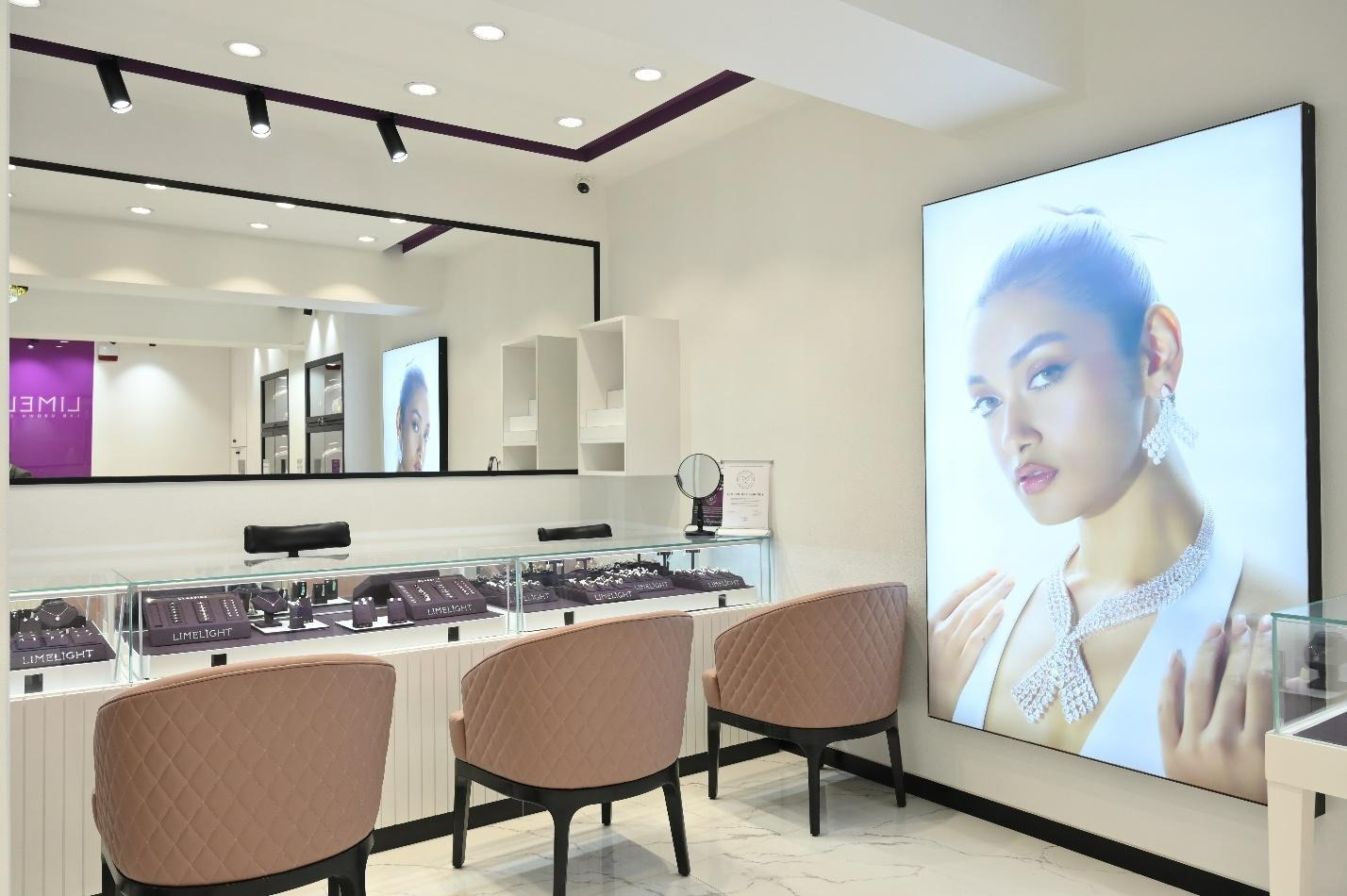
Limelight’s trajectory exemplifies how a focused strategy education, consistent branding and retail expansion can turn an emerging category into commercially viable retail real estate. The brand presents itself as India’s largest dedicated CVD lab grown diamond jewellery player, with a national retail footprint that now 50 plus exclusive stores and 45 plus shop-in-shops across the country. That physical presence gives trade partners immediate distribution reach and local market credibility.
For franchisees and retail partners this scale is important beyond headline counts. A national store network supports centralized design, inventory pooling, marketing scale, and predictable consumer flows factors that materially reduce the operating risk for a new store opening. Limelight’s ongoing store rollouts and the public announcements about new EBOs demonstrate pipeline momentum, which is reassuring to investors and property partners assessing lease economics and payback timelines.
Sustainability as a trade differentiator
Sustainability is no longer a CSR talking point it’s a category axis that changes purchase choice among younger and environmentally conscious shoppers. Limelight’s focus on CVD-grown diamonds (produced via Chemical Vapor Deposition) positions the brand on both environmental and ethical grounds. The brand has also won third-party recognition for its ESG credentials, an important signal for corporate buyers, multi-brand retailers and institutional partners evaluating brand risk and alignment with evolving consumer values. For retailers, stocking a brand with verified sustainability claims can elevate the entire jewellery assortment and create cross-sell opportunities with conscious consumers.
Product assurance and consumer confidence
One of the most frequent trade objections to LGDs is buyer apprehension around quality, certification and resale value. Limelight addresses those commercial pain points head-on with a combination of certifications by IGI and SGL, buyback/exchange policies and after-sales services concrete assurances that reduce the friction in both retail and wholesale channels. For jewellery buyers and franchise investors, these policies shorten the sales cycle and simplify the post-purchase lifecycle management that often burdens independent jewellers.
The franchise model: structured scalability for partners
Limelight’s franchise proposition is purpose-built for rapid market coverage. Trade listings and franchise portals indicate an investment band and an operating model designed to deliver strong unit economics in Indian retail contexts. For potential franchisees the headline numbers are a useful starting point for property and distribution partners, the clarity of a packaged franchise model means faster negotiation cycles and predictable unit openings. Franchise investors also benefit from the brand’s central services merchandising, marketing playbooks, and product training which reduce time-to-revenue and lower the management overhead for first-time retail entrepreneurs.

Relevance to today’s consumer
Indian consumers today are younger, digital-first, and value-conscious. They want premium aesthetics without the legacy costs financial, environmental or ethical associated with mined stones. Limelight’s proposition design-led jewellery, lower price points versus mined equivalents, and sustainability credentials resonates strongly with the urban millennial and Gen Z cohorts who are increasingly making jewellery purchases for self-expression, gifting and non-traditional bridal choices.
For trade partners this consumer alignment drives three practical B2B advantages:
- Higher conversion in store and online — shoppers who arrive with positive LGD awareness convert faster when presented with trusted certifications and a clear value proposition.
- Range and assortments that expand average ticket — contemporary designs that speak to office, party and bridal occasions enable upsell across price bands.
- Marketing lift through shared narratives — sustainability stories and “Let’s Get Real” messaging are content-rich themes that franchisees and retailers can localize, reducing marketing spend per outlet while increasing share of voice.
A pragmatic partner for a category in motion
Limelight Lab Grown Diamonds represents a mature, brand-led entry point into India’s lab grown diamond category. For B2B stakeholders franchise investors, multi-brand retailers, wholesale buyers and real estate partners Limelight offers a compelling combination of scale, sustainability credentials, product assurance and a structured franchise playbook. In a market where consumers increasingly equate provenance and impact with purchase worthiness, Limelight’s model reduces risk and accelerates time-to-value for trade partners willing to align with the LGD movement. For those evaluating where to place their next retail or supply-chain bet, Limelight is a pragmatic, growth-oriented choice that reflects both the commercial and cultural shifts reshaping jewellery consumption in India.


By Invitation
A fun, practical New Year note for jewellery business owners
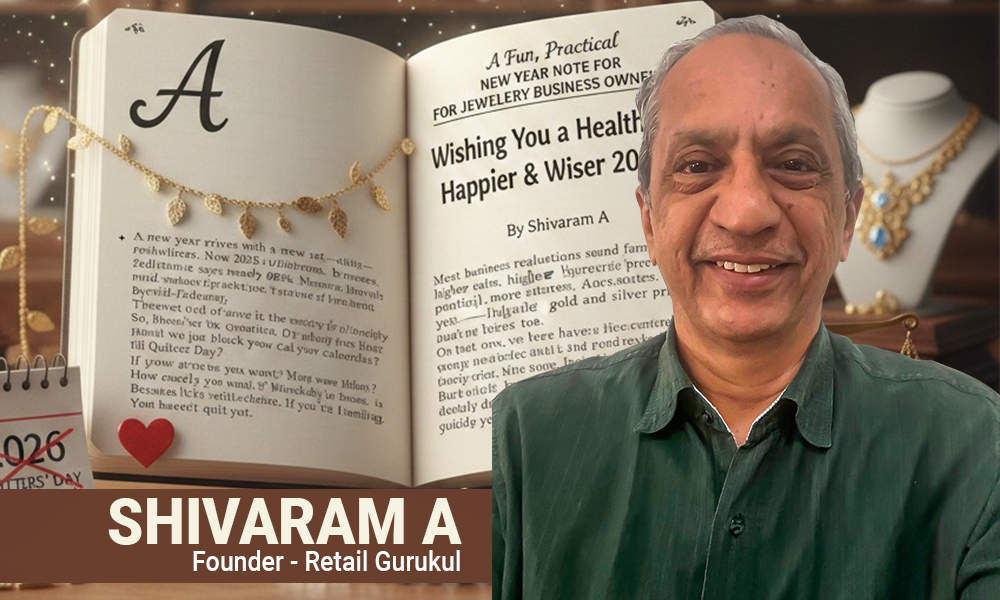
Wishing You a Healthier, Happier & Wiser 2026 – By Shivaram A
A new year arrives with a new set of—what else—New Year resolutions. And 2026 is no different.
Resolution makers, beware. Research says nearly 80% of New Year resolutions collapse by mid-February. There’s even a name for it: the second Friday of January is officially called Quitters’ Day.
So, here’s the uncomfortable question: Do you want 2026 to be any different, or should we just block your calendar till Quitters’ Day?
If your answer is a serious yes, then it boils down to two things:
- What exactly do you want?
- How badly do you want it?
Because let’s be honest intentions are cheap. Discipline is expensive.
If you’re still reading, congratulations. You haven’t quit yet.
Most business resolutions sound familiar: higher sales, higher profits (or much higher profits), more stores, more customers. And yes—higher gold and silver prices too. On that one, we have very little control… though prayers are always welcome!
But for 2026, let’s look beyond only business numbers and focus on three areas that quietly decide your long-term success.
1. A Healthier You in 2026
A typical day before 2025 (you may recognise this): Late wake-up. Late breakfast. Reaching the store by 11 am—or noon on a “busy” day. Vendor meetings. Lunch at 3 pm. Evening snacks at 6 pm. Endless cups of chai. Store closes at 9 pm. Dinner at 10:30 pm. Netflix or phone scrolling. Sleep well past midnight.
Not everything applies—but enough of it does to make you uncomfortable.
The result? Low energy, rising health reports, and a body that protests quietly… until it doesn’t.
Resolution for a Healthier 2026
Start with a complete health check-up. Think of it as your personal P&L statement—it shows your condition on one specific day.
Identify what I like to call “golden furniture” in the body—parts that have stopped moving but still occupy space.
Then act:
- Better food (not fancy diets)
- Regular movement (not heroic gym resolutions)
- Better sleep (yes, even for business owners)
Warning: Change will be uncomfortable. But so is ignoring the problem.
Set SMART health goals—Specific, Measurable, Achievable, Realistic, Time-bound.
2. A Happier You in 2026
Let’s admit it—becoming happier has rarely featured on a jeweller’s resolution list.

Resolution for a Happier 2026
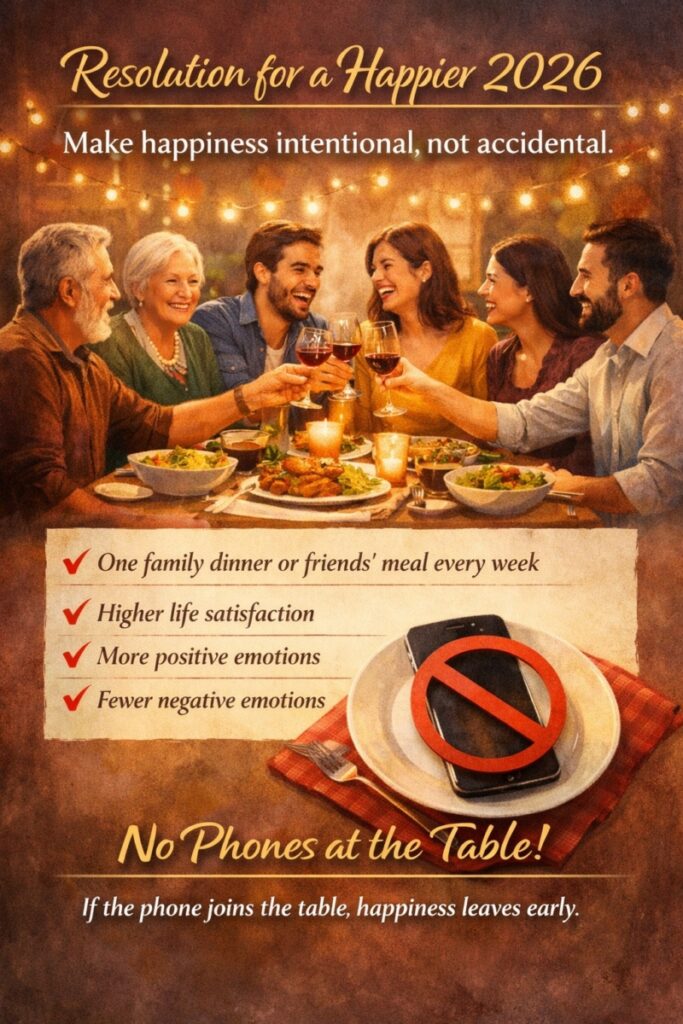
Make happiness intentional, not accidental.
Start with something simple: one family dinner or friends’ meal every week.
According to the World Happiness Report (based on over 1,50,000 people), those who regularly eat with others report:
- Higher life satisfaction
- More positive emotions
- Fewer negative emotions
One strict rule: phones stay away. If the phone joins the table, happiness leaves early.
3. A Wiser You in 2026
You’ve built a successful business. The numbers prove it. Experience, instinct, and industry knowledge have served you well.
But the world is shifting—fast.
AI. Agentic AI. AI Agents. (And yes, everyone is still figuring out the difference.)
People deep in this space believe AI may have a bigger impact than the internet itself.
The real question is not whether AI will affect jewellery retail—but whether you’ll learn early or catch up late.
For traditional business owners, the willingness to learn and apply new tools is the new unfair advantage.
A Simple 2026 Resolution Action Plan
| Action Area | Example | Final Status – 31.12.2026 |
| Healthier | 30 minutes movement daily | Achieved / Not Achieved |
| Happier | Weekly family dinner | Achieved / Not Achieved |
| Wiser | One AI implementation | Achieved / Not Achieved |
No overthinking. No complex dashboards. Just honest tracking.
Ready to make 2026 different?
If you want help converting good intentions into clear action plans—for health, happiness, or business wisdom—I’m happy to help you think it through.
Let’s ensure you’re still on track after Quitters’ Day.
Here’s wishing you a Healthier, Happier & Wiser 2026.
Call or WhatsApp on 90360 36524
Email: RetailGurukul.com
Jb Exclusive : Digital View


-
 BrandBuzz16 hours ago
The Pearl Edit: Thoughtful Women’s Day Gifting by GIVA
-

 BrandBuzz16 hours ago
Augmont Launches SPOT 2.0: One Platform. Every Product. Efficient Business
-
 BrandBuzz20 hours ago
Senco Gold & Diamonds Launches “SHAPE OF YOU”- AI Application for Women’s Day Celebration
-

 National News20 hours ago
Kushals Fashion Jewellery Curates Special Women’s Day Edit Celebrating Strength, Style and Self-Expression
