
National News
Jewellers’ Conclave and IIJS Premiere 2025 Roadshow Held in Lucknow to Empower Local Trade


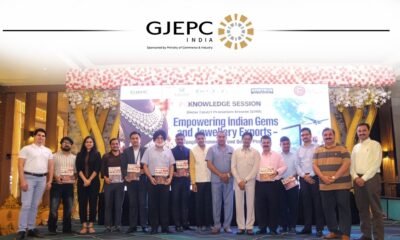
The Gem & Jewellery Export Promotion Council (GJEPC), in association with the Sarafa Wing of the Uttar Pradesh Vyapar Mandal, hosted a Jewellers’ Conclave and IIJS Premiere 2025 Roadshow in Lucknow. The event brought together over 125 participants with the goal of empowering local jewellers by providing insights into export potential, modern business strategies, and government-led support schemes.
Sanjay Gupta, President of the Uttar Pradesh Vyapar Mandal, underscored the growing importance of technology and timely information in enabling local jewellers to compete in global markets.
Mithilesh Pandey, Director – Membership at GJEPC, addressed the audience on crucial topics such as export documentation, global trade shows, GJEPC’s IJEX platform in Dubai, MSME support schemes, and upcoming events in Dubai and Doha. He also outlined the various benefits associated with GJEPC membership, encouraging wider participation from the region.
Naheed Sunke, Assistant Director at GJEPC, spoke about the pivotal role of IIJS Premiere in shaping the future of India’s gem and jewellery industry, highlighting its relevance for growing businesses.
Manoj Chaurasia, Director of the District Industries Centre (DIC), Lucknow, provided practical guidance on both Central and State government MSME schemes, offering valuable insights for small and medium-sized jewellery enterprises.
The event served as a strategic knowledge-sharing platform, aimed at integrating Uttar Pradesh’s jewellers more closely with national and international industry developments.



National News
BIS Introduces The Silver Refinery Certification Scheme; Framework Introduces “India Good Delivery For Silver”
Buyers, Institutional Investors, and Jewelers Are Guaranteed Strict Adherence To Exact Quality, Testing, and Traceability Standards. Silver From Any BIS-Approved Refinery Ensures A Verified Fineness and Purity


The Bureau of Indian Standards (BIS) has officially prioritized the domestic bullion sector by introducing the Silver Refinery Certification Scheme, that involved critical inputs and efforts by IBJA.
Mirroring the long-established certification ecosystem for gold, this framework introduces a structured “India Good Delivery for Silver” standard specifically tailored for silver bars and coins.
Buyers, institutional investors, and jewelers are guaranteed strict adherence to exact quality, testing, and traceability standards. Silver from any BIS-approved refinery ensures a verified fineness and purity.
Surendra Mehta, National Secretary- IBJA, said:

“BIS is introducing the Silver Refinery Certification Scheme, an initiative that involved critical inputs and efforts by IBJA. Mirroring the long-established certification ecosystem for gold, this framework introduces a structured India Good Delivery for Silver. Now, silver from any BIS-approved refinery ensures a verified fineness and purity. This will gradually end the impure silver bar market.”
Market structures have already evolved alongside this rollout. The Multi Commodity Exchange (MCX) aligned its exchange delivery protocols to accept BIS-standard domestic silver, allowing empanelled Indian refiners to fulfill physical delivery contracts directly on the exchange.
By formalizing the local refining of silver (including silver recovered as a by-product of gold dore), this scheme strengthens the domestic precious metals ecosystem in line with Aatmanirbhar Bharat objectives



India Delegation Arrives In Paris For Three Days Of Learning, Business & Collaboration

BIS Introduces The Silver Refinery Certification Scheme; Framework Introduces “India Good Delivery For Silver”

Navratri Edit By DAIMANTÉ: 9 Pendants, 9 Expressions Of Intention
BIS Introduces The Silver Refinery Certification Scheme; Framework Introduces “India Good Delivery For Silver”

Aspect Bullion & Refinery Launches “India’s Biggest Gold Fest” With Zero Making Charges On Gold Coins and Bars

GJEPC, ECGC Programme Underlines Recent Changes In Export Credit Insurance For The GJ Sector.
-
 National News5 hours ago
BIS Introduces The Silver Refinery Certification Scheme; Framework Introduces “India Good Delivery For Silver”
-
 National News6 hours ago
Aspect Bullion & Refinery Launches “India’s Biggest Gold Fest” With Zero Making Charges On Gold Coins and Bars
-
 National News6 hours ago
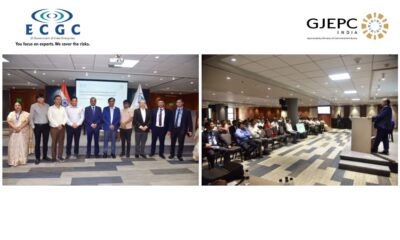
GJEPC, ECGC Programme Underlines Recent Changes In Export Credit Insurance For The GJ Sector.
-
 International News4 hours ago
India Delegation Arrives In Paris For Three Days Of Learning, Business & Collaboration
