
International News
Israel Diamond Exchange Closes Trading Floor Amid Escalating Iran Conflict

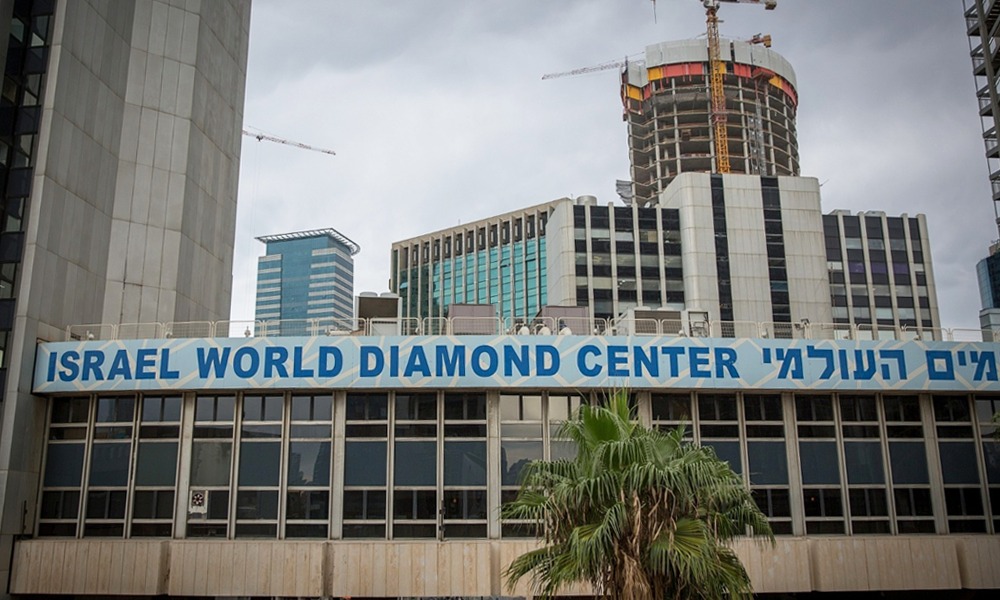
The Israel Diamond Exchange (IDE) has announced the closure of its trading floor and a shift to emergency operations following the outbreak of direct conflict between Israel and Iran. The decision, made in response to escalating security concerns, comes after Israel launched airstrikes on Iranian nuclear and military targets early Friday, prompting missile retaliation from Iran — some of which have struck areas near the IDE in Ramat Gan, just outside Tel Aviv.
In a statement released in Hebrew on Saturday, the IDE confirmed that it would operate in “emergency mode,” suspending regular activities and closing multiple facilities within the exchange complex. Services that are considered non-essential—including the bourse management offices, post office, import and export departments, the diamond controller’s office, maintenance services, restaurants, cafés, and bank branches—will remain shut until further notice.
Access to the IDE complex has also been restricted. Entry is now limited to the Shimshon building only, with all other entrances closed. The Maccabi and Yahalom parking lots, along with the office responsible for issuing bourse access tags, have also been temporarily closed.
The safety deposit room located in the Shimshon building will remain operational, but only until 2 p.m. daily, and solely for the purpose of depositing goods. “We recommend that companies and members transfer their goods to the secure safe room in the Shimshon building for optimal protection,” IDE advised in its statement.
In a separate communication issued on Friday, the exchange cautioned members about the limitations of most insurance policies, noting that damages resulting from war or terrorist activities are typically not covered. Members were urged to review their insurance coverage carefully and explore whether they might qualify for compensation under Israel’s property tax regulations in the event of a loss.
The IDE stressed that it will continue to closely monitor developments in the security situation and will update its guidelines accordingly to ensure the safety of its members and their assets.
Meanwhile, the Home Front Command, responsible for civil protection in Israel, has prohibited all non-essential public gatherings nationwide as missile threats persist. The missile attacks mark a significant escalation in regional tensions, drawing concerns from international observers and impacting critical sectors like Israel’s diamond trade.
The Israel Diamond Exchange is one of the world’s leading centers for diamond trading, and any disruption to its operations has wide-ranging implications for the global diamond supply chain. The current closure highlights the vulnerability of even highly secure economic institutions in times of geopolitical instability.







International News
Indian Consulate In New York Hosts India-USA Virtual Jewellery Exhibition; Facilitated By GJEPC
The Exhibition Brought Together 35 Indian Companies, Many Of Them Micro, Small and Medium Enterprises (MSMEs), Offering US Buyers An Opportunity To Explore Indian Jewellery Collections and Establish Direct Business Connections.


The Consulate General of India in New York, in collaboration with the Gem & Jewellery Export Promotion Council (GJEPC), organised the India-USA Virtual Exhibition on Gems & Jewellery on 23 October 2026, connecting Indian exporters with American buyers through a digital platform.
The inaugural ceremony featured welcome remarks by Ambassador HE . Binaya S. Pradhan, Consul General of India in New York, an inaugural address by Kirit Bhansali, Chairman, GJEPC, and closing remarks by Rajlakshmi Kadam, Consul (Trade), Consulate General of India, New York.
The exhibition brought together 35 Indian companies, many of them micro, small and medium enterprises (MSMEs), offering US buyers an opportunity to explore Indian jewellery collections and establish direct business connections. The event was designed to help exporters reach new customers and develop partnerships in one of India’s most important markets.
Addressing participants, Kirit Bhansali, Chairman, GJEPC, highlighted the importance of the US market, which accounted for around 30% of India’s gem and jewellery exports, worth nearly US$10 billion, in FY2024-25. He noted that tariff uncertainty had affected trade significantly, with India’s gem and jewellery exports to the US falling by more than 44% between April and December 2025.
However, trade has begun to recover. Between April and September 2026, India’s gem and jewellery exports to the US grew nearly 6% year-on-year to almost US$3 billion, compared with US$2.77 billion in the corresponding period of 2025.
Kirit Bhansali also referred to progress on the proposed India-US Bilateral Trade Agreement, expressing hope that it would provide greater clarity and predictability for exporters and buyers once its terms are finalised.
With the US holiday season approaching, followed by Valentine’s Day and retailers’ sourcing plans for 2027, he urged American buyers to explore India’s manufacturing capabilities across diamonds, coloured gemstones and gold jewellery. He also encouraged buyers to engage directly with participating MSMEs, highlighting their skills, flexibility and ability to meet varied sourcing requirements.



India’s Festive Jewellery Market Eyes Growth As Consumers Shift Towards Lightweight Designs and Value-Led Purchases

Kicky & Perky Opens Its First Official Store At DLF Midtown Plaza, Marking A New Chapter In Its Retail Journey

Senco Gold & Diamonds Brings Festive Cheer With “Dhanteras Shagun”, Offering Exclusive Savings and Rewards

Dhanteras Shopping Guide 2026:Gold, Silver, Diamonds & Festive Jewellery Trends To Watch

Indriya, Aditya Birla Jewellery Unveiled India’s Largest Sustainable Jewellery Rangavalli

From Diya Puja To Diwali Soirées: Jewellery Designed To Go Beyond The Festive Season
-
 JB Insights3 days ago
Dhanteras Shopping Guide 2026:Gold, Silver, Diamonds & Festive Jewellery Trends To Watch
-
 National News3 days ago
Indriya, Aditya Birla Jewellery Unveiled India’s Largest Sustainable Jewellery Rangavalli
-
 BrandBuzz3 days ago
From Diya Puja To Diwali Soirées: Jewellery Designed To Go Beyond The Festive Season
-

 BrandBuzz3 days ago
The Solenne Collection: A Celebration Of Diwali By Bharti Bangur Fine Jewels
