
National News
Indian bullion Market Experienced A Notable Recovery, Trimming Losses Triggered After The Ceasefire Headlines
While the immediate “Panic Buying” has subsided, The Long-Term trend for precious metals remains structurally supported by broader economic uncertainties.

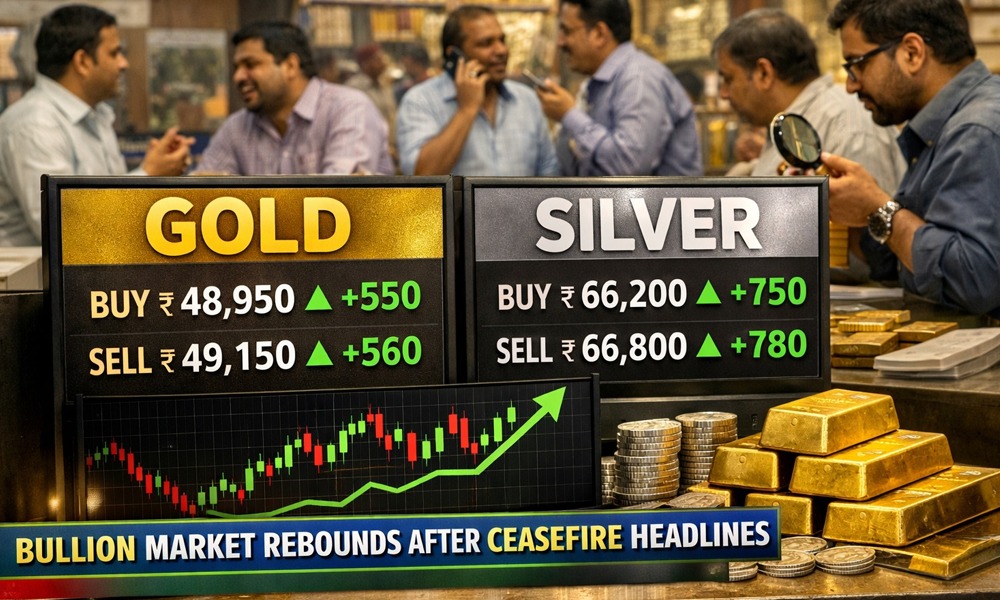
The Indian bullion market experienced a notable recovery as gold and silver prices rebounded from a recent corrective phase. This upward shift follows a period of high volatility driven by the geopolitical breakthrough of a US-Iran ceasefire, which initially stripped away some of the safe-haven premium that had been driving prices to record highs.
Indian gold prices on 11 April 2026 moved higher by about Rs. 870 per 10 grams, trimming losses triggered after the ceasefire headlines. For 24K gold with 99.9% purity, the rate stood at Rs. 15,235 per gram or Rs. 1,52,350 per 10 grams, while 22K gold at 91.6% purity was quoted at Rs. 13,965 per gram or Rs. 1,39,650 per 10 grams.
Despite this easing of tensions, the domestic market saw a firm recovery on Saturday, with the MCX signaling a cautious trend. While gold recovered a portion of its earlier losses, silver saw a more aggressive climb per kilogram across major metropolitan hubs, reflecting a resilient demand for precious metals even as global markets paused for the weekend.
In the international arena, spot gold stabilized near $4,749.42 per ounce, securing its third consecutive weekly gain of approximately 2%. Silver maintained a strong technical position, trading in a band between $76.31 and $76.65 per ounce and successfully defending a critical support level at $75.00. Investors are currently balancing a complex macroeconomic landscape where easing inflation risks are being weighed against a strengthening US dollar. This “cautious” sentiment is further reinforced by the strategic behavior of central banks, whose continued interest in diversifying reserves provides a steady floor for prices despite the de-escalation of conflict in the Middle East.
For domestic consumers in India, city-specific pricing continues to vary based on local taxes and demand, with significant recovery noted in cities like Chennai and Delhi. However, market experts remind buyers that retail costs remain subject to additional charges, including a 3% GST and various making charges that can significantly alter the final invoice. As central bank policies and currency fluctuations remain the primary drivers of momentum, the recovery on April 11 suggests that while the immediate “panic buying” has subsided, the long-term trend for precious metals remains structurally supported by broader economic uncertainties.



National News
Kangana Ranaut Unveils PNG Jewellers New Showroom In Ayodhya~
The Store Is PNG Jewellers’ 81st Overall and Its Fifth In UP following Lucknow, Kanpur, Gorakhpur and Varanasi.
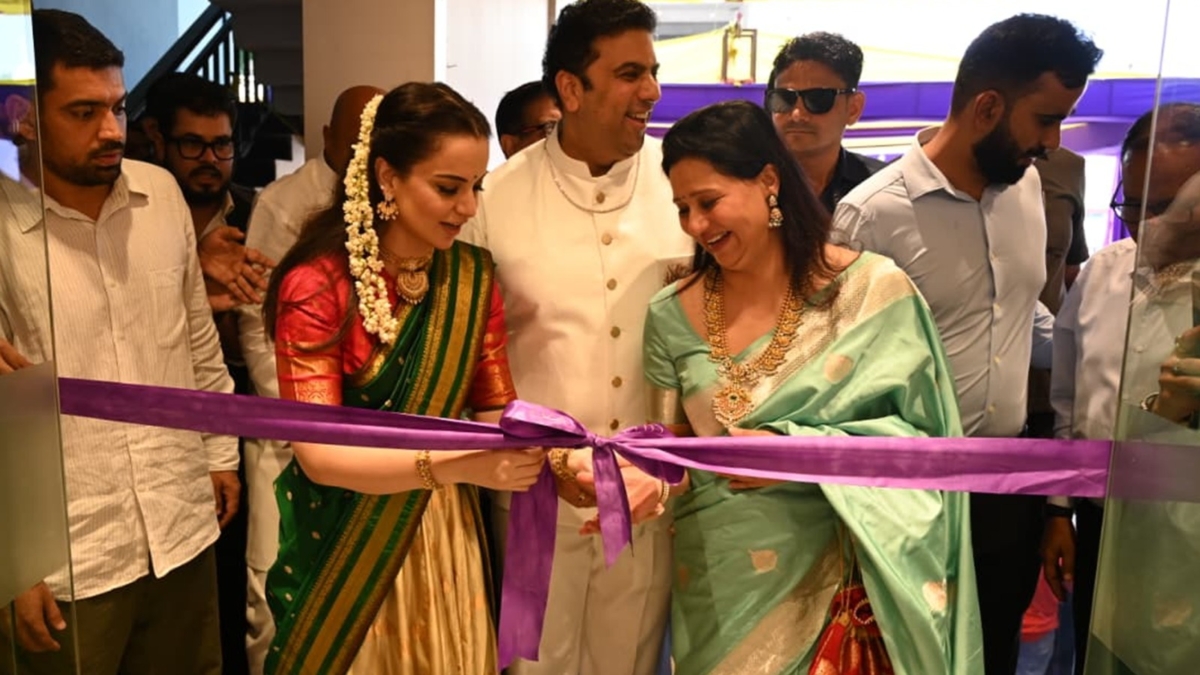
Member of Parliament and Indian film actor Kangana Ranaut inaugurated PNG Jewellers new store in Ayodhya. The store is PNG Jewellers’ 81st overall and its fifth in UP following Lucknow, Kanpur, Gorakhpur and Varanasi. Located next to Rikabganj Women Police Station, the new store gives Ayodhya customers access to PNG Jewellers’ products, collections, and quality service closer to home.
Dr. Saurabh Gadgil, CMD- PNG Jewellers, said:

“Opening a store in Ayodhya is a special moment for us. We have received an encouraging response from customers across Uttar Pradesh, and we are pleased to bring PNG Jewellers closer to people in and around Ayodhya. We look forward to being part of their weddings, festivals and family celebrations, while offering the legacy, trust and craftsmanship that our brand has stood for over generations.”
Kangana Ranaut added:
“Ayodhya holds a special place in the hearts of so many people, and I am delighted to be here for the opening of PNG Jewellers’ new store. Jewellery is closely woven into how we celebrate our traditions, weddings and important moments with family. I wish the PNG team every success in Ayodhya.’’
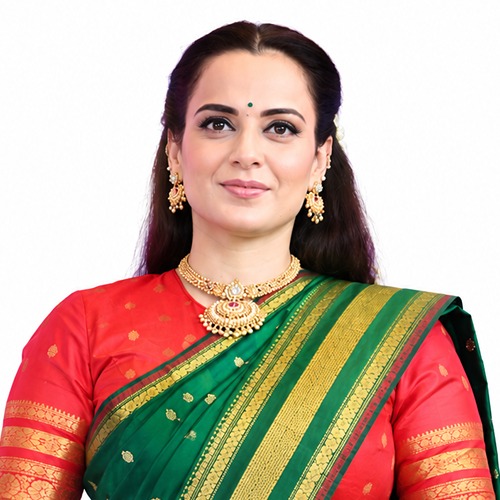
The occasion also marks the debut of Ram Katha, an exclusive collection inspired by the Ramayana and the historical, cultural and spiritual heritage of Ayodhya. Launched by Kangana Ranaut, the collection is being introduced in its initial phase across PNG stores in North India
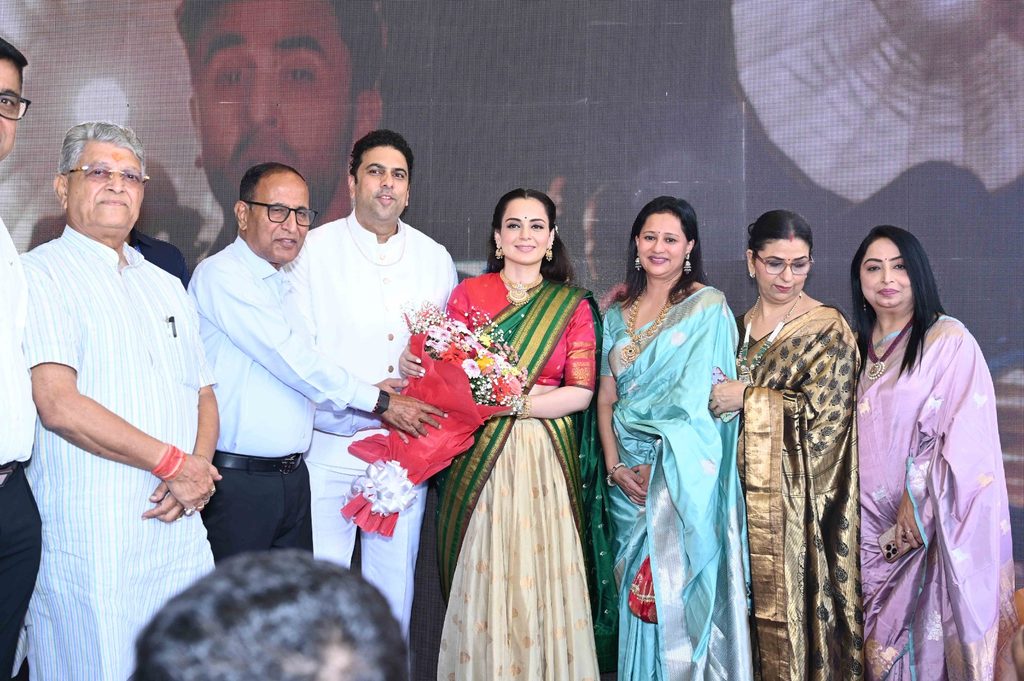
The store also showcases a range of gold, diamond, temple and bridal jewellery for weddings, festive occasions and everyday wear. Customers can explore PNG Jewellers’ collections, including Saptam, Katha, Pratha, Eiina and Polmi, with designs crafted for local tastes.
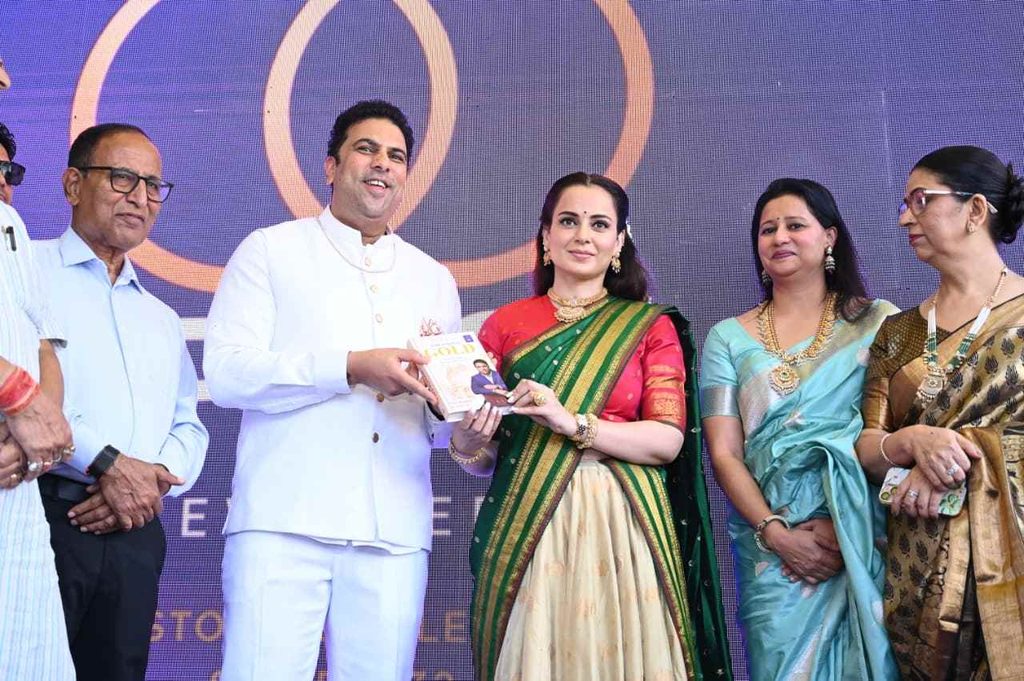
Ayodhya, revered as the birthplace of Lord Shree Ram, draws people from across the country for its temples, festivals and deeply rooted traditions. Jewellery is closely tied to weddings, festivals and family celebrations in the city. The new store allows PNG Jewellers to serve local customers more conveniently while continuing its expansion in Uttar Pradesh. To celebrate the opening, the brand introduced limited-period inaugural offers of up to 50% off on gold jewellery making charges and up to 100% off on diamond jewellery making charges*, valid till 15th November, 2026.
Adding to the excitement of the festive season, PNG Jewellers brings together its brand ambassadors Madhuri Dixit-Nene and Ranbir Kapoor for the first time in a special festive television commercial. The campaign marks a significant moment, bringing together two of Bollywood’s most iconic stars in a celebration of tradition, elegance and contemporary appeal. This much-awaited collaboration also reflects PNG Jewellers’ vision of connecting its nearly two-century-old legacy with a new generation of consumers.



Kangana Ranaut Unveils PNG Jewellers New Showroom In Ayodhya~

GGJS 2026 Concludes With High-Volume Trade and Strategic Focus On Next-Gen Leadership

The Solitaire Festival Of India Concludes; Bumper Prize Winner At Ranka Jewellers Wins XUV 7XO
GGJS 2026 Concludes With High-Volume Trade and Strategic Focus On Next-Gen Leadership

ABARAN Commemorates The 125th Birth Anniversary Of Founder Shri Burde Sadananda Kamath With Special Gold Coin Launch

MCX Gold Silver Futures See Dip
-
 National News2 hours ago
GGJS 2026 Concludes With High-Volume Trade and Strategic Focus On Next-Gen Leadership
-
 National News7 hours ago
ABARAN Commemorates The 125th Birth Anniversary Of Founder Shri Burde Sadananda Kamath With Special Gold Coin Launch
-
 National News6 hours ago
MCX Gold Silver Futures See Dip
-
 National News44 minutes ago
Kangana Ranaut Unveils PNG Jewellers New Showroom In Ayodhya~
