

International News
India, UK sign historic free trade agreement FTA; gems and jewellery, leather, textiles sectors stand to gain

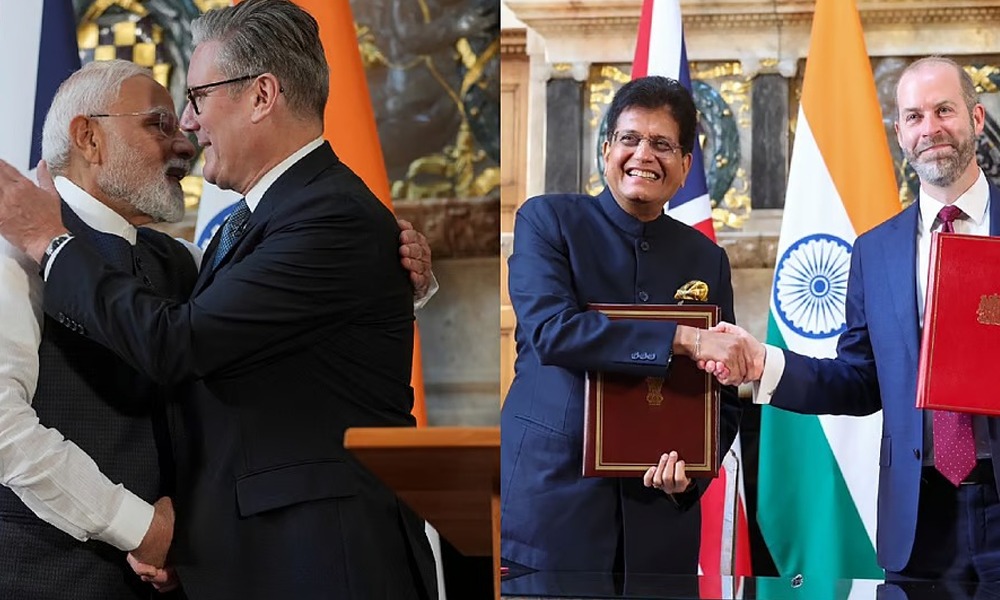
The United Kingdom and India signed a historic free trade agreement (FTA), boosting bilateral trade by around $34 billion annually. The FTA, signed during Prime Minister Narendra Modi’s visit to the UK, includes tariff cuts, improved mobility for professionals, and market access guarantees that together mark one of India’s most comprehensive trade pacts.
The FTA offers duty-free access to the UK’s $23 billion market, giving Indian MSMEs a strong advantage over other countries in labour-intensive sectors such as gems and jewellery, leather and footwear, textiles. India’s gems and jewellery exports to the UK are currently valued at $941 million, with jewellery alone accounting for $400 million. With the UK importing $3 billion worth of jewellery annually, India’s exports are expected to double in 2–3 years.
The deal took three years to reach and also commits to a new India-UK plan to tackle illegal migration.Opponents had warned the deal could undercut British workers due to extended social security terms, but UK Business Secretary Jonathan Reynolds said this was “completely wrong” and Indian workers on temporary secondment to the UK would get the same deal already offered to many other countries.
The trade deal is expected to ensure comprehensive market access for Indian goods across all sectors and India will gain from tariff elimination on about 99 per cent of tariff lines (product categories) covering almost 100 per cent of the trade values, the officials said.
After signing the landmark deal, the two prime ministers are also expected to unveil an “UK-India Vision 2035” to take their partnership to new heights in a time of rapid global change.
The UK said Indian consumers will benefit from improved access to the best British products — from soft drinks and cosmetics to cars and medical devices — as average tariffs will drop from 15 per cent to 3 per cent after the FTA kicks in.







DiamondBuzz
Diamond Slump forces Debswana to diversify into copper, platinum and solar
Diamond-centric mining models is giving way to broader resource portfolios
Debswana Diamond Company, the 50–50 joint venture between the Botswana government and De Beers, is moving to diversify into copper, platinum and renewable energy as the prolonged downturn in natural diamond demand pressures earnings and forces the industry to rethink its growth strategy.
The company’s board has approved plans to invest in a portfolio of non-diamond projects after revenue fell 46% in 2024, the latest available financial year, highlighting the scale of the downturn in the global diamond market.
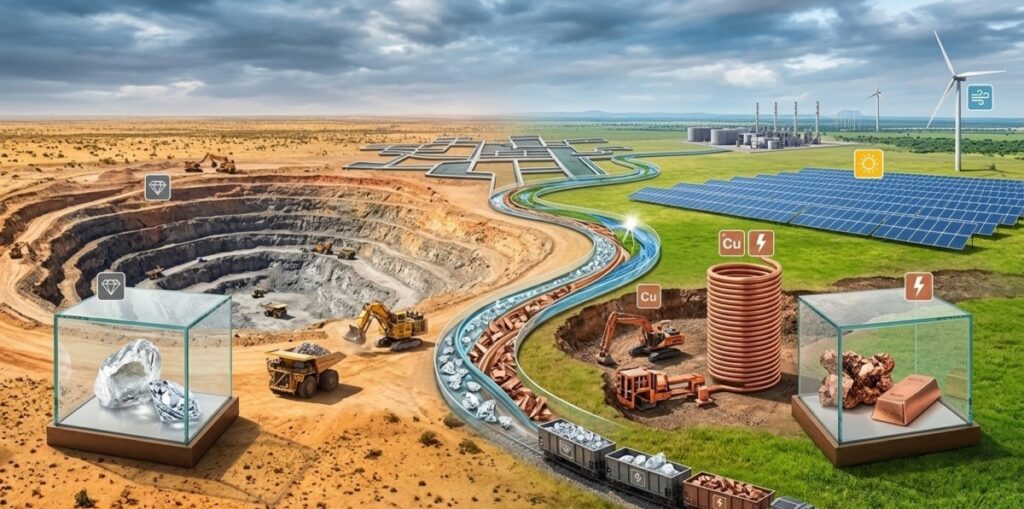
The move signals a strategic shift toward commodities with stronger long-term demand fundamentals, particularly copper, which is central to global electrification and energy-transition infrastructure.
Debswana’s diversification reflects a broader industry pivot as diamond producers confront weak consumer demand, rising competition from lab-grown stones and elevated inventories across the supply chain.
The shift is also visible among smaller exploration companies. Botswana Diamonds recently rebranded as Botswana Minerals, signalling its own strategic focus on copper exploration rather than diamonds.
Together, these moves underscore a growing consensus across the sector: the era of diamond-centric mining models is giving way to broader resource portfolios anchored in energy-transition metals.


-

 National News54 minutes ago
This Women’s Day, Dhirsons Jewellers Celebrates the Milestones in a Woman’s Journey
-

 BrandBuzz17 hours ago
The Pearl Edit: Thoughtful Women’s Day Gifting by GIVA
-

 BrandBuzz18 hours ago
Augmont Launches SPOT 2.0: One Platform. Every Product. Efficient Business
-

 BrandBuzz21 hours ago
Senco Gold & Diamonds Launches “SHAPE OF YOU”- AI Application for Women’s Day Celebration
