
International News
Gold volatility spikes on geopolitics, trade wars


Gold prices rose today on safe-haven buying after US President Donald Trump reignited the trade war by raising tariffs on Chinese goods to 100% and imposing export controls on “any and all critical software”. Gold saw a dip on Friday on the heels of Israel Hamas ceasefire. The unprecedented gold price rally came to a halt on Friday, offering some relief to investors and retail jewellery buyers alike. On the occasion of Karwa Chauth, gold prices in India witnessed a sharp correction on October 10.
US-China Trade Tensions (Escalating Uncertainty)
Renewed fears of a full-blown trade war between the United States and China are a major factor driving recent spikes in gold prices.
- Trade War Impact: Threats of new, high-rate tariffs (e.g., a potential 100% tariff on Chinese goods) and export restrictions create economic uncertainty, which investors traditionally hedge against by buying gold.
- Inflationary Pressure: Tariffs can raise the cost of imported goods, leading to inflationary pressures. Gold serves as a classic hedge against inflation, directly boosting its demand and price.
- Currency Weakness: An escalating trade dispute can cause the US Dollar (USD) to weaken relative to other currencies, which makes dollar-denominated gold cheaper for international buyers, further stimulating demand.
Hamas-Israel Conflict & Ceasefire Volatility (Risk Premium)
The conflict in the Middle East contributes a significant “geopolitical risk premium” to the price of gold.
- Safe-Haven Demand: The outbreak and escalation of the conflict (from October 2023 onward) immediately triggered a surge in gold buying as investors sought to protect capital from the sudden, high-stakes political and military instability.
- Ceasefire Impact: Reports of a US-brokered ceasefire agreement or de-escalation tend to have the opposite, negative effect, temporarily easing the geopolitical risk premium. This can cause short-term price corrections or dips in gold as market fears subside.
- Regional Spillover: The threat of the conflict spreading and disrupting global energy supplies (e.g., oil) creates potential inflationary risk, which reinforces gold’s appeal regardless of temporary ceasefires.


International News
US Holiday Shopping Expected To Top $1 Trillion For The First Time: NRF
While Overall Buying Power Remains High, Ongoing Inflation and Rising Household Costs Mean Some Families Will Have To Watch Their Spending More Carefully Than Others

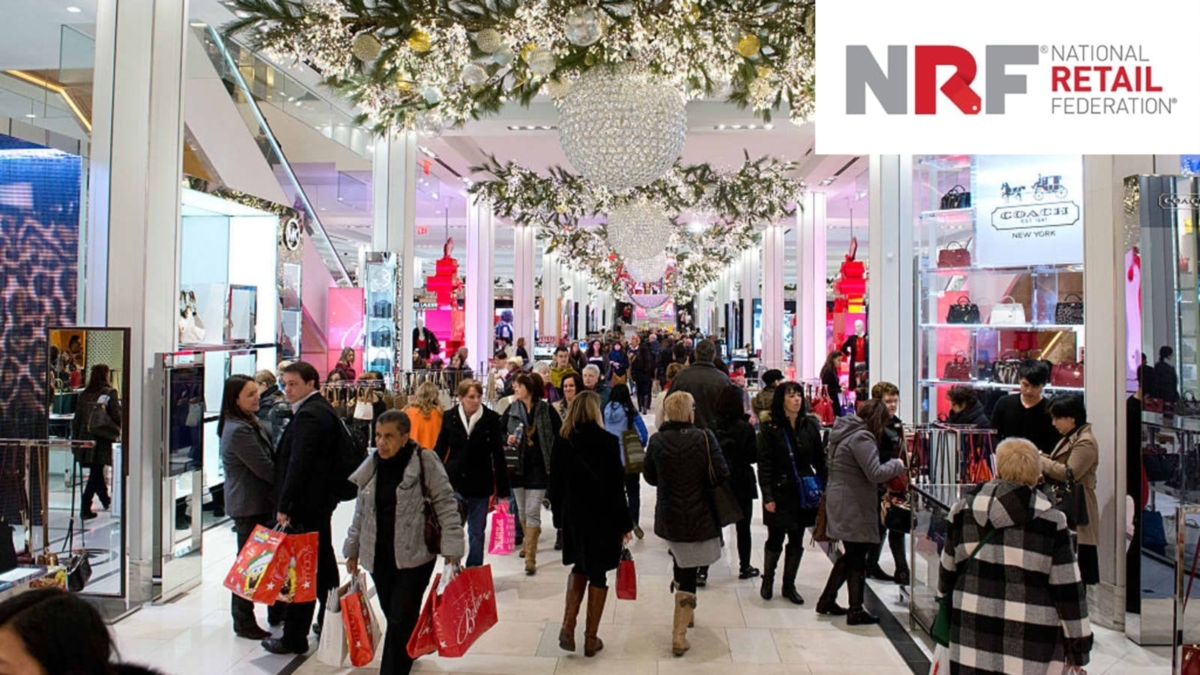
The National Retail Federation (NRF) predicts Americans will spend $1.01 trillion on holiday shopping in November and December. That is a 4.2% jump from $972 billion last year.
NRF said its forecast was based on economic modeling that incorporates consumer spending, employment, wages and historical retail sales data. It excludes automobile, gasoline and restaurant sales
Extra Hiring: To handle the surge in shoppers, stores plan to hire 325,000 to 375,000 temporary holiday workers.
Mixed Budget Impact: Higher gas prices and inflation could still strain some family budgets, affecting low- and high-income shoppers differently.
Retailers expect a strong shopping season because people continue to make holiday spending a priority.
Store owners are ready to attract shoppers by offering competitive prices, deals, and choices for every budget.
While overall buying power remains high, ongoing inflation and rising household costs mean some families will have to watch their spending more carefully than others.



Belgian Consul General H. E. Mr. Pierre Stverlynck Graces BDB Annual Day

Limelight Lab Grown Diamonds Crosses 100 Stores Milestone This Dussehra: Targets 200 In 2027

Joyalukkas Opens Its 2nd Bengaluru Showroom in Jayanagar

US Holiday Shopping Expected To Top $1 Trillion For The First Time: NRF
Belgian Consul General H. E. Mr. Pierre Stverlynck Graces BDB Annual Day
Limelight Lab Grown Diamonds Crosses 100 Stores Milestone This Dussehra: Targets 200 In 2027
-
 International News18 hours ago
US Holiday Shopping Expected To Top $1 Trillion For The First Time: NRF
-
 National News12 hours ago
Belgian Consul General H. E. Mr. Pierre Stverlynck Graces BDB Annual Day
-
 National News12 hours ago
Limelight Lab Grown Diamonds Crosses 100 Stores Milestone This Dussehra: Targets 200 In 2027
-
 New Premises13 hours ago
Joyalukkas Opens Its 2nd Bengaluru Showroom in Jayanagar
