
International News
GJEPCs statement on the geopolitical tensions in ME Region
GCC countries and MENA region is an important export destination for India’s GJ sector

GJEPC expresses deep concern over the escalating geopolitical tensions in the Middle East region. The situation is a matter of serious concern, and we hope for stability and peace to return at the earliest to make it conducive of conducting regular business activities.
From an industry standpoint, the Gulf Cooperation Council (GCC) countries and MENA region is not only an important export destination for India’s gem and jewellery sector, but also a key hub where Indian companies have established business interests. These include significant investments in jewellery retail chains, regional offices, manufacturing units, and logistics networks among other trade verticals.
GJEPC’s India Jewellery Exposition Centre (IJEX) in Dubai and the Saudi Arabia Jewellery Exposition (SAJEX) initiatives are examples of long-term investments across the Middle East.
The Gulf region is also home to a large Indian diaspora, many of whom are directly associated with the gem and jewellery trade.
Given these deep connections, any prolonged instability can have implications for business sentiment, movement of goods, imports of raw materials , exports of finished goods and overall market dynamics. At present, the industry is closely monitoring developments and adopting a cautious wait-and-watch approach while continuing normal business operations wherever feasible.
GJEPC remains in touch with stakeholders from Industry and Government of India. We will assess the evolving situation to evaluate any potential impact on India’s gem and jewellery exports and would urge the Government to take steps accordingly.


International News
US Holiday Shopping Expected To Top $1 Trillion For The First Time: NRF
While Overall Buying Power Remains High, Ongoing Inflation and Rising Household Costs Mean Some Families Will Have To Watch Their Spending More Carefully Than Others

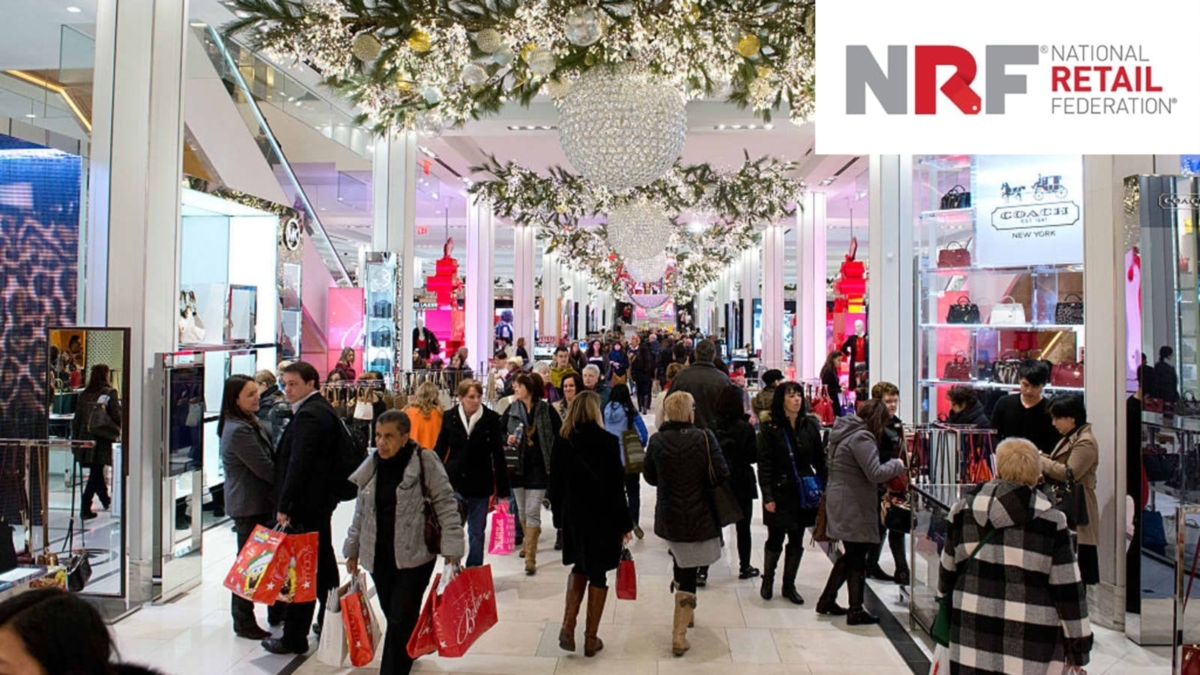
The National Retail Federation (NRF) predicts Americans will spend $1.01 trillion on holiday shopping in November and December. That is a 4.2% jump from $972 billion last year.
NRF said its forecast was based on economic modeling that incorporates consumer spending, employment, wages and historical retail sales data. It excludes automobile, gasoline and restaurant sales
Extra Hiring: To handle the surge in shoppers, stores plan to hire 325,000 to 375,000 temporary holiday workers.
Mixed Budget Impact: Higher gas prices and inflation could still strain some family budgets, affecting low- and high-income shoppers differently.
Retailers expect a strong shopping season because people continue to make holiday spending a priority.
Store owners are ready to attract shoppers by offering competitive prices, deals, and choices for every budget.
While overall buying power remains high, ongoing inflation and rising household costs mean some families will have to watch their spending more carefully than others.



Belgian Consul General H. E. Mr. Pierre Stverlynck Graces BDB Annual Day

Limelight Lab Grown Diamonds Crosses 100 Stores Milestone This Dussehra: Targets 200 In 2027

Joyalukkas Opens Its 2nd Bengaluru Showroom in Jayanagar

US Holiday Shopping Expected To Top $1 Trillion For The First Time: NRF
Belgian Consul General H. E. Mr. Pierre Stverlynck Graces BDB Annual Day
Limelight Lab Grown Diamonds Crosses 100 Stores Milestone This Dussehra: Targets 200 In 2027
-
 International News18 hours ago
US Holiday Shopping Expected To Top $1 Trillion For The First Time: NRF
-
 National News12 hours ago
Belgian Consul General H. E. Mr. Pierre Stverlynck Graces BDB Annual Day
-
 National News12 hours ago
Limelight Lab Grown Diamonds Crosses 100 Stores Milestone This Dussehra: Targets 200 In 2027
-
 New Premises13 hours ago
Joyalukkas Opens Its 2nd Bengaluru Showroom in Jayanagar
