

International News
GJEPC Signs Historic Luanda Accord that Commits 1% of Rough Sales Revenue to Global NaturaL Diamond Marketing

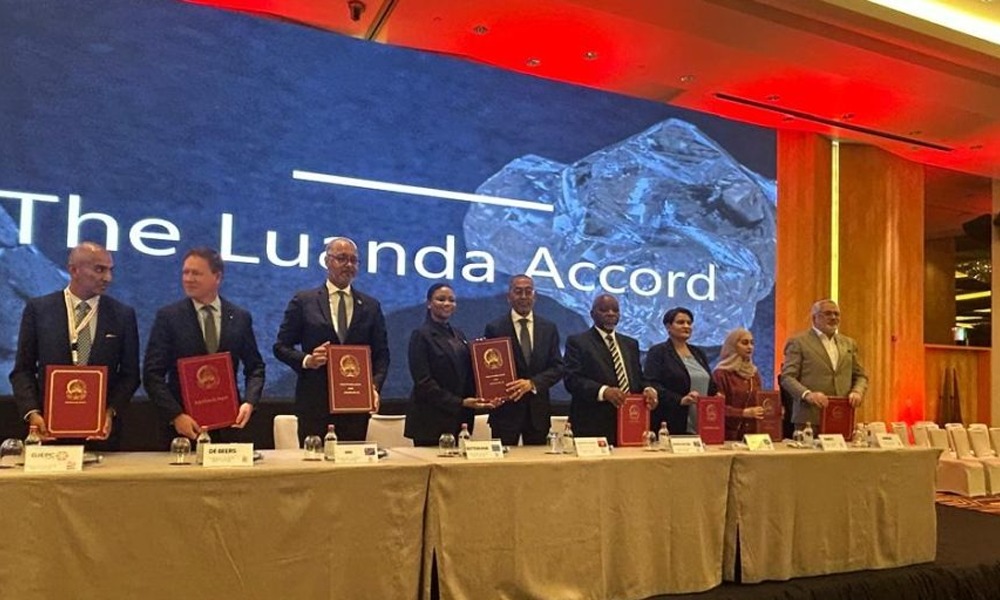
In a landmark move to boost the appeal of natural diamonds across the globe, top natural diamond mining, manufacturing and marketing players signed the Luanda Accord on Wednesday, in Luanda, the capital of Angola. Stakeholders jointly agreed to contribute the equivalent of 1% of annual revenues from rough diamond sales to a collective marketing initiative. Under pressure due to conflicts between countries, slowing economies and shifting consumer preferences towards lab-grown diamonds, the natural diamond trade is taking various measures to stabilize the market. After a significant drop in the global diamond business, industry leaders are joining hands to secure the industry’s interests.
The Luanda Accord signatories include:
H.E. Diamantino Azevedo
The Government of the Republic of Angola
Honourable Bogolo Joy Kenewendo
The Government of the Republic of Botswana
Honourable Kizito Pakabomba Kapinga Mulune
Government of the Democratic Republic of Congo
Honourable Gaudentia Krohne
Government of the Republic of Namibia
Shaunak Parikh, Vice Chairman
Gem & Jewellery Export Promotion Council
Al Cook, Chief Executive Officer
De Beers Group
Honourable Gwede Mantashe
Government of the Republic of South Africa
Isidore Mörsel, President
Antwerp World Diamond Centre
Maryam Al Hashemi
Dubai Multi Commodities Centre
This is a significant development for Surat and India. Eight lakh people are employed in the diamond manufacturing industry in the city, while seven lakh more work in the gems and jewellery sector in other cities of the country. The agreement was signed by the governments of Angola, Botswana, the Democratic Republic of Congo, Namibia, South Africa, officials of India’s Gem and Jewellery Export Promotion Council, Antwerp World Diamond Centre (AWDC), Dubai Multi Commodities Centre and De Beers Group.
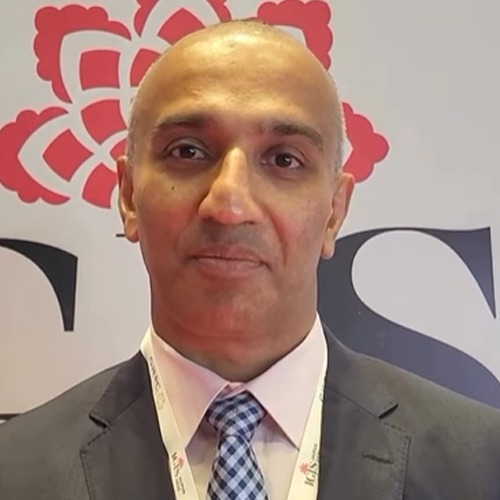
The 1% contribution will be channelled through the Natural Diamond Council (NDC), which will take the lead in designing and executing a global generic marketing strategy aimed at enhancing consumer awareness and demand for natural diamonds. “Implementation details, including the mechanisms for making these contributions, will be finalized after legal review. Each participating govt will work in coordination with industry representatives to establish suitable arrangements for contributions in their respective jurisdictions,” said an official present at the meeting. The agreement included that, to ensure transparency and alignment with contributor interests, the governance structure of the NDC will undergo a review. Annual assessments of both financial contributions and the impact of marketing campaigns will be conducted by NDC members. “The Luanda Accord marks a fundamental shift in the way our industry comes together to protect and promote the future of natural diamonds. As the world’s largest diamond manufacturing centre, India is proud to stand shoulder to shoulder with African producer nations and global partners,” said Shaunak Parikh, vice-chairman, GJEPC. “A unified global marketing push is no longer optional — it’s essential. GJEPC remains deeply committed to this shared vision and is ready to contribute actively to the next chapter of sustainable growth for our industry,” Parikh added.” The signing of the Luanda Accord marks a historic moment of unity in our industry. After a year of collaboration with African diamond-producing nations and global partners like the GJEPC and DMCC, we’ve committed to collectively fund and promote natural diamonds. This is a powerful step toward a stronger, more sustainable future for our industry — and I’m proud of the leadership role the AWDC played in making it happen,” said Ravi Bhansali, vice-president, AWDC.







DiamondBuzz
Diamond Slump forces Debswana to diversify into copper, platinum and solar
Diamond-centric mining models is giving way to broader resource portfolios
Debswana Diamond Company, the 50–50 joint venture between the Botswana government and De Beers, is moving to diversify into copper, platinum and renewable energy as the prolonged downturn in natural diamond demand pressures earnings and forces the industry to rethink its growth strategy.
The company’s board has approved plans to invest in a portfolio of non-diamond projects after revenue fell 46% in 2024, the latest available financial year, highlighting the scale of the downturn in the global diamond market.
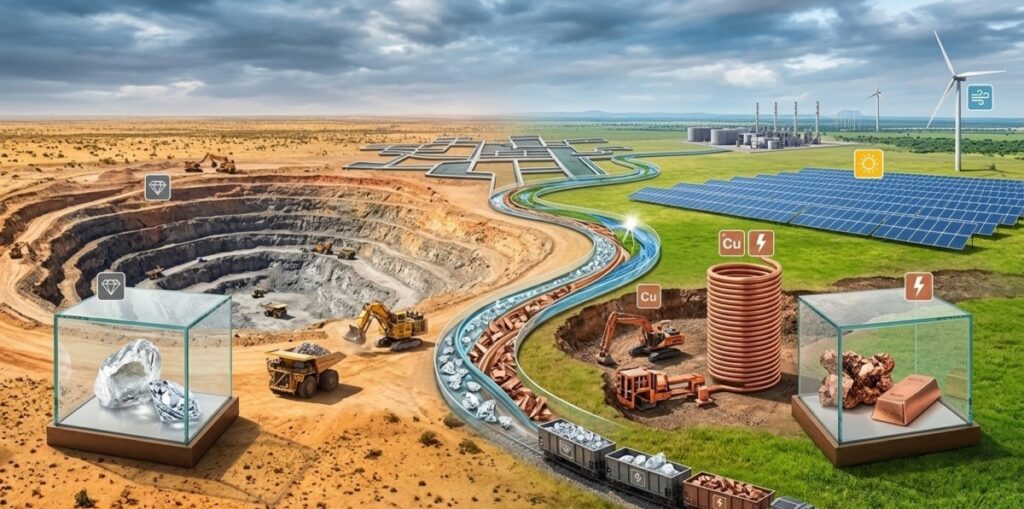
The move signals a strategic shift toward commodities with stronger long-term demand fundamentals, particularly copper, which is central to global electrification and energy-transition infrastructure.
Debswana’s diversification reflects a broader industry pivot as diamond producers confront weak consumer demand, rising competition from lab-grown stones and elevated inventories across the supply chain.
The shift is also visible among smaller exploration companies. Botswana Diamonds recently rebranded as Botswana Minerals, signalling its own strategic focus on copper exploration rather than diamonds.
Together, these moves underscore a growing consensus across the sector: the era of diamond-centric mining models is giving way to broader resource portfolios anchored in energy-transition metals.


-

 National News1 hour ago
This Women’s Day, Dhirsons Jewellers Celebrates the Milestones in a Woman’s Journey
-

 BrandBuzz18 hours ago
The Pearl Edit: Thoughtful Women’s Day Gifting by GIVA
-

 BrandBuzz18 hours ago
Augmont Launches SPOT 2.0: One Platform. Every Product. Efficient Business
-
 BrandBuzz22 hours ago
Senco Gold & Diamonds Launches “SHAPE OF YOU”- AI Application for Women’s Day Celebration