
National News
GJEPC Proposes Pre-Budget Recommendations to Strengthen India’s Gem & Jewellery Competitiveness Amid Challenging Trade Landscape

The Gem & Jewellery Export Promotion Council (GJEPC), the apex body representing India’s gem and jewellery sector, has proposed its pre-Budget recommendations to Hon’ble Finance Minister Smt. Nirmala Sitharaman, outlining key policy measures to boost India’s export competitiveness, enhance ease of doing business, and support the industry’s resilience amid global headwinds.
India’s gem and jewellery exports, valued at USD 28.7 billion in FY 2024–25, continue to play a pivotal role in driving foreign exchange earnings and employment generation. However, the industry currently faces multiple challenges — including geopolitical uncertainties, the impact of U.S. tariff actions, and slowing consumer demand in key markets.
As the sector works to diversify exports and tap new markets, GJEPC has urged the government to consider targeted duty rationalisation and procedural reforms that will help Indian manufacturers stay cost-competitive. These recommendations aim to create a more enabling policy environment that supports sustainable growth, innovation, and value addition across the entire gem and jewellery value chain.

Kirit Bhansali, Chairman, GJEPC, said, “The global gem and jewellery trade is undergoing a major transformation. With high U.S. tariffs, evolving consumer preferences, and shifting global supply chains, it is imperative that India maintains its competitive edge. Our pre-Budget proposals are focused on making Indian exports more cost-efficient, strengthening SEZ operations, and improving policy frameworks that encourage investment and skill development.
A key objective is also to establish India as a global diamond trading hub, complementing its position as the world’s leading cutting and polishing centre. With supportive reforms and a stable trade ecosystem, India can not only weather current global challenges but also lead the next phase of growth in the international jewellery market.”
Key Recommendations Proposed by GJEPC
1. Liberalised Taxation for Rough Diamond Trading

India, which cuts and polishes nearly 90% of the world’s rough diamonds, continues to lack a global trading hub comparable to Antwerp and Dubai. To address this, GJEPC has recommended the introduction of a liberalised and predictable taxation regime on foreign mining companies (FMCs) operating in Special Notified Zones (SNZs). The current 4% Safe Harbour tax is considered too high and deters international trading activity. Drawing inspiration from Belgium’s successful “Carat Tax” model, which has attracted global diamond trading to Antwerp, GJEPC proposes a similar approach to position India as a diamond trading and value discovery centre. The Council also seeks permission for reputed global brokers to operate in India, thereby improving transparency, liquidity, and international participation in the domestic market.
2. Duty Rationalisation on Cut and Polished Stones
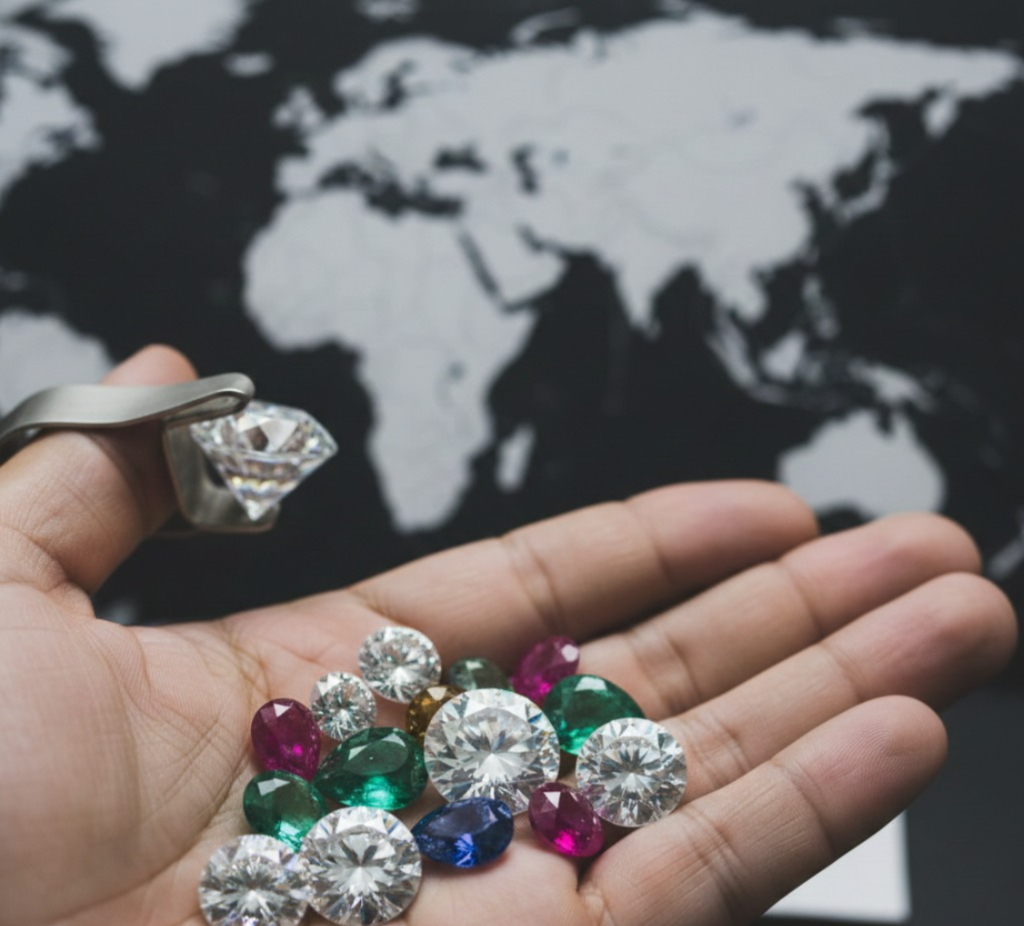
GJEPC has urged the government to rationalise import duties on cut and polished diamonds and coloured gemstones to help Indian exporters remain globally competitive. India is facing challenges due to beneficiation policies of mining countries, demand slowdown, and new rival centres emerging in Africa and Southeast Asia. Under current rules, semi-processed diamonds imported from mining countries are classified as “cut and polished” and attract a 5% Basic Customs Duty, making Indian exports less competitive.
Similarly, many rough gemstone–producing countries have restricted exports or imposed high duties, forcing Indian jewellers to import finished gemstones for manufacturing. The existing 5% import duty on these stones adds to costs and weakens India’s position against competitors like Thailand and China. GJEPC has therefore recommended reducing the duty on cut and polished diamonds and gemstones to 2.5% and abolishing duties on rough gemstones to sustain manufacturing, employment, and export growth.
3. Ad-Valorem Duty Drawback for Gold and Silver Jewellery

To stabilise earnings for exporters amid fluctuating metal prices, GJEPC has proposed replacing the existing fixed-rate duty drawback system with an ad-valorem (value-based) mechanism. The current fixed drawback reimburses only about 75–80% of the duty paid, resulting in consistent losses for exporters. With gold prices ranging between Rs.99,000 and Rs.1,25,000 per 10 grams, a fixed refund mechanism becomes unviable. An ad-valorem system would ensure proportionate refunds, offering fair compensation and predictability to jewellery exporters. According to GJEPC, this measure is vital for maintaining India’s export momentum and financial stability across the value chain.
4. Inclusion of Platinum and Gold Articles in the Duty Drawback Scheme
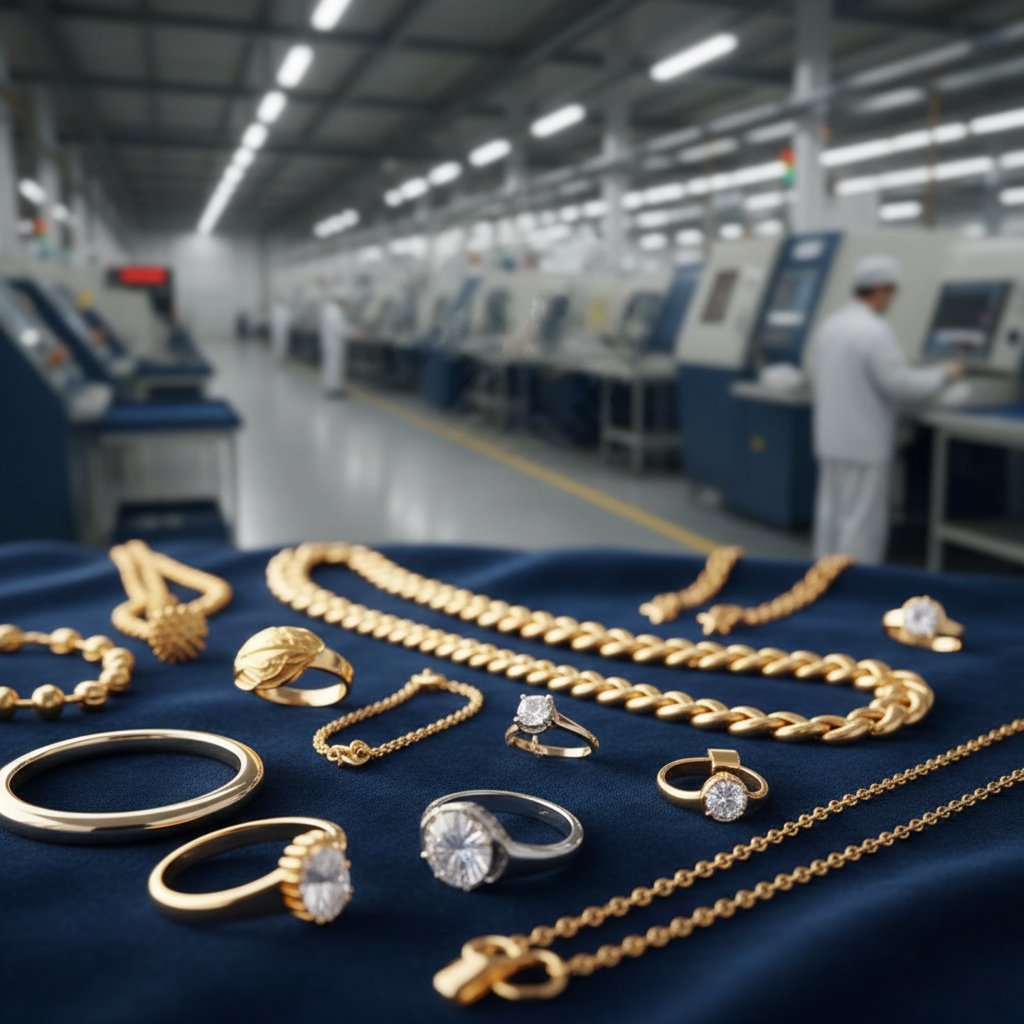
The Council has also called for the inclusion of platinum jewellery and gold articles under the Duty Drawback Scheme. Platinum jewellery exports from India have grown nearly 17 times in the past five years, largely from SEZs that benefit from duty exemptions. However, Domestic Tariff Area (DTA) exporters remain at a disadvantage without similar incentives. Extending the duty drawback benefit to DTA units would create a level playing field, encourage diversification, and unlock India’s potential to become a global hub for platinum and high-end gold jewellery manufacturing.
5. Tax Refund Scheme for Foreign Tourists
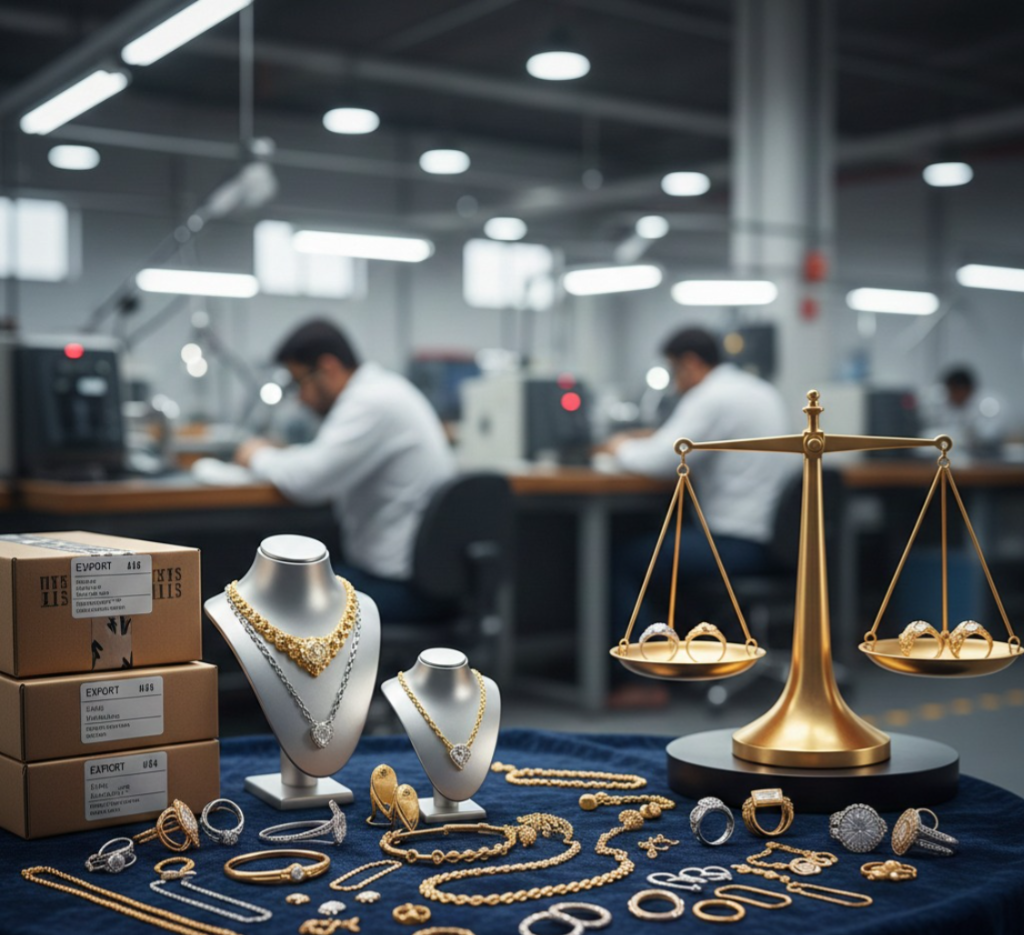
To position India as a premier luxury shopping destination, GJEPC has recommended the introduction of a comprehensive tax refund scheme for foreign tourists. Currently, international visitors purchasing jewellery in India are subject to Basic Customs Duty (BCD), Agriculture Infrastructure and Development Cess (AIDC), and Goods and Services Tax (GST), but only the GST component is refundable. The Council proposes a system that allows tourists to claim refunds on all applicable taxes — similar to Dubai and Singapore — making Indian jewellery more competitively priced and appealing to global shoppers. This initiative, GJEPC believes, would significantly boost tourism-driven retail and reinforce “Brand India” as a luxury shopping destination.
6. Enhancing SEZ Flexibility for Resilience and Growth

With global demand fluctuations affecting export performance, GJEPC has sought operational flexibility in Special Economic Zones (SEZs) to ensure business continuity and safeguard employment. The Council has proposed allowing SEZ units to undertake “reverse job work” for domestic orders during export slowdowns, preventing idle capacity. It also recommends permitting clearance of unsold inventory into the Domestic Tariff Area (DTA) upon payment of duty, thereby reducing wastage. Simplifying logistics through a “Bill to Ship to” mechanism would further ease compliance and improve efficiency. These measures, GJEPC asserts, will help SEZs remain viable, protect skilled jobs, and strengthen India’s manufacturing base.
7. Amendment of the Customs Act and Simplification of Customs Procedures

GJEPC has urged the need to amend the Customs Act, 1962, to align customs processes with the requirements of a fast-evolving, export-driven gems and jewellery sector. The Council has recommended reforms such as risk-based customs clearance, AI-enabled digital appraisals, and self-certification for trusted exporters to improve speed, transparency, and cost efficiency.
In addition, GJEPC has called for uniform Standard Operating Procedures (SOPs) and simplified procedures for the export of finished goods and import of raw materials across all customs ports, to reduce procedural bottlenecks and enhance ease of doing business for the industry.
8. Extension of Duty Exemption on Seeds for Lab-Grown Diamonds
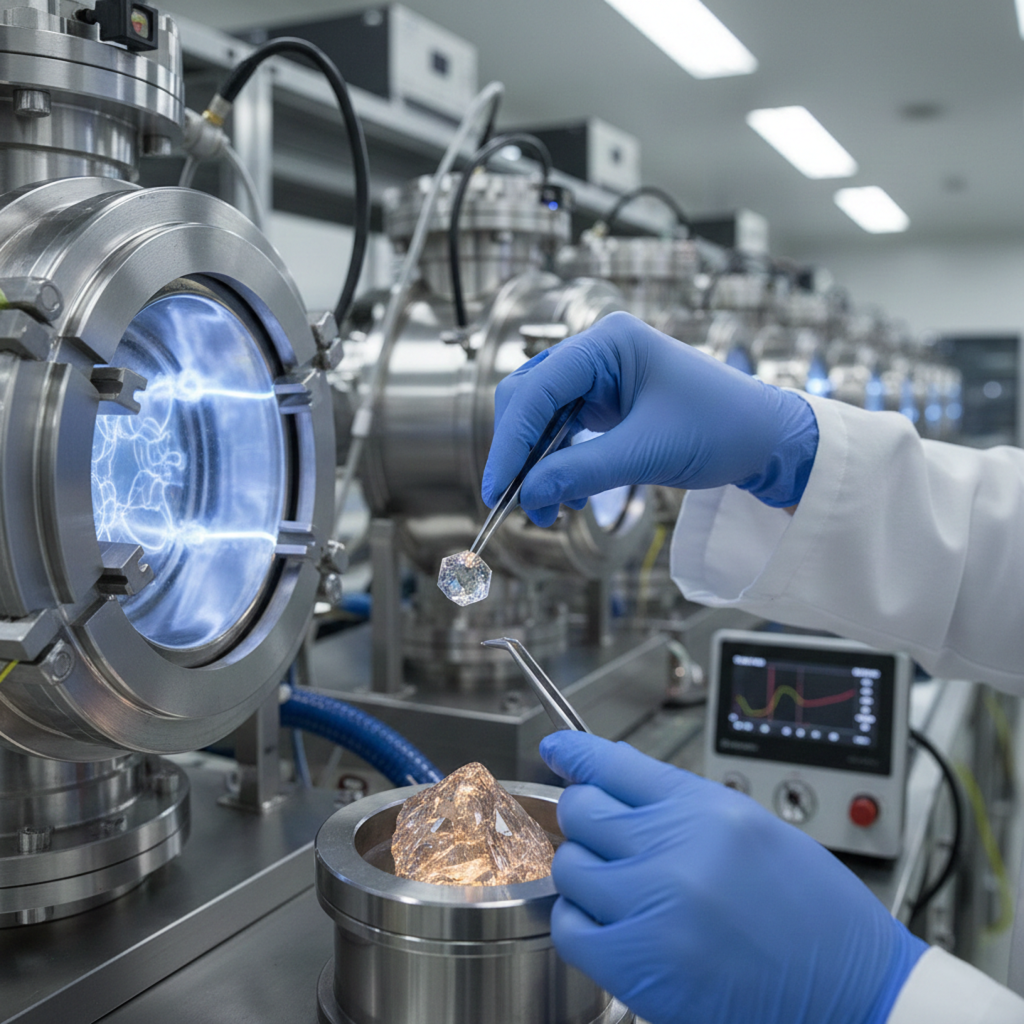
Recognising India’s global leadership in the lab-grown diamond (LGD) segment, GJEPC has recommended the continuation of the existing duty exemption on imported LGD seeds beyond March 2026. As the industry still depends on high-quality imported seeds for consistency and yield, extending the exemption is crucial to maintaining cost competitiveness and export growth. The Council believes that sustaining this policy will promote higher domestic production, enhance employment opportunities, and ensure that India retains its leadership position in the rapidly expanding global LGD market.


National News
Gold and Silver Prices Drop Post-Dussehra On Stronger US Dollar
Precious Metals Dip On Strengthening US Dollar, Persistent Global Inflation Concerns, and Shifting Interest Rate Expectations —


Gold and silver prices opened lower on the Multi Commodity Exchange (MCX) on Wednesday following the Dussehra festival, pulled down by a strengthening US dollar, persistent global inflation concerns, and shifting interest rate expectations from the US Federal Reserve.
Gold futures fell by Rs 223 to trade at Rs 1,46,296 per 10 grams on the MCX, mirroring weak sentiment across overseas bullion markets. Silver experienced a sharper decline, tumbling by Rs 1,373 to trade at Rs 2,10,112 per kilogram.
Market Summary
Gold (MCX): Down Rs 223 at Rs 1,46,296 per 10 grams.Silver (MCX): Down Rs 1,373 at Rs 2,10,112 per kilogram.
Global Benchmark: Both metals traded weaker across international exchanges as the US dollar gained strength.
Primary Drivers: A firm US dollar index, sticky global inflation concerns, and hawkish signals surrounding the US Federal Reserve’s rate trajectory continue to exert downward pressure on precious metal valuations post-festive demand.



Malabar Gold & Diamonds Unveils ‘SWAYE’, A Natural Diamond Collection Inspired By Spiral Forms and Modern Elegance

Nike Enters Jewellery Market With First-Ever Collection Priced Up To $5,750

Kylie Jenner Debuts At Victoria’s Secret Show In $50 Million Fantasy Bra By Jacob & Co.

Limelight Lab Grown Diamonds Crosses 100 Stores Milestone This Dussehra: Targets 200 In 2027
Malabar Gold & Diamonds Unveils ‘SWAYE’, A Natural Diamond Collection Inspired By Spiral Forms and Modern Elegance
Kylie Jenner Debuts At Victoria’s Secret Show In $50 Million Fantasy Bra By Jacob & Co.
-
 National News2 days ago
Limelight Lab Grown Diamonds Crosses 100 Stores Milestone This Dussehra: Targets 200 In 2027
-
 BrandBuzz2 hours ago
Malabar Gold & Diamonds Unveils ‘SWAYE’, A Natural Diamond Collection Inspired By Spiral Forms and Modern Elegance
-
 DiamondBuzz2 hours ago
Kylie Jenner Debuts At Victoria’s Secret Show In $50 Million Fantasy Bra By Jacob & Co.
-
 International News2 hours ago
Nike Enters Jewellery Market With First-Ever Collection Priced Up To $5,750
