

DiamondBuzz
GIA Puzzled by Rare Starburst Inclusions in Yellow Diamond
A 2.50-carat yellow diamond shows never-before-seen starburst cloud formations, prompting deeper investigation by GIA scientists.

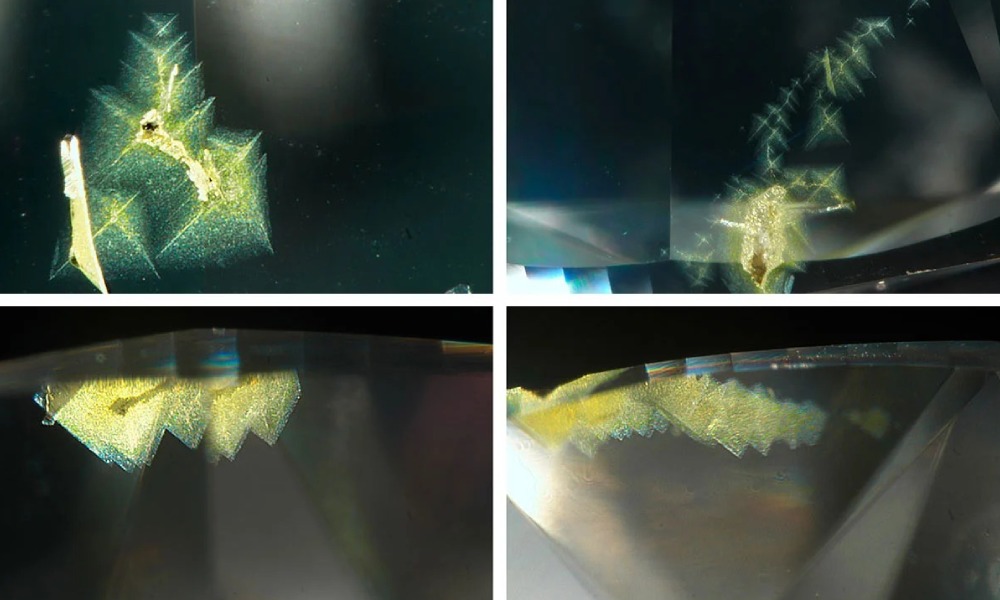
The Gemological Institute of America (GIA) recently encountered an exceptionally unusual diamond that defied easy explanation. The 2.50-carat round brilliant, graded at the institute’s Carlsbad, California, laboratory, displayed star-shaped inclusions so distinctive that researchers struggled to pinpoint their origin.
According to research “several randomly distributed yellow zones consisting of stacks of clouds with four-sided star patterns near the girdle noticed in the diamond.” These clouds—clusters of micro-inclusions—each contained a central concentration of more intensely colored particles arranged in a cross-like formation. When viewed from an alternate angle, the phenomenon appeared as a row of bright-yellow overlapping triangles, prompting the GIA to launch an in-depth analysis.
Initial observations revealed blue fluorescence under long-wave UV light, while the clouded yellow patches displayed weak yellow fluorescence under deep-UV imaging. Testing also indicated the presence of hydrogen-related defects, typically associated with brownish or greenish color components. However, these did not explain the intense yellow coloration of the zones, which is more commonly linked to cape defects, H3 centers, isolated nitrogen (C-centers), or a 480-nanometer absorption band.
To probe further, GIA scientists used photoluminescence spectroscopy to compare the yellow zones with surrounding areas. The results showed no signs of H3-related features or absorption-band activity. The only notable finding was a nitrogen-vacancy center present exclusively within the vivid yellow areas, suggesting the coloration stemmed from C-centers confined to specific surface regions.
The lab initially considered whether the diamond might resemble a case reported in 2020, in which a near-colorless diamond developed a yellow overgrowth layer late in formation. However, the composition and behavior of the current stone’s micro-inclusion clouds did not align with that scenario.
GIA researchers concluded that the origin and formation of the starburst-like micro-inclusions remain unknown — a mystery that will require further investigation.


DiamondBuzz
GIA Celebrates World Diamond Day Highlighting Iconic Gems
Institute Spotlights Historic Diamonds Like the Hope, Dresden Green, Winston Red, Taylor Burton, Motswedi

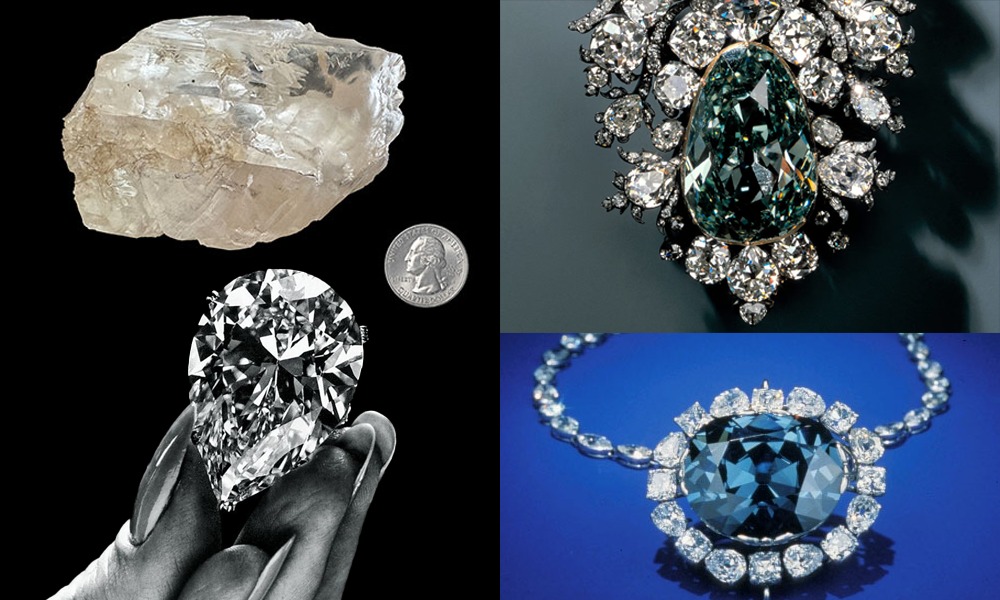
The Gemological Institute of America (GIA) marked World Diamond Day on 8th April by highlighting a selection of historically significant precious stones it has examined, underscoring their rarity, scientific importance and cultural legacy.
Below is a concise analytical breakdown of the stones and their significance from a trade, scientific, and storytelling angle:
Key diamonds highlighted
- Hope Diamond (45.52 ct, Fancy Deep greyish blue)
Traced to Golconda‑type deposits in India, this stone passed through French royalty before entering private and then museum collections, and today sits at the Smithsonian. Its combination of intense blue colour, provenance, and storied “curse” lore has made it one of the most‑recognised diamonds in the world, frequently used as a reference point in colour‑diamond marketing and exhibitions. - Dresden Green (~41 ct natural green)
The largest known natural green diamond, with an even green hue produced by natural ionising radiation in the crust. Its high purity and Saxon–European royal‑court history make it a benchmark for both rarity and the link between gemstones and political‑dynastic symbolism. - Winston Red (2.33 ct Fancy red)
A rare old‑mine‑cut Fancy red stone, of which only about 0.04% of fancy colour diamonds attain such a grade. As the only Fancy red diamond on public display, it is a key reference for dealers and collectors benchmarking the value of red‑dominant fancy colours. - Taylor‑Burton Diamond
A 68‑carat pear‑shaped D‑colour stone cut from a 240‑carat rough from South Africa’s Premier‑type deposit, later made famous by Richard Burton and Elizabeth Taylor. Its celebrity‑driven glamour elevated high‑colour‑clarity white diamonds into pop‑culture icons, reinforcing the “diamond as romance” narrative that still dominates bridal jewellery advertising. - Motswedi Diamond (2,488.32 ct rough)
Recovered in Botswana in 2024, this is the second‑largest gem‑quality diamond ever discovered and a high‑purity Type IIa crystal. Its size and purity allow scientists to study how carbon crystallises under extreme pressures deep in the Earth, making it a research‑grade specimen as well as a commercial headline‑maker. - Several stones—Hope, Dresden Green, Taylor Burton, and Winston Red—carry strong narratives of royalty, curses, Hollywood romance, and extreme rarity.
- GIA’s highlighting of these gems on World Diamond Day is a strategic blend of education and soft branding:
- It positions diamonds as objects of history and art, not just commodities.
- It reminds buyers, retailers, and media that GIA sits at the centre of authenticating and contextualising these legendary stones.gia+1
Beyond these diamonds, GIA has documented historic and royal artefacts such as the Marie Thérèse Pink diamond and the Mughal era “Mughal Spectacles,” helping to codify their gemmological and provenance data. This work reinforces its positioning as both a research institute and a preserver of the cultural heritage layer of gemmology, bridging ancient craftsmanship with modern scientific verification.



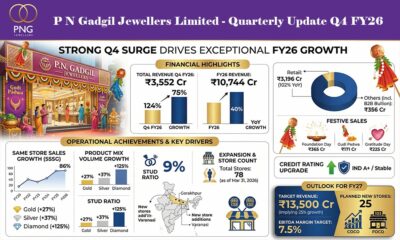
P N Gadgil Jewellers Limited – Quarterly Update Q4 FY26

Gargi by P. N. Gadgil & Sons Posts 30.27% Revenue Growth in Q4FY26

GIA Celebrates World Diamond Day Highlighting Iconic Gems
Gargi by P. N. Gadgil & Sons Posts 30.27% Revenue Growth in Q4FY26

Precious Metals Rally On US-Iran Ceasefire: Gold Tops $4,850, Silver Jumps To $76

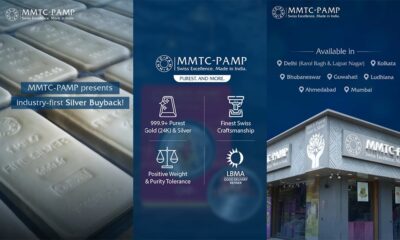
MMTC-PAMP Launches Industry’s First Organized Silver Buyback for Coins, Bars, and Jewellery
-
 National News4 hours ago
Gargi by P. N. Gadgil & Sons Posts 30.27% Revenue Growth in Q4FY26
-
 International News1 day ago
Precious Metals Rally On US-Iran Ceasefire: Gold Tops $4,850, Silver Jumps To $76
-
 BrandBuzz23 hours ago
MMTC-PAMP Launches Industry’s First Organized Silver Buyback for Coins, Bars, and Jewellery
-
 National News31 minutes ago
P N Gadgil Jewellers Limited – Quarterly Update Q4 FY26
