
International News
Gemfields Resumes Emerald Mining in Zambia as Market for Premium Stones Rebounds
Following a four-month pause, the miner restarts operations at Kagem’s Chama pit amid rising demand and improving auction results.

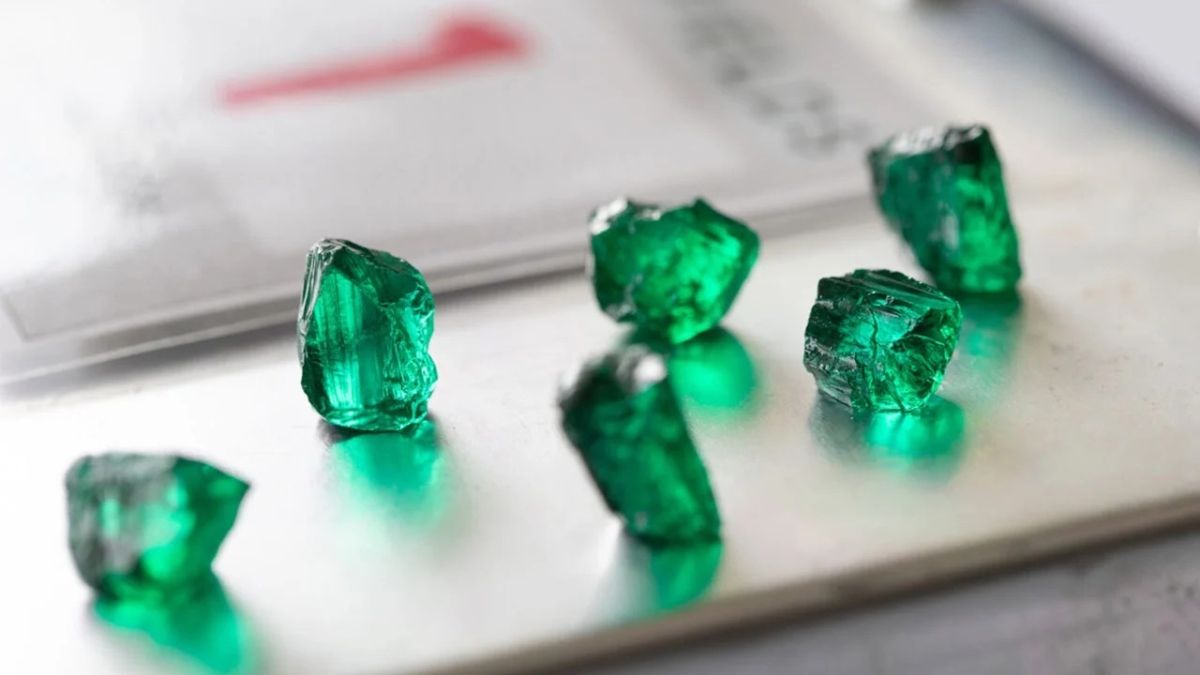
Gemfields has announced the resumption of open-pit mining operations at its Kagem emerald mine in Zambia, following signs of recovery in the global market for high-quality colored gemstones. The move comes after a four-month suspension of mining activities, which began on January 1, 2025, as part of a cost-control strategy during a challenging period for the gemstone sector.
During the suspension, Gemfields relied on processing material from existing stockpiles rather than extracting new ore. While the upgraded processing facility met expectations in terms of carat recovery, the company reported a lower yield of top-quality emeralds, citing the limited potential of stockpiled material compared to fresh ore from open-pit mining.
Encouraged by recent strong auction results and improving buyer sentiment, Gemfields will now restart mining in two high-potential zones within the Chama pit. The focus will be on minimal waste removal and targeted excavation to maximize recovery of premium-grade stones suitable for higher-end sales.
The company emphasized that this restart is a measured step, and it will continue to assess global market trends before making any decisions on returning to full-scale mining at Kagem. Gemfields holds a 75% stake in the mine, with the remaining 25% owned by Zambia’s Industrial Development Corporation (IDC).
The strategic restart underscores Gemfields’ confidence in the rebound of the premium emerald market while maintaining operational flexibility amid evolving global demand.








International News
WGC Report-Digital Gold: Unlocking a $700bn Opportunity
Yes—Digital Gold Could Become The Next Major Growth Market For Gold, But Only If The Industry Solves Trust, Access, Utility and Cost.


The World Gold Council (WGC) and Boston Consulting Group estimate that digital gold could unlock up to US$700 billion in latent demand over the long term, although this is a potential-demand estimate rather than a five-year forecast.
What “digital gold” means
The report defines digital gold as two related product categories: vaulted digital gold (digitally represented claims on allocated physical gold) and tokenised gold (blockchain-based tokens backed by physical gold). Together, they currently account for roughly US$45–55 billion, less than 1% of the global gold market, which the WGC values at about US$13 trillion.
Momentum is nonetheless visible. Tokenised gold has grown about fivefold since late 2024 to around US$6 billion, while cumulative spot trading volumes exceeded US$90 billion in Q1 2026—more than during all of 2025.
The $700bn opportunity
The headline figure represents the additional demand that could emerge if the main barriers to adoption were removed at scale. Nearly nine in ten surveyed retail investors said they would consider digital gold under the right conditions, based on a survey of more than 12,000 investors and interviews with 20 industry experts.
The global digital-gold market—currently valued at US $ 45–55 billion—is positioned for significant expansion. In their base-case outlook, the market is projected to grow at an annual rate of approximately 27%, reaching US $ 160–170 billion by 2031. Under a bull-case scenario, market valuation could climb even higher, reaching US $ 270–280 billion over the same period. Furthermore, if key adoption barriers such as regulatory clarity, pricing, and platform trust are fully addressed, the long-term latent demand for digital gold could unlock up to US700 billion.
Genuinely new gold demand by 2031. About US$95 billion, net of displacement
The crucial distinction is that US$700bn is not a market-size prediction for 2031. It is the theoretical upside if trust, distribution, product usefulness and pricing improve sufficiently; the base case is far more conservative.
Four barriers to adoption
Trust is the decisive barrier. Nearly four in five investors prioritise trusting the provider, and they want proof that products are safe, legitimate, transparently backed and redeemable for physical gold; clearer regulation and consumer protection are also central.
Access matters because familiar distribution channels dramatically increase uptake. In markets such as China, India and Indonesia, where digital gold is embedded in super-apps, payment platforms and banking apps, penetration is up to seven times higher than in markets without such channels.
Utility could transform gold from a passive store of value into a usable financial asset. The most attractive new feature is yield generation through lending or collateral use, followed by payments functionality.
Cost remains a prerequisite. Digital gold must be price-competitive with physical bullion and gold ETFs; an uncompetitive price is the second most common barrier cited by investors.
Why it may create new demand
The report argues that digital gold is more likely to expand the gold market than merely shift investors from ETFs, coins or bars. About 65% of latent demand comes from people who do not yet own gold, and 52% of current digital-gold investors held no gold before their first digital purchase.
This makes digital gold a potential on-ramp: among those first-time digital-gold buyers, 92% subsequently bought other forms of gold. Even after allowing for some switching between gold formats, the base case implies around US$95 billion of genuinely new demand by 2031.
Who will drive growth
Younger investors are the immediate growth engine. Awareness reaches 50% among 25–34-year-olds, versus 23% among those aged 55 and older, and younger cohorts are twice as likely to say they would invest if entry barriers were addressed.
This aligns with the broader tokenisation of finance. As blockchain-based investment products become more mainstream, gold’s physical backing may give it a credibility advantage over purely digital assets—provided issuers can demonstrate custody, redemption rights and regulatory compliance.
Could it be the next major gold growth market?
Potentially, yes—but conditionally. The case for digital gold is strong because it combines gold’s established safe-haven and store-of-value role with digital accessibility, fractional ownership, faster transferability and possible new financial uses. The WGC’s own base case implies a market roughly three times its current size by 2031.
However, digital gold will remain a niche if providers cannot deliver:
- Transparent, auditable proof that tokens are fully backed by physical gold.
- Simple, legally robust redemption into physical gold or cash.
- Clear regulation and investor protections.
- Distribution through mainstream banking, payments and investment apps.
- Fees competitive with ETFs and physical bullion.
- Useful features such as collateral, lending or payments—without compromising safety.
Assessment
Digital gold is best viewed as a high-potential distribution and product innovation, not an automatic replacement for physical gold or ETFs. Its biggest contribution may be bringing first-time, younger and digitally native investors into gold, then encouraging them to hold other gold formats as their allocations mature.
If the industry establishes trusted infrastructure and interoperable standards, the US$700bn latent-demand estimate becomes a plausible long-run ceiling. If not, the market may still grow, but likely toward the report’s bear-case trajectory of roughly US$70–80 billion by 2031, driven mainly by wealth growth rather than conversion of untapped demand.



Festive Dressing, But Make It QWEEN: 10 Jewellery Pieces To Add To Your Festive Wardrobe

WGC Report-Digital Gold: Unlocking a $700bn Opportunity

Malabar Gold & Diamonds Unveils ‘SWAYE’, A Natural Diamond Collection Inspired By Spiral Forms and Modern Elegance

Limelight Lab Grown Diamonds Crosses 100 Stores Milestone This Dussehra: Targets 200 In 2027
Malabar Gold & Diamonds Unveils ‘SWAYE’, A Natural Diamond Collection Inspired By Spiral Forms and Modern Elegance
Festive Dressing, But Make It QWEEN: 10 Jewellery Pieces To Add To Your Festive Wardrobe
-
 National News2 days ago
Limelight Lab Grown Diamonds Crosses 100 Stores Milestone This Dussehra: Targets 200 In 2027
-
 BrandBuzz11 hours ago
Malabar Gold & Diamonds Unveils ‘SWAYE’, A Natural Diamond Collection Inspired By Spiral Forms and Modern Elegance
-
 National News7 hours ago
Festive Dressing, But Make It QWEEN: 10 Jewellery Pieces To Add To Your Festive Wardrobe
-
 International News8 hours ago
WGC Report-Digital Gold: Unlocking a $700bn Opportunity
