JB Insights
From Rare to Reachable: The Changing Face of the Diamond Industry
How diamonds moved beyond tradition to become a part of everyday style, personal milestones, and modern living.


Diamonds have always been symbols of love, celebration, and timeless beauty. But the journey behind these sparkling stones has changed significantly over the years. The diamond industry today looks very different from what it once was — more open, more transparent, and more focused on the modern consumer.
How Diamonds Were Seen Earlier
In the past, diamonds followed a very traditional path. They were considered rare and special, usually bought only for weddings or major life events. The diamond industry was controlled by a few large companies, which meant limited choices and fixed perceptions around price and value.

Jewellery shopping happened mostly offline, often guided by family tradition rather than information. Buyers relied on trust, as details about quality, origin, and pricing were not always clear.
What Changed Over Time
As global markets opened up and technology improved, the diamond industry began to change. More countries entered the diamond trade, competition increased, and innovation reshaped the entire supply chain.

Diamonds slowly moved from being “rare and unreachable” to becoming more accessible. Marketing also evolved — diamonds were no longer just about marriage but also about personal milestones, style, and self-expression.
India’s Big Role in the Diamond Story
India plays a major role in today’s global diamond industry. Cities like Surat have become global centres for cutting and polishing diamonds, handling a majority of the world’s stones.

Skilled craftsmanship combined with modern technology has helped India shape diamonds worn across the world. This growth has also benefited Indian consumers, offering better designs, competitive pricing, and international-quality jewellery.
The Rise of Lab-Grown Diamonds
One of the biggest shifts in recent years has been the rise of lab-grown diamonds. These diamonds are created in controlled environments but look identical to natural diamonds.

They offer the same sparkle and certification, often at a more affordable price. Many consumers today choose lab-grown diamonds for their value, sustainability, and flexibility in design.
How Diamond Buying Feels Today
Buying diamonds today is easier and more transparent than ever before. Certifications clearly explain quality, while online and offline stores offer wide design options.

Diamonds are now worn daily, gifted for celebrations, and purchased as self-rewards. Lightweight designs, trendy styles, and digital shopping tools have changed how people connect with jewellery.
Why Diamonds Mean More Today
Modern buyers care about more than just sparkle. They want to know where their diamonds come from, how they are made, and whether they align with their values.

Design, comfort, trust, and storytelling now play a big role in choosing diamond jewellery. Diamonds today represent individuality and conscious luxury, not just tradition.
Then vs Now: A Quick Look
Earlier, diamonds were mostly linked to weddings, had limited design choices, and involved traditional buying experiences.

Today, diamonds are part of everyday fashion, available in multiple price ranges, and backed by clear information and certification.
The industry has moved from being exclusive to inclusive

The diamond industry has transformed from something complicated and distant into something personal and approachable. Today, diamonds are about choice, confidence, and self-expression — made for every moment, not just one.


JB Insights
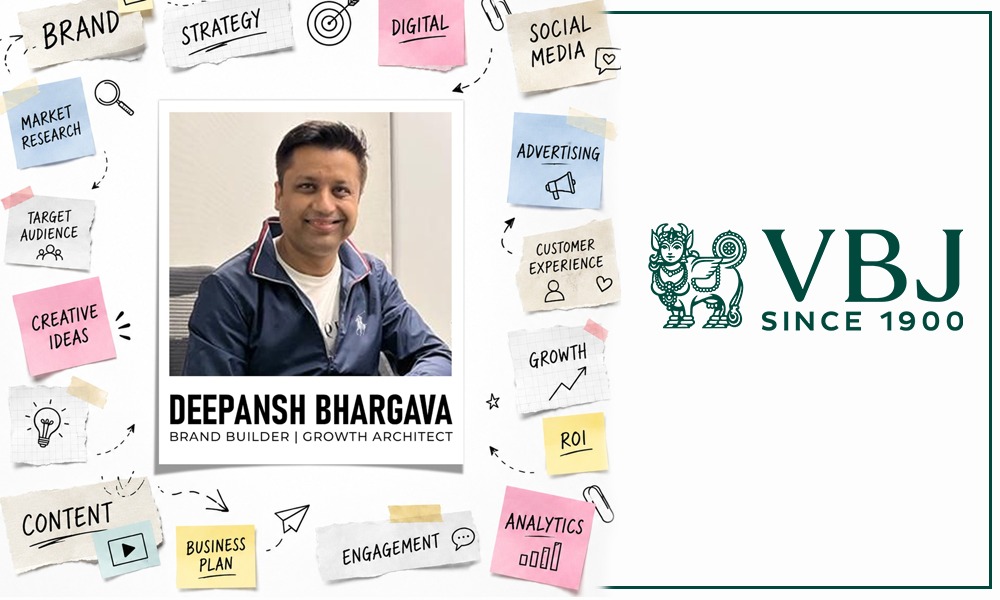
From Customer Intelligence To Autonomous Growth Intelligence: Deepansh Bhargava Senior Vice President & Head Marketing at VBJ
From Customer Intelligence To AI-powered Growth Decisions, The Next-Gen CDP Is Built To Create Measurable Incremental Value.

For the last 6 years, Customer Data Platforms have transformed how brands understand their customers. They have brought fragmented data together, created unified customer profiles, enabled segmentation and made personalisation more intelligent. But the next evolution of CDPs will not be defined by how much customer data they can organise. It will be defined by how intelligently AI can convert that data into consumer value and incremental business outcomes.
The shift is from Customer Intelligence to Growth Intelligence.
Businesses today know more about their existing customers than ever before their purchase history, frequency, preferences, lifetime value and likelihood of buying again. Yet the larger opportunity lies in moving beyond what customers did to understanding what they need next, where their behaviour is changing and where the next phase of growth will come from. This also requires a sharper focus on incrementality.
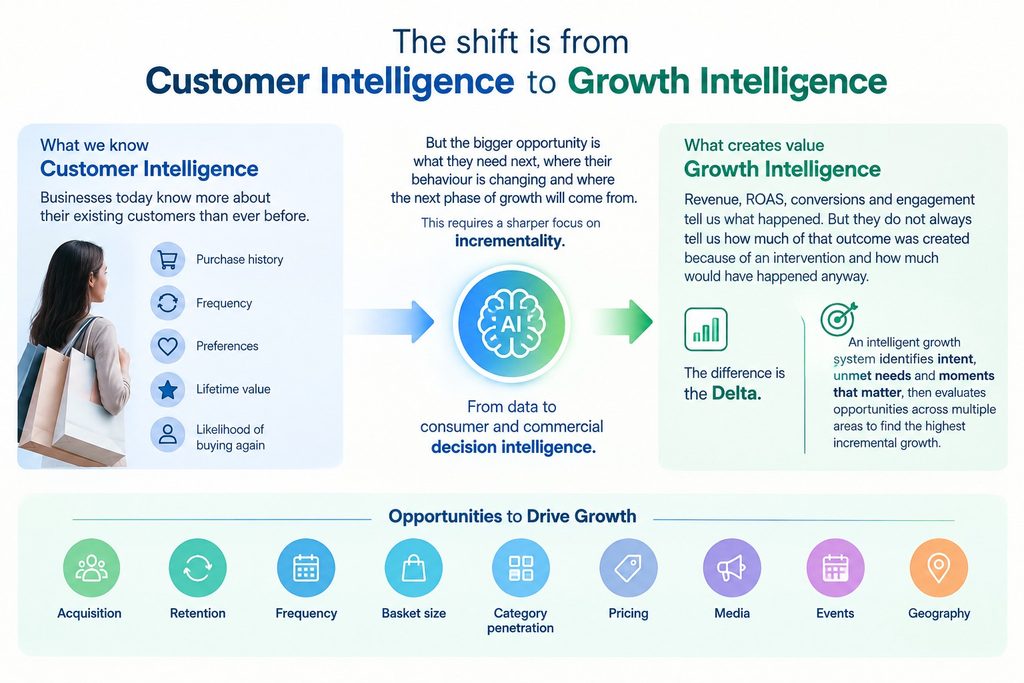
Revenue, ROAS, conversions and engagement tell us what happened. But they do not always tell us how much of that outcome was created because of an intervention and how much would have happened anyway.
That difference is the Delta. AI can help take CDPs beyond systems of customer intelligence and turn them into systems of consumer and commercial decision intelligence. Instead of simply identifying customers with a high propensity to purchase, an intelligent growth system could identify intent, unmet needs and moments that matter then evaluate opportunities across acquisition, retention, frequency, basket size, category penetration, pricing, media, events and geography to identify where the highest incremental growth opportunity lies.
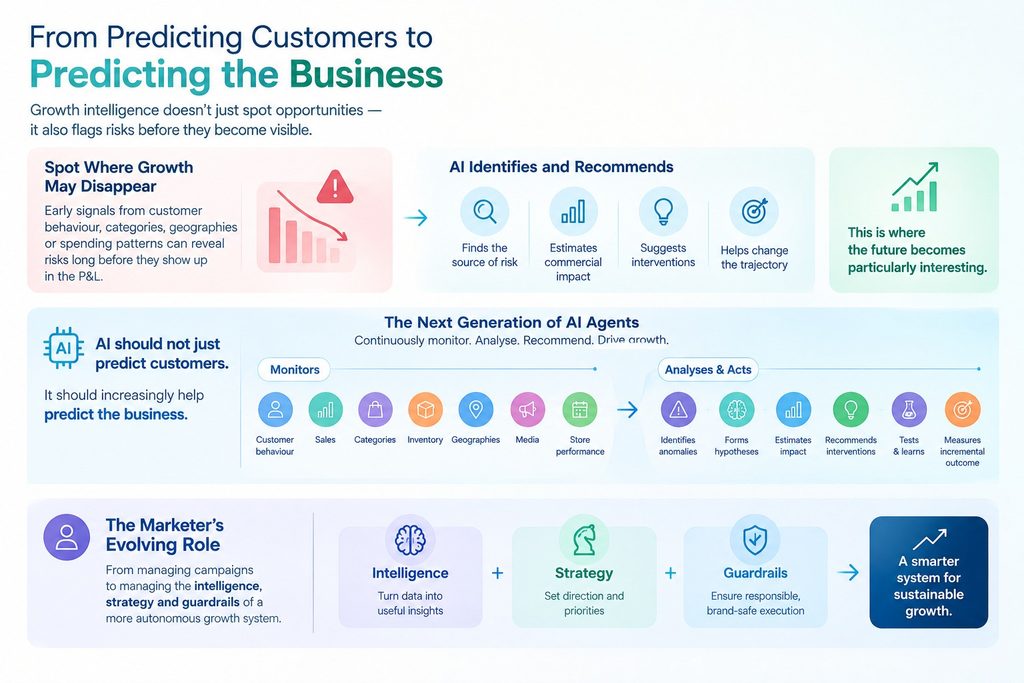
Growth intelligence should also help businesses identify where growth is likely to disappear. Early signals from customer behaviour, categories, geographies or spending patterns could reveal risks long before they become visible in the P&L. AI could identify the source of the risk, estimate its potential commercial impact and recommend interventions to change the trajectory. This is where the future becomes particularly interesting.
AI should not just predict customers. It should increasingly help predict the business.
The next generation of AI agents could continuously monitor customer behaviour, sales, categories, inventory, geographies, media and store performance. They could identify anomalies, form hypotheses, estimate commercial impact, recommend interventions, test them and measure the incremental outcome.
The role of the marketer would evolve from simply managing campaigns to managing the intelligence, strategy and guardrails around a more autonomous growth system.
This evolution can be built around three principles: Anticipate, Act and Account.
1. Anticipate where consumer needs and growth will emerge and where they may disappear.
2. Act by identifying and eventually executing the most relevant intervention for the consumer and the business.
3. Account for whether that intervention genuinely created incremental value.
The CDP of the future, therefore, should move beyond being a platform that simply manages customer data. It should become a Growth Decision Platform one that helps businesses understand consumers better, identify opportunities, detect risks, recommend actions, measure incrementality and continuously learn from every intervention. The ultimate measure of such a platform should not be the volume of data it manages.
It should be much simpler:
Show me the Delta you create.
Because ultimately, consumer centricity is not the opposite of growth. It is where sustainable growth begins.



Belgian Prime Minister Bart De Wever opens expanded HRD Antwerp laboratory in Mumbai

Verlas Introduces the ‘Alyssa’ Collection in India, Bringing Modern Luxe Floral-Inspired Design to Lab-Grown Diamond Jewelry Crafted in Fine Gold

Gold rebounds,Silver reclaims Rs 2.33 lakh mark

Limelight Lab Grown Diamonds Inaugurates Showroom In Kalyan, Its 8th Exclusive Store MMR
Verlas Introduces the ‘Alyssa’ Collection in India, Bringing Modern Luxe Floral-Inspired Design to Lab-Grown Diamond Jewelry Crafted in Fine Gold
Belgian Prime Minister Bart De Wever opens expanded HRD Antwerp laboratory in Mumbai
-
 National News2 days ago
Limelight Lab Grown Diamonds Inaugurates Showroom In Kalyan, Its 8th Exclusive Store MMR
-
 BrandBuzz12 hours ago
Verlas Introduces the ‘Alyssa’ Collection in India, Bringing Modern Luxe Floral-Inspired Design to Lab-Grown Diamond Jewelry Crafted in Fine Gold
-
 DiamondBuzz12 hours ago
Belgian Prime Minister Bart De Wever opens expanded HRD Antwerp laboratory in Mumbai
-
 National News14 hours ago
Gold rebounds,Silver reclaims Rs 2.33 lakh mark