
National News
Foreign exchange reserves declined by $11.413 billion to $698.346 billion
Forex drop due to a sharp fall in gold reserves:RBI

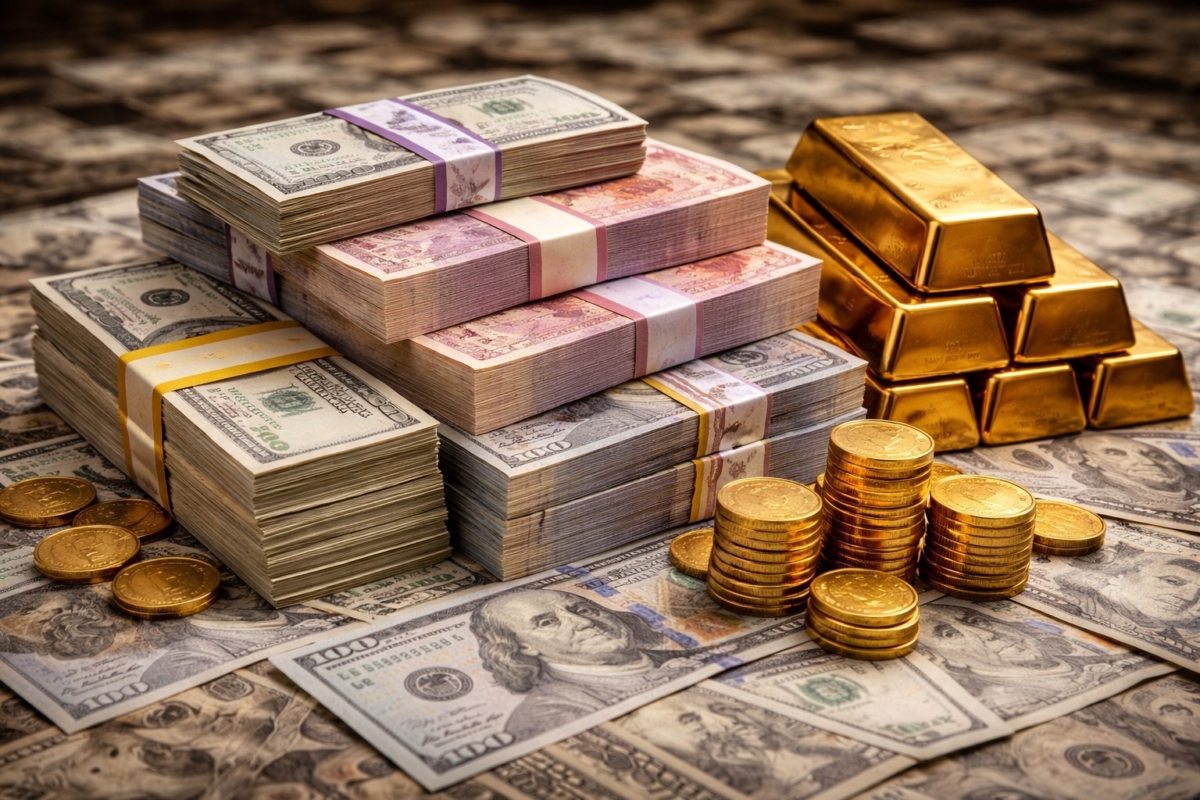
As of March 28, 2026, the Reserve Bank of India’s latest data reveals a brutal $30.14 billion evaporation in forex reserves over just three weeks. The headline-grabber? A staggering $13.49 billion collapse in gold reserves in a single week.
While the official line points to “valuation effects,” the underlying reality is a cocktail of geopolitical warfare, a bleeding Rupee, and an RBI backed into a corner.
For years, gold was the “safe haven.” In March 2026, it became a weight. The drop to $117.19 billion wasn’t because the RBI sold the family silver—it’s because the global gold market just endured its worst weekly rout in four decades.
- The Paper Flush: As the US-Iran conflict escalated, institutional investors faced massive margin calls on their stock portfolios. They didn’t sell gold because they lost faith in it; they sold it because it was the only liquid asset left to cover their losses.
- The Yield Trap: With oil breaching $110, inflation fears have spiked. This has forced the US Fed to signal “higher for longer” rates, making non-yielding gold look like an expensive hobby compared to high-interest US Treasuries.
The Rupee isn’t just sliding; it’s in a freefall. Falling over 4% in March alone and nearly 10% for the fiscal year, the Indian unit is gasping at record lows near 94.81/$1.
The central bank is fighting a multi-front war:
- Crude Oil Shock: Brent crude at $110 is a direct tax on India’s dollar reserves.
- The Forward Book Time Bomb: The RBI’s net short dollar position in the forward market is estimated to have ballooned to $100 billion.
- Import Cover Erosion: Adjusting for these forward positions, India’s “real” import cover has shriveled from 11 months to just 9.4 months.
If West Asia remains a tinderbox, the buffer that felt “invincible” at $728 billion in February could look skeletal by 2027. Some analysts are already eyeing a drop to $636 billion as the new reality.The RBI is no longer just “managing volatility”; it is performing triage on a currency being pummeled by global macro-forces it cannot control.




National News
Kantilal Jewellers, Launches Flagship Showroom At Vastrapur, Ahmedabad
Marking Its First Expansion Outside Surat, The Massive Three-Story Space Is The Brand’s Largest Retail Destination To Date.

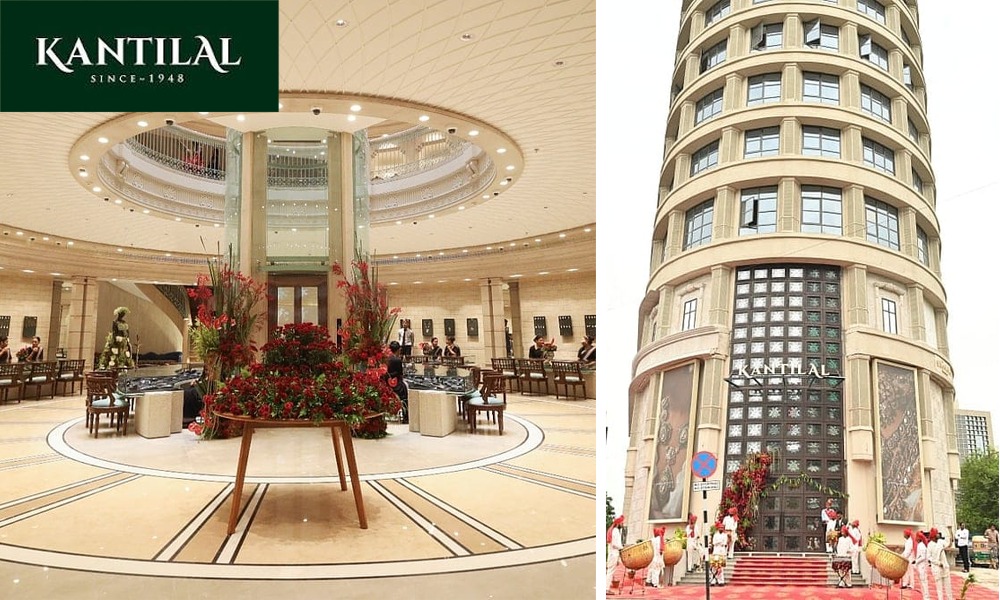
Surat-based Kantilal Jewellers, a legacy brand established in 1948, has expanded beyond its home base with the launch of a 28,000 sq. ft. flagship showroom at Keshavbaug Capital, Vastrapur, Ahmedabad.
Marking its first expansion outside Surat, the massive three-story space is the brand’s largest retail destination to date.
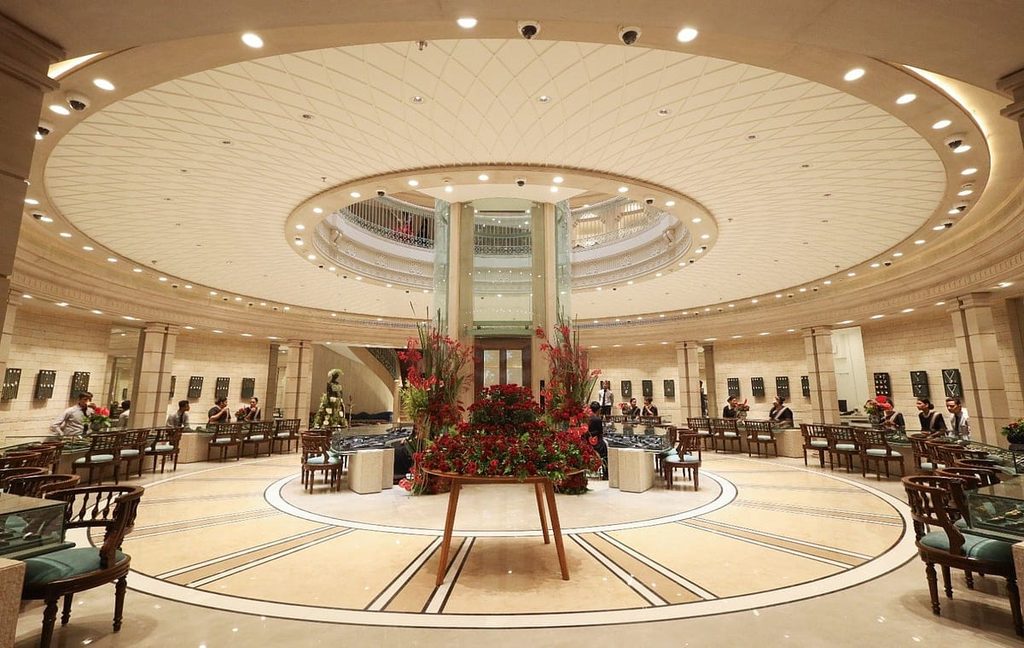
Palatial Architectural Concept: The store design takes inspiration from Jodhpur Palace, featuring Jharokha-style screens, marble passageways, domed skylights, chandelier lounges, and a central atrium linking all three levels.
Experiential Studio Retail: Departing from traditional counters, the showroom offers private studio spaces, VIP viewing areas, and dedicated experience centers.
Ambient Luxury: The shopping experience is elevated by live sitar and guitar performances alongside personalized consultation lounges.
Product Offering: The flagship showcases the brand’s signature gold, diamond, and bridal collections tailored for the Ahmedabad market.
Led by Director Jinay Choksi, this flagship rollout is a strategic move to establish a distinct, experiential luxury footprint across major Gujarat markets while preserving the heritage of the Kantilal brand.


-

 Special Reports1 day ago
Growth of the 925 Sterling Silver Gifting Segment
-

 ShowBuzz1 day ago
TRENDS @ SSI DELHI 3RD EDITION
-

 JB Insights2 days ago
Devotion, Heritage & Diversification: The defining trends of SSI Delhi’s 3rd Edition
-

 JB Insights2 days ago
Gold-plated silver jewellery is seeing explosive growth
