
JB Insights
Electroplating and surface finishing
Enhancing visual appeal of ornaments, durability, corrosion resistance


Electroplating and surface finishing are critical processes in the jewellery industry, enhancing not only the visual appeal of ornaments but also their durability, corrosion resistance, and market value. With rising consumer expectations for quality, longevity, and sustainability, these technologies have become central to modern jewellery manufacturing.
Importance of Electroplating in Jewellery
- Aesthetic Enhancement
- Provides lustrous finishes such as rhodium, gold, silver, and platinum plating.
- Enables diverse colour tones (yellow, white, rose gold, black rhodium, etc.) to meet fashion trends.
- Durability & Protection
- Prevents tarnishing and corrosion of base metals like silver, copper, or brass.
- Adds a protective layer that improves scratch resistance and wearability.
- Cost Efficiency
- Allows use of base metals with a thin coating of precious metal, reducing production costs while maintaining luxury appeal.
EUROTecniche has been a trusted name in surface treatment and finishing solutions for over 20 years. They focus on the design, production, and global distribution of both manual and automatic galvanic systems—all proudly made in Italy. They are specialists in precious electroplating chemistry, galvanic plating plants, ceramic enamels, and electro-polishing machines.
In India, EUROTecniche provides tailored solutions for the jewellery manufacturing sector. core strength lies in adapting our cutting-edge Italian technology to meet the specific demands of Indian goldsmiths, silversmiths, and jewellery manufacturers.
LEM FENICE is a next-generation manual galvanic system, designed to offer maximum control in metal deposition and tailor-made electrodeposition solutions for the fashion, luxury, and design industries.Thanks to artisanal craftsmanship and the precision of our specialized operators, LEM FENICE allows for the treatment of accessories with the most complex geometries, ensuring uniformity and impeccable quality.
The process begins with the manual mounting of items onto frames, followed by immersion in galvanic baths and subsequent electrodeposition, meticulously controlled in every detail to achieve high-end finishes—both aesthetically and in terms of performance.




JB Insights
US Holiday Sales Will See 5.5% Growth For 2026 : Mastercard Economics Institute
This Resilience Reflects A Robust Labor Market, Rising Household Wealth, and Broad-Based Consumer Demand Across Income Cohorts. Overall, The 2026 Holiday Season Showcases An Adaptable U.S. Consumer Using Digital and AI Tools To Maximize Value While Continuing To Drive Broader Economic Momentum.


The Mastercard Economics Institute (MEI) forecasts a strong 2026 U.S. holiday shopping season (November 1–December 24), projecting retail sales excluding gas and autos to grow 5.5% year-over-year (YoY). This resilience reflects a robust labor market, rising household wealth, and broad-based consumer demand across income cohorts.
Key Drivers and Growth Channels
- Channel Performance: E-commerce continues to lead with an expected 11% YoY growth, but in-store sales are set to grow 3.6%—their strongest pace since 2022. This highlights the critical role of omnichannel strategies.
- Inflation Dynamics: Inflation accounts for 2.8 percentage points of the total 5.5% growth. Unlike last year’s tariff pressures, current price increases are driven by elevated energy/diesel costs and the massive AI infrastructure buildout.
- Calendar Shifts: A late Thanksgiving compresses the shopping window, pushing retailers toward early promotions. Additionally, Cyber Monday falling in November will shift significant online volume into the month.
The Role of Artificial Intelligence
AI is reshaping both prices and consumer behavior:
- Tech Inflation: High demand for memory chips and data infrastructure components has driven a 12.2% YoY increase in prices for info-processing equipment. Consequently, the consumer electronics category is projected to post outsized nominal sales growth (+10.7% YoY).
- AI Power Users: Consumers with paid AI subscriptions demonstrate distinct “optimization” habits. Data shows these users plan early, shop across a wider variety of boutique and specialty merchants, and aggressively target promotions during Thanksgiving weekend before transitioning to experience and hospitality spending in December.
Last-Minute Shopping Behavior
The final rush to Christmas offers key operational insights for retailers:
- In-Person and Malls: The final week before Christmas sees heavy physical store foot traffic, especially in enclosed shopping malls where consumers can complete multi-category purchases. Climate also plays a role: warmer-state residents (e.g., Florida, Nevada) are far more likely to make last-minute in-store runs than those in colder states.
- Transaction Value Trends: Average order values for children’s items peak near Black Friday, while premium categories—such as jewelry, cosmetics, luxury handbags, and department stores—see transaction values climb steadily from December 15, peaking on Christmas Eve as procrastinating shoppers pay a premium for convenience.
AI tools lower search costs for consumers, making price transparency higher than ever. Retailers must capture early November demand through targeted promotions before comparison tools push shoppers toward alternative or boutique brands.
Last-minute shoppers are price-inelastic and seeking speed. Malls and physical stores should maximize inventory for high-margin, rush-gift items (jewelry, cosmetics, designer goods, gift cards) in the final 10 days, leveraging store availability over promotional discounting.
Overall, the 2026 holiday season showcases an adaptable U.S. consumer using digital and AI tools to maximize value while continuing to drive broader economic momentum.



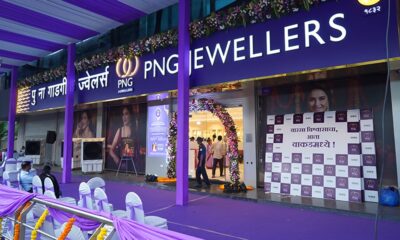
Kangana Ranaut Unveils PNG Jewellers New Showroom In Ayodhya~

GGJS 2026 Concludes With High-Volume Trade and Strategic Focus On Next-Gen Leadership

The Solitaire Festival Of India Concludes; Bumper Prize Winner At Ranka Jewellers Wins XUV 7XO
GGJS 2026 Concludes With High-Volume Trade and Strategic Focus On Next-Gen Leadership

ABARAN Commemorates The 125th Birth Anniversary Of Founder Shri Burde Sadananda Kamath With Special Gold Coin Launch

MCX Gold Silver Futures See Dip
-
 National News2 hours ago
GGJS 2026 Concludes With High-Volume Trade and Strategic Focus On Next-Gen Leadership
-
 National News6 hours ago
ABARAN Commemorates The 125th Birth Anniversary Of Founder Shri Burde Sadananda Kamath With Special Gold Coin Launch
-
 National News6 hours ago
MCX Gold Silver Futures See Dip
-
 National News3 days ago
P N Gadgil Jewellers Limited – Quarterly Update Q2FY27
