
DiamondBuzz
Dubai Facilitates Over 1 Billion Carats in Diamond Trade as UAE Leads Kimberley Process Reforms


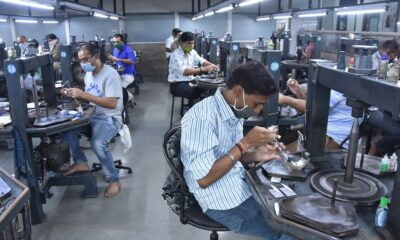
Dubai has traded more than 1.06 billion carats of rough and polished diamonds over the past five years, according to Ahmed Bin Sulayem, Chair of the Kimberley Process (KP) and Executive Chairman and CEO of the Dubai Multi Commodities Centre (DMCC). In 2024 alone, the emirate facilitated the trade of nearly 179 million carats, reaffirming its position as a global diamond trading hub.
The announcement was made during the Kimberley Process Intersessional Meeting, held in Dubai, which brought together hundreds of stakeholders from governments, industry, and civil society. The gathering focused on strengthening traceability, governance, and sustainability in the global diamond supply chain. This marks the UAE’s third term as KP Chair, and the second consecutive year it has led the initiative.
A major highlight of the event was the launch of Verifico, a digital platform designed to enhance the traceability and security of KP certificates. The platform is being made available to all KP participants as part of the UAE’s broader push toward digital transformation in the diamond trade.
Bin Sulayem also called for the first-ever ministerial meeting of KP member states to address mounting global challenges in the diamond industry. Highlighting the critical role of major markets, he stated: “The US, India, and the UAE are the key pillars sustaining the global diamond trade. The Kimberley Process must stay focused to ensure we support growth, resilience, and sustainable development.”

Opening the conference, H.E. Safeya Hashem Al Safi, Acting Assistant Undersecretary at the UAE Ministry of Economy, emphasized Dubai’s journey: “From modest origins, Dubai has risen to become the world’s leading rough diamond trading center. This reflects our economic diversification strategy and our long-term commitment to the diamond sector.”
Feriel Zerouki, President of the World Diamond Council, praised Bin Sulayem’s leadership: “His vision—defining the past two years as the ‘Year of Delivery’ and ‘Year of Best Practice’—provided the clarity and unity needed to overcome long-standing challenges.”


Jaff Bamenjo, from the Civil Society Coalition, echoed the call for meaningful progress: “The KP must deliver on long-promised reforms. A collective, renewed commitment is essential to achieve credible progress during this final year of the current KP reform cycle.”





DiamondBuzz
Belgian Prime Minister Bart De Wever opens expanded HRD Antwerp laboratory in Mumbai
HRD Antwerp is increasing its research capacity in Mumbai by 30%. The official opening, which takes place as part of a two-day visit by Prime Minister Bart De Wever to India, marks an important next step in the growth of HRD Antwerp in India
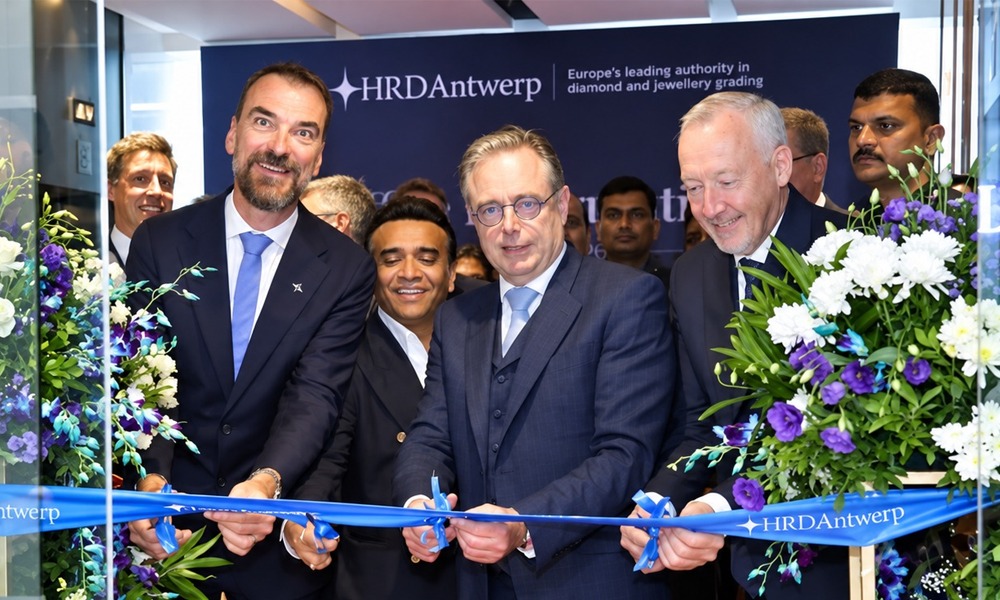
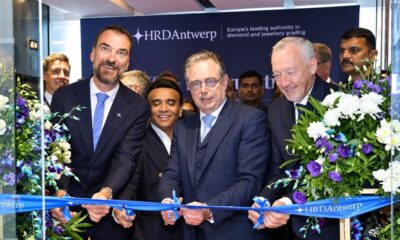
In the presence of Belgian Prime Minister Bart De Wever, HRD Antwerp, Europe’s leading authority in diamond and jewellery grading and a subsidiary of the Antwerp World Diamond Centre (AWDC), officially opened its renovated and significantly expanded laboratory in the Bandra Kurla Complex (BKC) in Mumbai, India. Thanks to the expansion, HRD Antwerp is increasing its research capacity in Mumbai by 30%. The official opening, which takes place as part of a two-day visit by Prime Minister Bart De Wever to India, marks an important next step in the growth of HRD Antwerp in India, one of the world’s leading centres for the trade and cutting of natural diamonds.
For HRD Antwerp, a grading report is not an administrative document but a guarantee of trust, transparency and authenticity. As an independent, neutral party between science, industry and consumer, HRD Antwerp is a worldwide guarantor of objective and reliable diamond and jewellery grading, a principle the organisation has upheld since its founding. HRD Antwerp was established in 1973 and has been active in India since 2012. Today it serves around 1,500 clients there, including jewellery manufacturers and retailers, as well as companies that produce and trade cut diamonds.
The Indian branch now accounts for 59% of HRD Antwerp’s total group revenue and is expected to grow by 15.4% this year, compared with a projected growth of 12.6% for the group as a whole. Jewellery grading is an important growth driver in this respect: as much as 47% of HRD Antwerp’s total revenue increase comes from that segment.
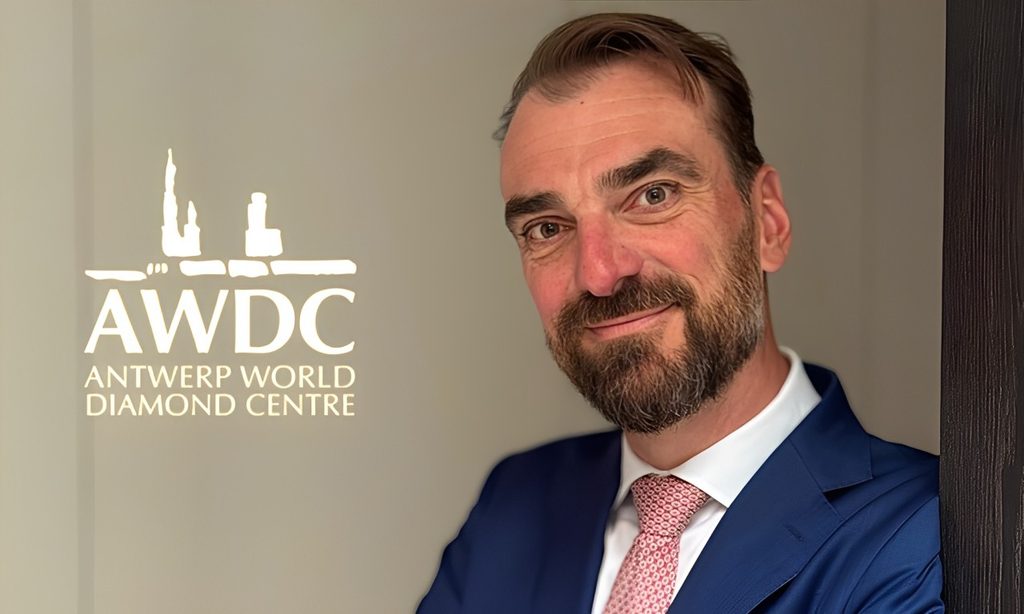
“As the authority in grading reports for natural diamonds and diamond jewellery, and in research into natural diamonds, we are already firmly established in India today”, says Paul De Wachter, CEO of HRD Antwerp. “India remains the world’s most important centre for diamond cutting. For a diamond laboratory such as HRD Antwerp, which provides cut natural diamonds with an independent and objective grading report, it is therefore essential to keep investing in this market.”
Thanks to the expansion, HRD Antwerp in Mumbai can now examine and grade up to 2,000 diamonds per day, a capacity increase of 30%. To support this additional capacity, HRD Antwerp is recruiting 40 additional employees to work full time. The investment underlines HRD Antwerp’s confidence in the Indian market and strengthens the longstanding cooperation between Belgium and India within the international diamond and jewellery sector.
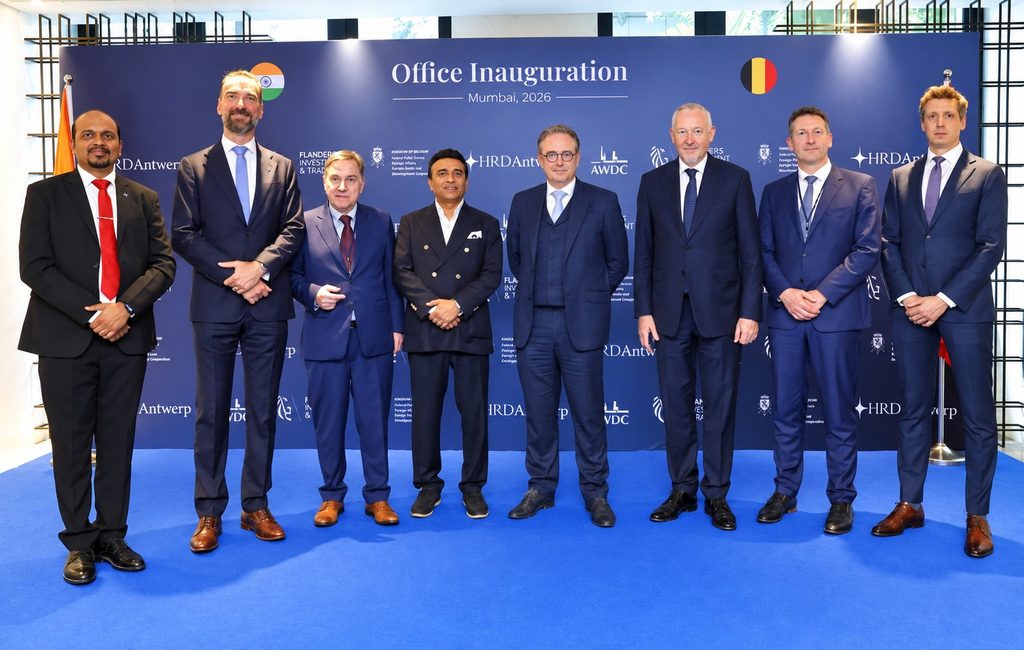
During the opening, Prime Minister Bart De Wever was given a tour of the renovated office. He was shown the diamond grading process and was able to examine a diamond up close himself using a microscope. The demonstration was provided by HRD Antwerp’s Indian experts.
Alongside the Prime Minister, also present were Paul De Wachter, CEO of HRD Antwerp, Ramakant Mitkar, Managing Director of HRD Antwerp India, Chirag Shah, Vice Chairman of AWDC, Didier Vanderhasselt, Belgian Ambassador to India, and Frank Geerkens, Consul General of Belgium in Mumbai.
Paul De Wachter, CEO of HRD Antwerp: “The visit of our Prime Minister underlines the importance of cooperation between Belgium and India within the global diamond sector. India and Antwerp together form two indispensable links in the international diamond chain. With this expansion, we are investing not only in additional capacity, but above all in the future of our cooperation with the Indian diamond and jewellery sector.”
Bart De Wever, Prime Minister of Belgium wrote the following message in HRD Antwerp’s guestbook during his visit: ” Sicut adamas fulget, ita fiducia inter gentes monet. As a diamond shines, so trust endures between nations “



Belgian Prime Minister Bart De Wever opens expanded HRD Antwerp laboratory in Mumbai

Verlas Introduces the ‘Alyssa’ Collection in India, Bringing Modern Luxe Floral-Inspired Design to Lab-Grown Diamond Jewelry Crafted in Fine Gold

Gold rebounds,Silver reclaims Rs 2.33 lakh mark

Limelight Lab Grown Diamonds Inaugurates Showroom In Kalyan, Its 8th Exclusive Store MMR
Verlas Introduces the ‘Alyssa’ Collection in India, Bringing Modern Luxe Floral-Inspired Design to Lab-Grown Diamond Jewelry Crafted in Fine Gold
Belgian Prime Minister Bart De Wever opens expanded HRD Antwerp laboratory in Mumbai
-
 National News2 days ago
Limelight Lab Grown Diamonds Inaugurates Showroom In Kalyan, Its 8th Exclusive Store MMR
-
 BrandBuzz19 hours ago
Verlas Introduces the ‘Alyssa’ Collection in India, Bringing Modern Luxe Floral-Inspired Design to Lab-Grown Diamond Jewelry Crafted in Fine Gold
-
 DiamondBuzz18 hours ago
Belgian Prime Minister Bart De Wever opens expanded HRD Antwerp laboratory in Mumbai
-
 National News20 hours ago
Gold rebounds,Silver reclaims Rs 2.33 lakh mark
