
International News
CIBJO Report Examines AI’s Expanding Role in the Jewellery Industry Ahead of Paris Congress

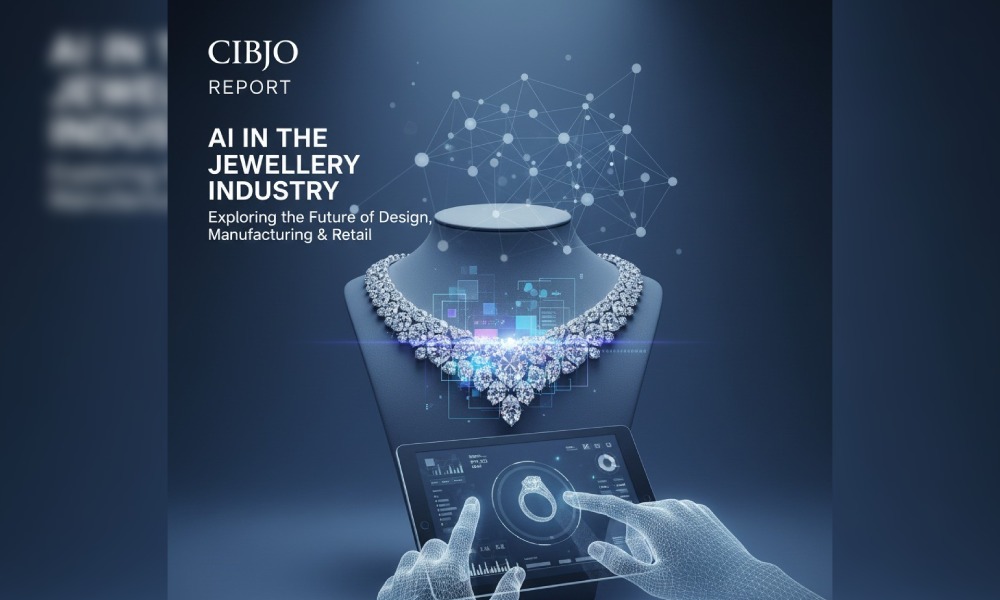
As the countdown begins to the 2025 CIBJO Congress set to open in Paris on October 27, the World Jewellery Confederation (CIBJO) has released its tenth and final Pre-Congress Special Report, this one from the Technology Committee chaired by Stéphane Fischler.
The report provides a timely exploration of artificial intelligence (AI) and its growing impact on the global jewellery sector — assessing both its transformative opportunities and the ethical, creative, and operational challenges it brings.

“AI is neither inherently good nor bad; its success depends on how it is used,” said Fischler. “Those who integrate AI strategically and ethically will enhance productivity while keeping human judgment at the centre.”
Acknowledging the industry’s long-standing traditions of craftsmanship and heritage, the report urges stakeholders to adopt a mindset of experimentation and innovation. Fischler noted that embracing AI requires “calculated risk-taking”, encouraging companies to create ‘safe-to-fail’ environments where creative solutions can be tested and debated.
At the same time, the report warns against over-automation, emphasizing that the luxury jewellery market thrives on human stories and artisanal skill.
“AI should complement, not replace, the creativity that defines fine jewellery,” Fischler remarked.
Contributors to the report include Elle Hill (Hill & Co.), Mahiar Borhanjoo (De Beers Group), Thomas Baillod (BA111OD), David Block (Sarine Technologies), Daniel Nyfeler (Gübelin), and Emmanuel Piat (Maison Piat) — representing a cross-section of global expertise at the intersection of technology and jewellery.
The report sets the stage for dynamic discussions at the CIBJO Congress 2025, where leaders from across the world will gather to explore how AI, sustainability, and innovation are redefining the future of the jewellery trade.


International News
Nike Enters Jewellery Market With First-Ever Collection Priced Up To $5,750
The Sportswear Giant Expands Into Jewellery, Bringing Its Brand Identity To A New Category With Premium-Priced Pieces.

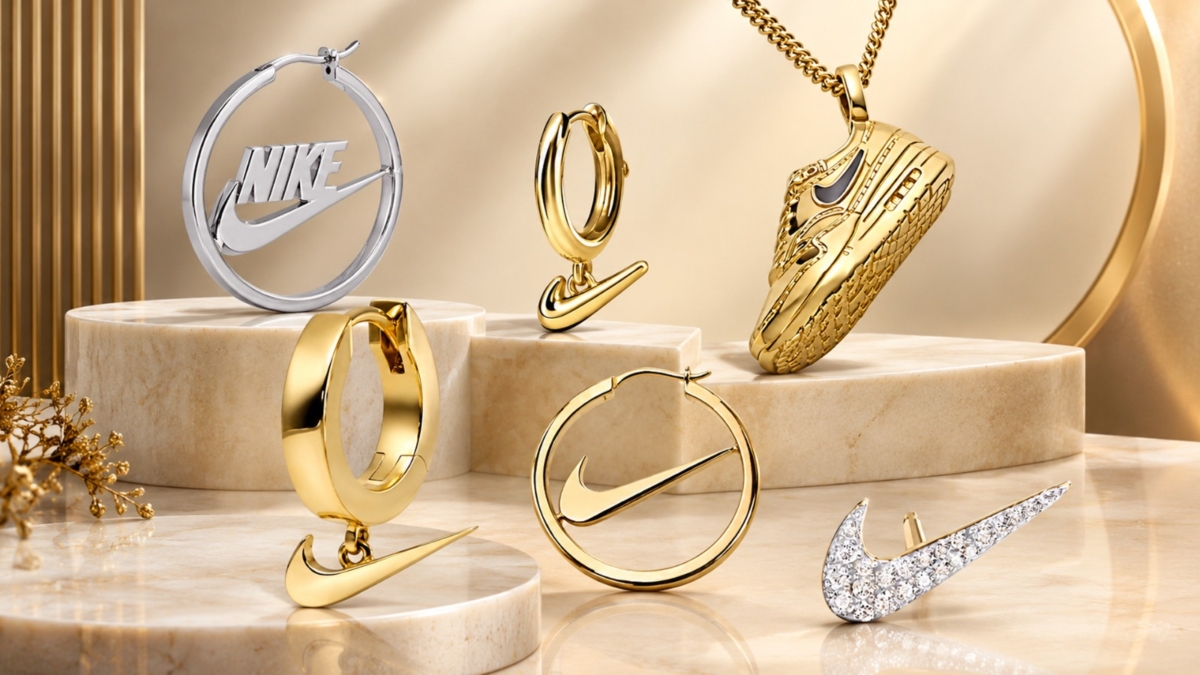
Nike is extending its brand into the jewellery market with its first dedicated jewellery collection, featuring necklaces, earrings and pendants inspired by its signature designs. The range includes a miniature Air Force 1 pendant necklace priced at $5,750, making it the collection’s standout piece.
The lineup also features a crystal-covered Swoosh necklace at $1,750, Swoosh earrings priced at $995 and an Air Max 1 pendant at $395. More accessible designs include Swoosh necklaces and hoop earrings in silver and gold finishes.
The collection combines sportswear culture with premium accessories, transforming Nike’s recognisable logos and footwear silhouettes into wearable jewellery. The range is scheduled to begin releasing through Nike’s SNKRS platform on 29 October 2026, with availability varying by design.



Malabar Gold & Diamonds Unveils ‘SWAYE’, A Natural Diamond Collection Inspired By Spiral Forms and Modern Elegance

Nike Enters Jewellery Market With First-Ever Collection Priced Up To $5,750

Kylie Jenner Debuts At Victoria’s Secret Show In $50 Million Fantasy Bra By Jacob & Co.
Malabar Gold & Diamonds Unveils ‘SWAYE’, A Natural Diamond Collection Inspired By Spiral Forms and Modern Elegance

Limelight Lab Grown Diamonds Crosses 100 Stores Milestone This Dussehra: Targets 200 In 2027
Kylie Jenner Debuts At Victoria’s Secret Show In $50 Million Fantasy Bra By Jacob & Co.
-
 BrandBuzz3 hours ago
Malabar Gold & Diamonds Unveils ‘SWAYE’, A Natural Diamond Collection Inspired By Spiral Forms and Modern Elegance
-
 National News2 days ago
Limelight Lab Grown Diamonds Crosses 100 Stores Milestone This Dussehra: Targets 200 In 2027
-
 DiamondBuzz3 hours ago
Kylie Jenner Debuts At Victoria’s Secret Show In $50 Million Fantasy Bra By Jacob & Co.
-
 International News3 hours ago
Nike Enters Jewellery Market With First-Ever Collection Priced Up To $5,750
