
International News
China’s Diamond Demand Rekindles Hope for Indian Exporters
Early signs of recovery in Chinese consumer interest, driven by retail innovations, offer a cautious boost to India’s struggling diamond trade

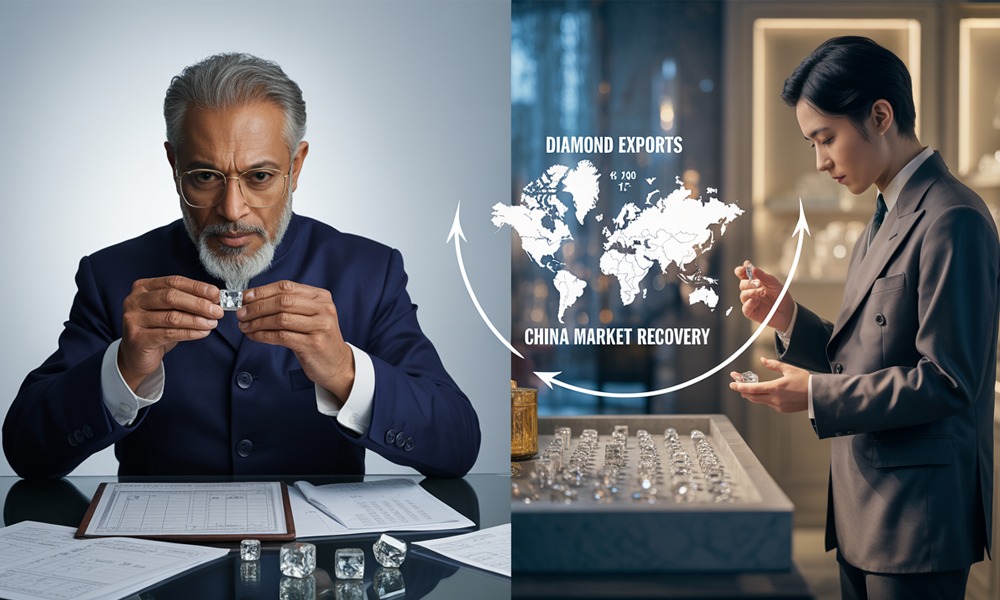
India’s diamond export industry is beginning to show signs of a turnaround, fueled by a renewed appetite for natural diamonds in China — a market that had seen a sharp downturn in recent years. After exports to China dropped from over $6.5 billion in 2021 to around $3.3 billion by 2024, Indian traders are now witnessing a modest but encouraging uptick in inquiries and deals.
This positive shift is being largely attributed to innovative retail strategies adopted by leading Chinese jewellery chains, particularly diamond buyback programs that promise customers guaranteed resale value. These initiatives appear to be restoring consumer trust in diamonds as both luxury items and viable investments. Retailers have reported increased foot traffic and renewed interest since the programs were launched.
Between 2021 and 2024, the slump in Indian diamond exports to China was driven by multiple factors — including a pivot toward gold jewellery, broader economic uncertainty, reduced post-pandemic retail activity, and intermittent health crises. However, 2025 is bringing a cautiously optimistic outlook.
Demand is stabilizing, particularly for smaller, natural diamonds often used in lightweight or gold-accented designs. Trade fairs in Hong Kong this year have reflected this shift, with growing interest among young, urban Chinese buyers.
India, which cuts and polishes more than 90% of the world’s diamonds, is preparing for a potential rebound. While overall exports remain below pre-pandemic levels, the pace of decline has slowed, and trade associations report a notable rise in inquiries from Chinese buyers.
Industry players anticipate a more visible impact by the second half of 2025, aligning with China’s traditional wedding and festive buying seasons. The buyback schemes, still in their infancy, are seen as a game-changer that could help the natural diamond industry regain lost ground — especially as lab-grown alternatives gain popularity.
Nevertheless, challenges persist. Other global exporters are also targeting the recovering Chinese market, increasing competition. Additionally, shifting consumer tastes toward smaller, lower-cost stones may limit the scale of recovery.
Despite the hurdles, the policy and retail shifts in China are being welcomed across the global diamond sector. Key exporting nations such as Belgium, Israel, and African producers are closely monitoring the Chinese market for signs of sustained recovery.
While the road ahead remains uncertain, there is a growing belief that the worst may be over for the natural diamond trade. As the year progresses, India is positioned to capitalize on any resurgence in Chinese demand, especially if momentum carries into the critical year-end shopping period.






International News
Vicenzaoro September 2026 Closes With Stronger International Footprint
The Five-Day Trade Show Recorded A 4% Increase In Total Visitors Compared With The September 2025 Edition, While International Attendance Rose By 9%.

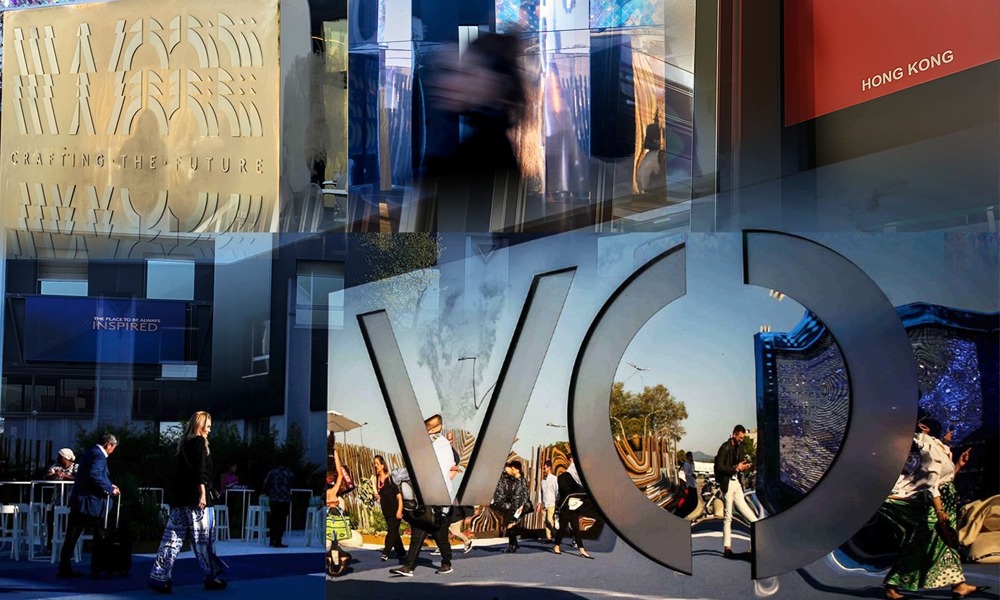
Vicenzaoro September 2026 concluded on 8 September with further growth in visitor traffic and international participation, reinforcing its position as a key global meeting point for the jewellery, gemstones, precious metals and technology industries. Organised by Italian Exhibition Group (IEG), the five-day trade show recorded a 4% increase in total visitors compared with the September 2025 edition, while international attendance rose by 9%.
The edition marked the first major presentation of the expanded Vicenza Expo Centre following the opening of the new Hall 2. The upgraded infrastructure, combined with the show’s Boutique Show format, brought the jewellery supply chain together under one roof—from manufacturing technologies and machinery at T.Gold to finished jewellery, gemstones, packaging and related services.
International attendance reaches new markets
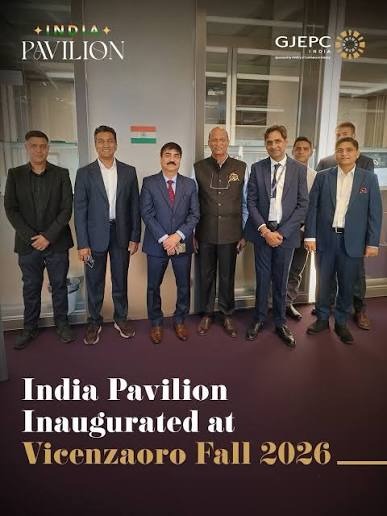
Vicenzaoro attracted visitors from 136 foreign countries, a 4% increase compared with September 2025. Attendance from Europe grew by 9%, while non-European participation also rose by 9%, reaching 91 countries. Visitors from the United States increased by 2%.
The largest international visitor groups came from:
- The United Kingdom.
- Germany.
- China.
- India.
- Romania.
- Switzerland.
- Spain.
- Denmark.
- Colombia.
- Belgium.
The strongest growth in visitor numbers was recorded from South Korea, Singapore, Kuwait, South Africa, Finland, Norway, Denmark, Indonesia, Cyprus and Saudi Arabia.
India’s presence among the top five international visitor markets underlines the importance of the country to Vicenzaoro’s global strategy and reflects the continued strength of business links between Italian manufacturers and the Indian jewellery trade.
“This growth confirms the work carried out during the transitional editions when construction of the new Hall 2 was underway,” said Matteo Farsura, head of IEG’s Jewellery & Fashion division. He noted that international attendance has risen steadily since September 2024 and, boosted by T.Gold, is now 12% higher despite an increasingly complex global environment.
MAECI and ICE programme delivers 910 buyers
The show’s international business programme, organised in collaboration with Italy’s Ministry of Foreign Affairs and International Cooperation (MAECI) and the Italian Trade Agency, brought 700 hosted international buyers to Vicenza. A further 210 Italian buyers participated, taking the total number of hosted trade visitors to a record 910.
The buyers represented 73 countries and were reported to be 33% higher in number than at the September 2025 edition.
Farsura said the programme was designed not only to increase visitor numbers but also to identify buyers according to the profiles of exhibiting companies and the markets they serve. The network of approximately 70 Italian Trade Agency offices worldwide played a significant role in supporting the initiative.
New Hall 2 reshapes the exhibition
The opening of Hall 2 represented a significant milestone in IEG’s development of the Vicenza Expo Centre. The two-storey facility covers approximately 23,000 square metres and connects Halls 1, 3, 4 and 6, improving movement across the exhibition complex and creating a more integrated environment for exhibitors and visitors.
The expanded layout hosted 1,300 exhibiting brands from 40 countries, with international exhibitors accounting for 45% of the total. T.Gold, the specialised exhibition dedicated to jewellery manufacturing technologies and machinery, was brought inside the Expo Centre for the first time, strengthening the show’s ability to present the complete value chain in a single location.
In a period marked by uncertain demand, margin pressure and changing consumer expectations, the format enabled Vicenzaoro to combine commercial activity with a focus on innovation, production efficiency and future market trends.
CIBJO centenary adds global relevance
A major feature of the September edition was the centenary congress of CIBJO, the World Jewellery Confederation. Led by President Gaetano Cavalieri, CIBJO brings together the international jewellery industry around standards, nomenclature, responsible business practices and consumer confidence.
Held in Vicenza to mark the organisation’s 100th anniversary, the congress attracted more than 600 delegates, including representatives of luxury groups, mining companies, retailers, laboratories and other parts of the global supply chain.
The congress addressed several of the industry’s most pressing issues, including sustainability, market transparency, the classification of natural and laboratory-grown diamonds and coloured stones, and the need to strengthen consumer trust. Its presence further positioned Vicenzaoro as a forum where businesses, associations and institutions can discuss the structural changes shaping the jewellery sector.
Networking remains central to the show
Beyond its exhibition and sourcing functions, Vicenzaoro continued to emphasise the value of professional relationships. The event provided a platform for companies, buyers, institutions, associations and international industry leaders to exchange views and develop new commercial connections.
This networking-led approach has become one of the show’s defining characteristics, allowing business discussions to extend beyond individual transactions to wider conversations on market development, technology, distribution and consumer behaviour.
The September edition also featured the ninth edition of VO Vintage, which brought together 53 selected exhibitors specialising in vintage and modern jewellery and watches. The event, open to the general public, combined sales with an educational programme featuring expert speakers and initiatives aimed at strengthening interest in watchmaking culture.
Broad industry support
Vicenzaoro’s strategic partners include MAECI and the Italian Trade Agency. Its international partners are CIBJO, GJEPC India, the Hong Kong Jewellery & Jade Manufacturers Association and Francéclat.
National partners include Confindustria Federorafi, Confcommercio Federpreziosi, Confartigianato Orafi, CNA Orafi, Club degli Orafi Italia, Confimi Industria’s Gold and Silver Category, Assogemme, Assocoral and AFEMO. The regions of Sicily and Campania also participated as institutional representatives.
IEG’s jewellery calendar will continue with JGTD—Jewellery, Gems and Technology in Dubai—from 27 to 29 October 2026. Italy’s jewellery industry will meet next at the Valenza Gem Forum on 22 October and the Italian Jewellery Summit in Arezzo on 3 December.
The next edition of Vicenzaoro and T.Gold will take place from 15 to 19 January 2027, while VO Vintage is scheduled for 15 to 18 January 2027.



Belgian Prime Minister Bart De Wever opens expanded HRD Antwerp laboratory in Mumbai

Verlas Introduces the ‘Alyssa’ Collection in India, Bringing Modern Luxe Floral-Inspired Design to Lab-Grown Diamond Jewelry Crafted in Fine Gold

Gold rebounds,Silver reclaims Rs 2.33 lakh mark

Limelight Lab Grown Diamonds Inaugurates Showroom In Kalyan, Its 8th Exclusive Store MMR
Verlas Introduces the ‘Alyssa’ Collection in India, Bringing Modern Luxe Floral-Inspired Design to Lab-Grown Diamond Jewelry Crafted in Fine Gold
Belgian Prime Minister Bart De Wever opens expanded HRD Antwerp laboratory in Mumbai
-
 National News3 days ago
Limelight Lab Grown Diamonds Inaugurates Showroom In Kalyan, Its 8th Exclusive Store MMR
-
 BrandBuzz2 days ago
Verlas Introduces the ‘Alyssa’ Collection in India, Bringing Modern Luxe Floral-Inspired Design to Lab-Grown Diamond Jewelry Crafted in Fine Gold
-
 DiamondBuzz2 days ago
Belgian Prime Minister Bart De Wever opens expanded HRD Antwerp laboratory in Mumbai
-
 National News2 days ago
Gold rebounds,Silver reclaims Rs 2.33 lakh mark
