JB Insights
Ashth: Built on pillars of Innovation, Ethics and Unmatched Craftsmanship

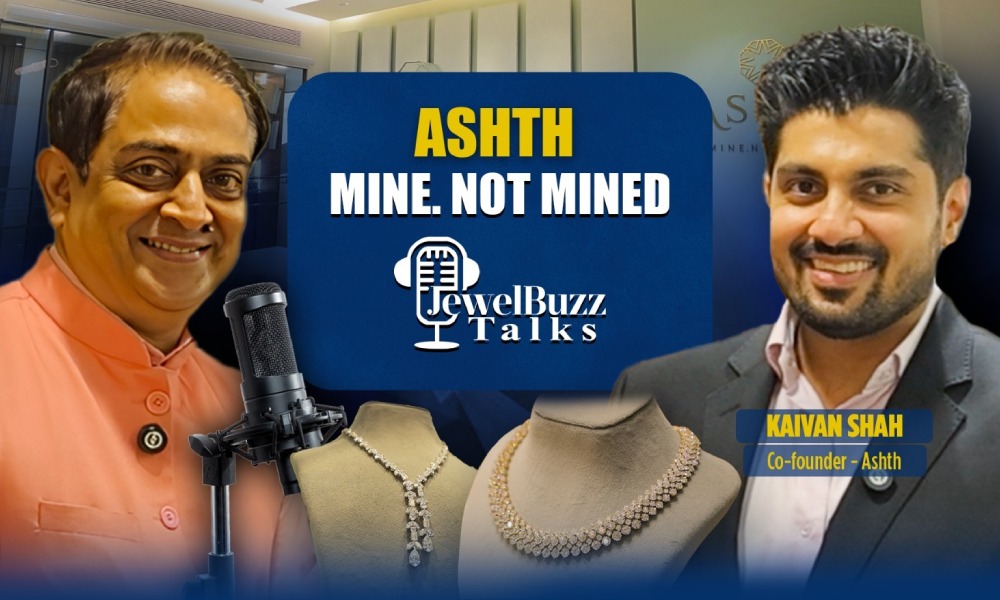
In a rapidly evolving global market, the traditional pillars of luxury—scarcity, high price points, and status—are being dismantled. Kaivan Shah –Co-founder of ASHTH, posits that we are entering an era where luxury is defined by emotional resonance, ethical integrity, and creative freedom. Driven by the conscientious values of Gen Z, the jewelry industry is shifting from a “store of value” model to a “narrative of self” model.
At the forefront of the lab diamond revolution is Ashth with its tag line Mine. Not Mined. driving over 20% YoY growth in designer lab diamond jewellery. Built on three pillars—Innovation, Ethics, and Unmatched Craftsmanship—Ashth captivates ethical luxury consumers.
The Shift from Status to Sentiment
Kaivan argues that modern luxury is an intensely personal experience. The value of a piece of jewelry no longer rests solely on its price tag, but on the memories and meanings it evokes. For the contemporary consumer, jewelry serves as a medium for self-expression. This transition marks a departure from outward displays of wealth toward an inward alignment with one’s personal identity and beliefs.
The Ethical Revolution: Lab-Grown Diamonds
A central theme in Kaivan’s perspective is the rise of lab-grown diamonds (LGDs) as a moral and cultural choice rather than a budget-driven one. Led by Gen Z’s demand for transparency and sustainability, LGDs have moved from the periphery to the center of the luxury conversation.
- Values over Valuation: Affluent consumers are increasingly choosing LGDs because they align with a commitment to environmental and social responsibility.
- A New Product Category: By decoupling diamonds from the “investment asset” mindset, the industry is free to treat them as high-value, consumable luxury, focusing on their aesthetic and emotional appeal rather than their resale speculation.
Design as the New Differentiator
With the constraints of material cost significantly lowered by LGDs, a new frontier of unleashed creativity has emerged. Kaivan highlights how this affordability acts as a catalyst for innovation:
- Bold Silhouettes: Designers can now experiment with larger carats, intricate structures, and avant-garde shapes that were previously cost-prohibitive.
- Versatility: The focus has shifted toward wearable luxury—pieces like detachable earrings and modular necklaces that offer multi-functional utility for the modern lifestyle.
- Artistry over Rarity: In the LGD era, the “premium aura” is built through superior craftsmanship and distinctive storytelling rather than the mere rarity of the stone.
Kaivan underscores the USP of Ashth’s product portfolio: the exclusive 97-facet Ashth Cut, a patented octagon-shape lab-grown diamond that maximizes brilliance and fire. This visionary cut powers 2000+ designs across 20+ categories, including lab-grown diamond rings, earrings, necklaces & pendants, bracelets & bangles, and initial & charm jewellery—for every occasion
India’s Strategic Transformation
Perhaps the most ambitious aspect of Kaivan’s vision is the repositioning of India. While the nation has long been the “world’s workshop” for cutting and polishing, Kaivan sees a future where India is the global design capital.
By leveraging its rich cultural heritage and artisanal expertise alongside the flexibility of lab-grown diamonds, India can lead global trends. However, this requires a shift toward a more organized, collaborative ecosystem that bridges the gap between growers, designers, and retailers to project a unified creative voice to the world.
Conclusion
Ultimately, Kaivan envisions a future where luxury is democratized through design and sanctified through ethics. The lab-grown diamond is the symbol of this transition—a bridge between heritage craftsmanship and a future-forward, responsible philosophy. For the industry, the challenge and the opportunity lie in embracing this new vocabulary: one where authenticity is the ultimate luxury.


JB Insights
What Happens When The World’s 0.03% Of Diamonds Meet 131 Pairs Of Masterful Hands At QWEEN?
QWEEN Brings Together Traceable Natural Diamonds, Japanese Craftsmanship and Precision-Led Jewellery Making Through Rosy Blue and Kashikey.

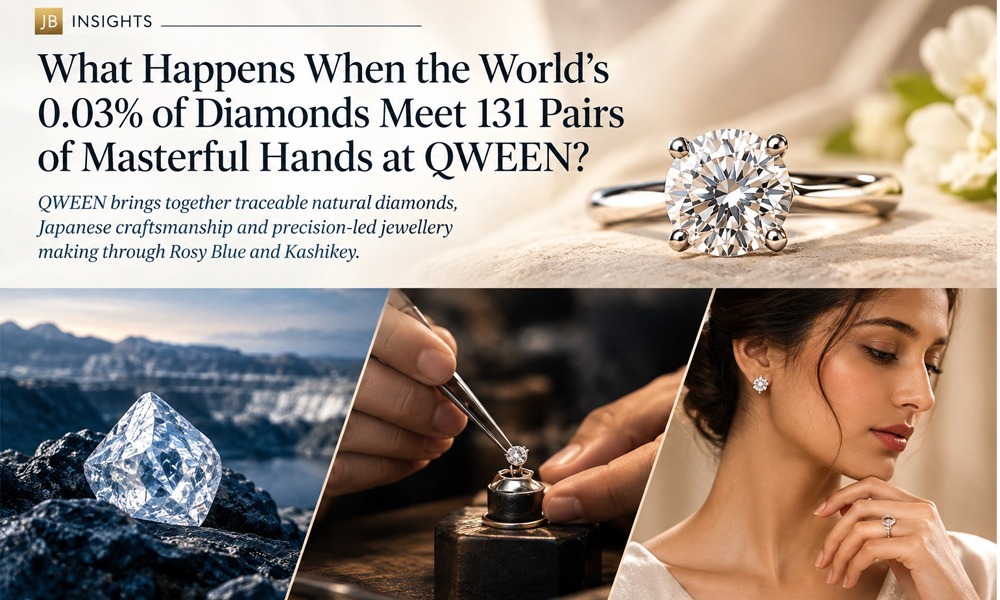
QWEEN, India’s first self-discovery, 100% natural experiential luxury jewellery brand, has detailed the strategic roles of Rosy Blue and Kashikey in powering its product proposition. Beyond being investors in the brand, Rosy Blue and Kashikey serve as QWEEN’s core supply-chain and craftsmanship partners, respectively, bringing together traceable access to 100% natural diamonds and nearly a century of Japanese craftsmanship expertise.
You know the diamond. But do you know its journey?
As QWEEN’s single strategic supply-chain partner, Rosy Blue brings over six decades of diamond expertise and sourcing capabilities to the brand. This partnership enables QWEEN’s Mine to Marvel™ initiative, allowing consumers to trace their diamonds back to their mine of origin.
At QWEEN, the story behind the stone is as important as the sparkle you see. And not every diamond makes it into a QWEEN. Only 0.03% of the world’s diamonds that enter QWEEN’s selection process meet its exacting standards.
Every QWEEN diamond is 100% natural and perfectly cut, meeting the Hearts & Arrows standard. At the QWEEN store, consumers can see that precision for themselves through specialised viewers.
“At Rosy Blue, we believe that trust must be established across the entire value chain. Our partnership with QWEEN brings together exceptional natural diamonds, greater traceability and consistent product standards, giving consumers greater visibility into the journey of their diamond and a clearer understanding of what makes it exceptional,” said Ms. Manali Jayant Parekh, Director, Rosy Blue.
But knowing the diamond is only half the story. What happens to it next matters just as much.
QWEEN’s strategic craftsmanship partner, Japanese luxury jewellery house Kashikey, brings nearly a century of jewellery-making expertise to the brand. Founded in 1928, Kashikey’s craftsmanship informs the construction, setting and finishing of QWEEN jewellery.
A QWEEN jewel is made by 131 pairs of masterful hands. From planning, cutting and polishing to setting and quality checks, every pair brings a decade or more of specialised expertise to the piece before it reaches the woman who wears it.
That attention to detail extends to the smallest elements of the jewellery. One example is QWEEN’s four-prong setting, which leaves more of the diamond visible than a conventional six-prong setting while keeping it securely held.
“For nearly a century, Kashikey has pursued beauty through precision, balance and attention to detail. Our partnership with QWEEN brings this approach to jewellery created for the modern Indian woman, where every element, from the setting to the finish, is considered to enhance the beauty of the diamond while preserving the integrity of the piece,” said Mr. Hisao Kato, Chairman, Kashikey Co. Ltd.
Amit Kumar, Co-founder and CEO, QWEEN said:
“For us, these partnerships go well beyond investment. Rosy Blue, as our single strategic supply-chain partner, gives us the ability to build traceability, consistency and rigorous selection standards into every QWEEN diamond, while Kashikey brings decades of craftsmanship and precision to how we turn those diamonds into jewellery. We wanted all of that to be part of the product itself, so women can see and understand what makes a QWEEN piece different.”
From knowing where the diamond came from to understanding how precisely it was cut and how carefully it was crafted, QWEEN is building a jewellery experience where trust is not just a promise. It is something you can see for yourself.
With Rosy Blue as its single strategic supply-chain partner and Kashikey as its strategic craftsmanship partner, QWEEN brings together diamond expertise, traceability and nearly a century of Japanese craftsmanship to set a new standard for the jewellery a woman chooses to wear.


PNG Jewellers Wins IACC Excellence In Service Award At IACE 2026

Dagina Maharashtra-Cha — Since 1832: PNGS Welcomes Ganeshotsav With Silver Rooted In Maharashtra’s Festive Heritage

India Has Emerged As The Most Important Startup Market In LGD Segment, Home To 70 Lab-Grown Diamond Companies

GJC CALLS 67% HIKE IN GOLD HALLMARKING CHARGES UNWARRANTED; SEEKS IMMEDIATE REVIEW
PNG Jewellers Wins IACC Excellence In Service Award At IACE 2026
Dagina Maharashtra-Cha — Since 1832: PNGS Welcomes Ganeshotsav With Silver Rooted In Maharashtra’s Festive Heritage
-
 National News3 hours ago
GJC CALLS 67% HIKE IN GOLD HALLMARKING CHARGES UNWARRANTED; SEEKS IMMEDIATE REVIEW
-
 National News1 hour ago
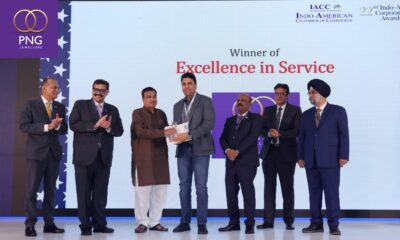
PNG Jewellers Wins IACC Excellence In Service Award At IACE 2026
-
 BrandBuzz2 hours ago
Dagina Maharashtra-Cha — Since 1832: PNGS Welcomes Ganeshotsav With Silver Rooted In Maharashtra’s Festive Heritage
-

 National News4 hours ago
MCX Gold and Silver Futures Rebounded In Early Domestic Trading